Mexico and Brazil crowned champions at the Street Child World Cup 2026


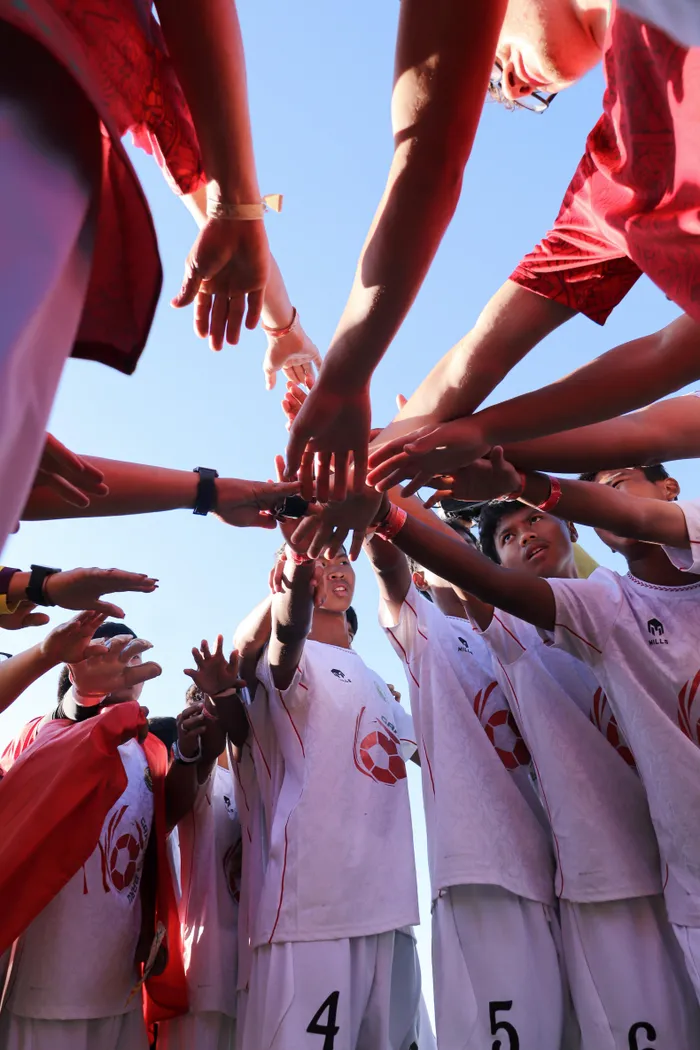
A team huddle at the Street Children World Cup in Brazil.
Image: Supplied
Mexico’s girls team and Brazil’s boys team have been crowned champions of the Street Child World Cup 2026, following a powerful week in which street-connected young people from 21 countries came together in Mexico City for football, advocacy and cultural exchange.
Hosted by Street Child United in partnership with Fútbol Más Mexico, the Street Child World Cup brings together street-connected young people from around the world, using the power of sport to create dialogue, challenge perceptions and drive lasting change. This year’s tournament finals took place at the Parque Ecológico Lago de Texcoco, where Mexico and Kenya came together in the girls’ cup final, while Brazil and India took part in the boys’ cup final, competing in front of young people from 21 nations, as well as guests from across Mexican sport, politics, diplomacy and civil society.
The finals delivered an unforgettable cultural moment, blending sport, music and global attention. Bono was in attendance alongside U2 bandmates, with drummer Larry Mullen Jr. performing the ceremonial coin toss to kick-start the final match. US artist Paul Russell then took to the stage with a live performance of his viral hit Lil Boo Thang, bringing a celebratory close to the tournament.
The tournament concluded after the Street Child World Cup General Assembly, where participants presented a collective call for action to policymakers, civil society leaders and international guests, including Mexican President Claudia Sheinbaum and Gabriela Cuevas, the Mexican government’s official representative for the organization of the 2026 World Cup. A filmed message from football icon David Beckham reinforced the moment, as he wished the teams well, and described the tournament as more than football, recognizing the incredible achievement for all involved.
Hosted by Street Child United, the General Assembly took place on 14 May at Mexico City’s Teatro Hidalgo, and formed the centerpiece of the tournament’s advocacy program. Young people spoke directly about the realities that street-connected communities face worldwide and urged governments and institutions to strengthen protections, uphold children’s rights, and ensure young people are included in decisions affecting their futures.
John Wroe, CEO of Street Child United, said: “Too often, street-connected young people are spoken about rather than listened to. The Street Child World Cup changes that by creating a platform for them to be seen, heard and celebrated, with the General Assembly providing a space for young people to speak for themselves and advocate for the rights and protections they deserve.
Today’s finals were a powerful example of what can happen when young people are able to show up on their own terms,and I am so proud of every single player for what they have achieved today, and in the last two weeks.”
Since its launch in 2010, the Street Child World Cup has brought together hundreds of young people from across the globe, combining international sport with a platform for advocacy and social change.