How common medications can become poisonous to children


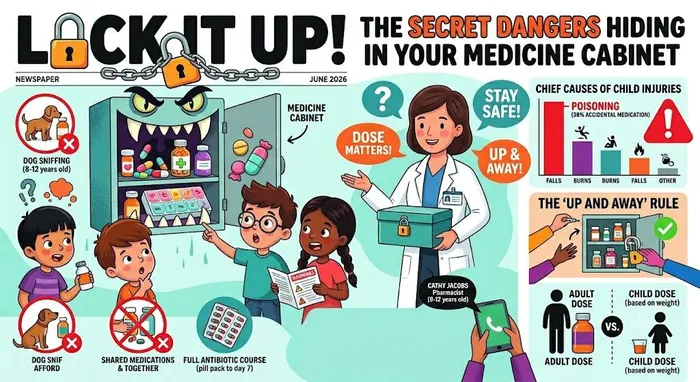
Lock it up: The secret dangers hiding in your medicine cabinet.
Image: AI/Gemini
Imagine something designed to make you feel better suddenly turning into a dangerous poison. It sounds like the plot of a movie, but it happens in real life every single day.
Health experts in South Africa have issued an urgent warning to families: everyday medicines can become incredibly dangerous if they end up in the wrong hands—especially those of curious children or family pets.
According to a shocking 10-year study published in the African Journal of Emergency Medicine, a massive 38% of all children treated for poisoning at one South African hospital were there because they had accidentally swallowed medicine. In fact, across the entire world, accidental poisoning is now one of the top five causes of serious childhood injuries.
So, how can something helpful turn harmful? Pharmacist Cathy Jacobs, from Medipost Pharmacy, said that it all comes down to the size of your body. Because children are much smaller than adults, a normal adult dose of medicine can completely overwhelm a child's system. Paediatric doses are specifically calculated based on a child's weight, meaning even a tiny extra amount can be toxic.
Even daily pill organisers—the colourful plastic boxes that parents and grandparents use to sort their weekly pills—can look like toys or sweets to toddlers. Leaving these boxes on a bedside table or dropping them into a handbag is an easy mistake, but it can lead to a real emergency.
To keep everyone safe, experts say all tablets, liquids, and creams must be stored using the 'up and away' rule. This means keeping them high up, completely out of sight, and preferably locked inside a cupboard where little hands cannot reach them. Medicines should also be kept in a cool, dry place, or in the fridge if the label says so.
Healthcare workers also remind us that medicine should never be shared with friends or siblings, even if they have the exact same cough or tummy ache. Every prescription is specially tailored to one person based on their unique medical history.
Staying safe is all about asking questions. Families should always read the patient information leaflet and check the dosage carefully. Pharmacists are always ready to help, and Medipost even offers a WhatsApp helpline on 012 426 4655 to answer any safety questions in all official languages.