Fadiel Adams granted bail: Political implications and public reactions



National Coloured Congress leader and MP Fadiel Adams was released on R10 000 bail.
Image: Leon Lestrade/ Independent Newspapers
The closely watched bail application of National Coloured Congress leader Fadiel Adams has received mixed reactions across political and public circles, with fresh debate now emerging over whether the outspoken Member of Parliament has been treated fairly and whether he is fit to stand trial.
Adams, was arrested earlier this month in connection with allegations of fraud and defeating the administration of justice linked to the high-profile murder investigation of former ANC Youth League secretary-general Sindiso Magaqa. He was freed on R10 000 bail in the Pinetown Magistrate's Court on Friday.
The State alleges Adams falsely presented himself as operating in an official parliamentary capacity when he conducted prison interviews with accused persons connected to the Magaqa matter. Prosecutors claim he did not have authorisation from Parliament or investigators to carry out the interviews.
The case has placed Adams firmly in the national spotlight, with many closely following developments due to his controversial public persona and vocal commentary on crime, policing and government accountability issues.
Before entering Parliament, Adams built a reputation in Cape Town through activism and community mobilisation, later launching the NCC as a political platform.
Now, crime expert Calvin Rafadi has suggested that the court should consider referring Adams for mental observation by a qualified practitioner.
Rafadi said, based on his observations, there appeared to be concerns regarding Adams’ demeanour and understanding of the seriousness of the allegations against him.
“Perhaps the court should consider referring Mr Fadiel Adams for mental observation by a qualified practitioner,” Rafadi said.
He explained that it is legally permissible for courts to order mental observation where there may be concerns about whether an accused fully understands the nature and consequences of criminal proceedings or is fit to stand trial.
Rafadi further argued that Adams appeared to continue believing that his conduct was justified despite the seriousness of the charges.
“He seemingly continues to believe that his conduct is justified, which raises broader concerns, particularly given his position as a Member of Parliament,” Rafadi said.
Meanwhile, Julius Malema the Commander in Chief of the Economic Freedom Fighters publicly criticised the manner in which Adams was arrested and transported from Cape Town to Durban.
Speaking at a recent EFF gathering linked to preparations for the upcoming local government elections, Malema said his earlier comparison between Adams’ transportation and that of anti-apartheid activist Steve Biko was intended to highlight similarities in the physical treatment of detainees by authorities.
Malema argued that transporting Adams for an extended period in the back of a police vehicle risked generating public sympathy for him rather than strengthening the State’s case.
He further suggested that heavy-handed policing tactics can unintentionally elevate public figures facing criminal allegations, saying authorities were in danger of “making a hero out of nothing”.
Malema had also previously remarked that there was nothing inherently wrong with individuals providing information to police authorities.
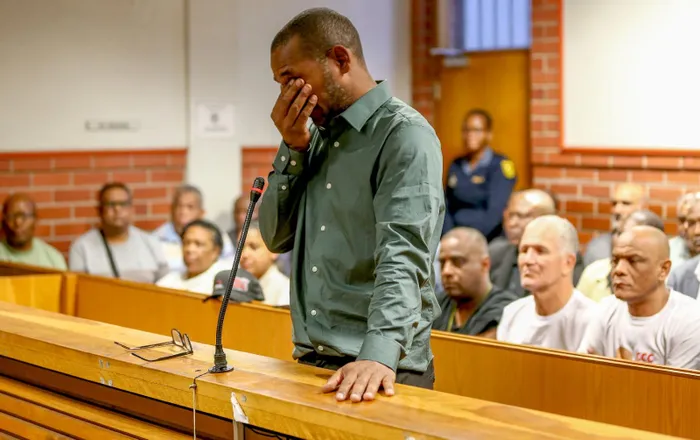
Fadiel Adams
Image: Leon Lestrade / Independent Newspapers.
At the same time, the African National Congress said Adams should allow the legal process to run its course.
“We believe that, like everyone else, he must subject himself to all the legal processes. The court is the only competent platform where he can ventilate the correctness or incorrectness of his detainment,” the ANC said.
“It is not for us to engage on the merits and demerits and whether the matter is handled fairly or not, that’s for the courts to adjudicate and we have full confidence in the judiciary.”
While everything plays out, The National Coloured Congress (NCC) has come out strongly in defence of its president, describing the move as politically motivated and aimed at intimidating those exposing alleged corruption.
In a lengthy statement, the party claimed Adams’ arrest on May 5 involved what it called “intentional errors” and conduct that allegedly violated both constitutional protections and national laws. The NCC argued that involving the Political Killing Task Team (PKTT), armed officers and a large prosecution team for what it described as a Schedule 1 offence was excessive and created the impression of a coordinated effort to publicly discredit Adams.
The party further questioned the manner in which Adams was transported from the Western Cape to KwaZulu-Natal, claiming the heavy police presence and high-profile handling of the matter sent a message that speaking out against alleged corruption could come at a personal cost.
The NCC also raised concerns about the State’s handling of bail proceedings, alleging investigators failed to appear in court despite allegedly having prior knowledge of Adams’ arrival. The party criticised what it viewed as contradictions around the verification of Adams’ residential address, pointing out that he was arrested at his parliamentary residence.
Central to the NCC’s defence is Adams’ role as a member of Parliament serving on the Portfolio Committee on Police. The party insisted Adams was acting within his constitutional oversight duties when he visited a convicted inmate at Westville Prison and later presented a statement obtained during the visit to Parliament.

The National Coloured Congress leader faces fraud and defeating the ends of justice charges.
Image: Doctor Ngcobo/ Independent Newspapers
According to the NCC, parliamentary oversight allows MPs to engage with inmates and investigate allegations linked to police misconduct. The party argued that any dispute around committee procedures or permissions should be treated as an internal parliamentary matter rather than a criminal offence.
The statement also accused authorities of potentially violating parliamentary protections by entering Adams’ parliamentary residence during the arrest process. The NCC said it intends seeking clarity from the Speaker of Parliament on whether the required authorisation had been granted.
While acknowledging that Adams should not receive special treatment under the law, the NCC maintained that he deserved the same fairness and constitutional protections afforded to every South African citizen.