The hidden history of Julia Damstra: a tale of racial identity in apartheid South Africa


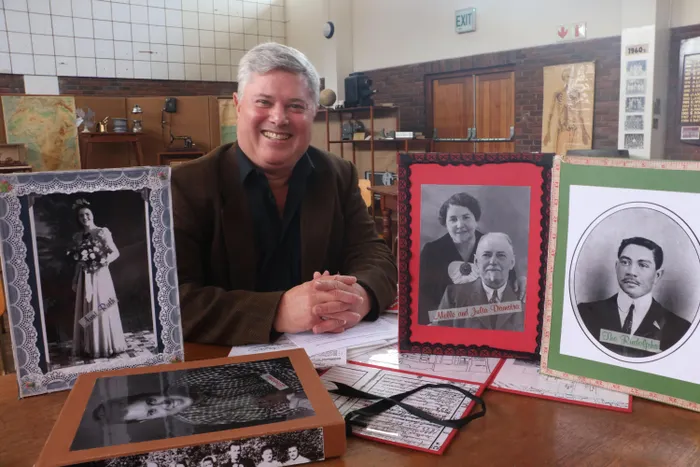
Larramie Damstra researched his grandmother’s history and met family members he never knew about before.
Image: Yazeed Kamaldien
Racial segregation in South Africa tore families apart, as Larramie Damstra from Cape Town discovered years after his grandmother passed away.
Damstra, a white man from Cape Town, discovered that his grandmother Julia Damstra was mixed-race. She was born in 1906 and died in 1954 when apartheid was already established.
Prior to apartheid, various laws and social norms had dictated the lives of people of colour. South Africa’s colonial past had meant that white people were in positions of power and people of colour were treated as inferior.
Julia Damstra and her family were mixed-race — later referred to as coloured when apartheid took grip in 1948 — but she looked white. Her maiden surname was Rudolph. She was born in Caledon and grew up in District Six.
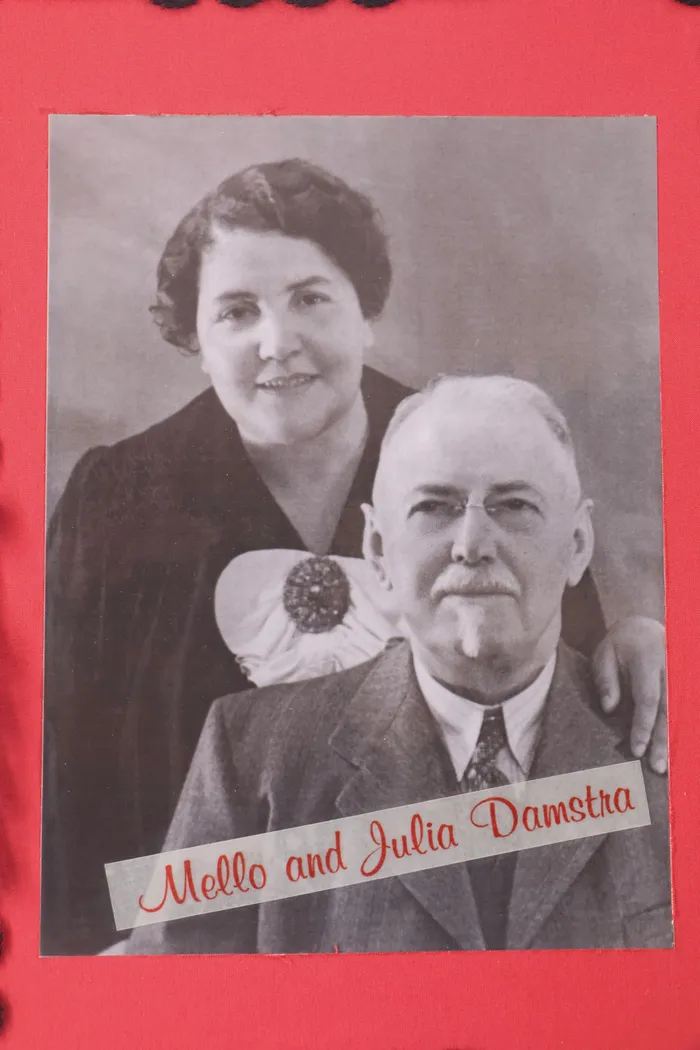
Julia Damstra with her husband Mello Damstra. During South Africa’s segregation period she hid that she was mixed-race and married a white man.
Image: Supplied
When she met and married Mello Damstra, who was from the Netherlands, she lived a double life as a white and mixed-race woman.
Larramie Damstra said his “grandfather was colour blind and he loved Julia. She died and I don’t know her stance on the story.” His father, Douwe Damstra, had four brothers and a sister but none of them “knew much about their mother”.
That led Damstra to research his grandmother, leading to a revelation and family members he had never met or known before.
Damstra presented his story at the Centre for Conservation Education in Wynberg earlier this week. It was part of Archives Week organised by the Western Cape Archives and Records Service, a government institution, which aims to introduce people countrywide to the ways that the national archives can be accessed.
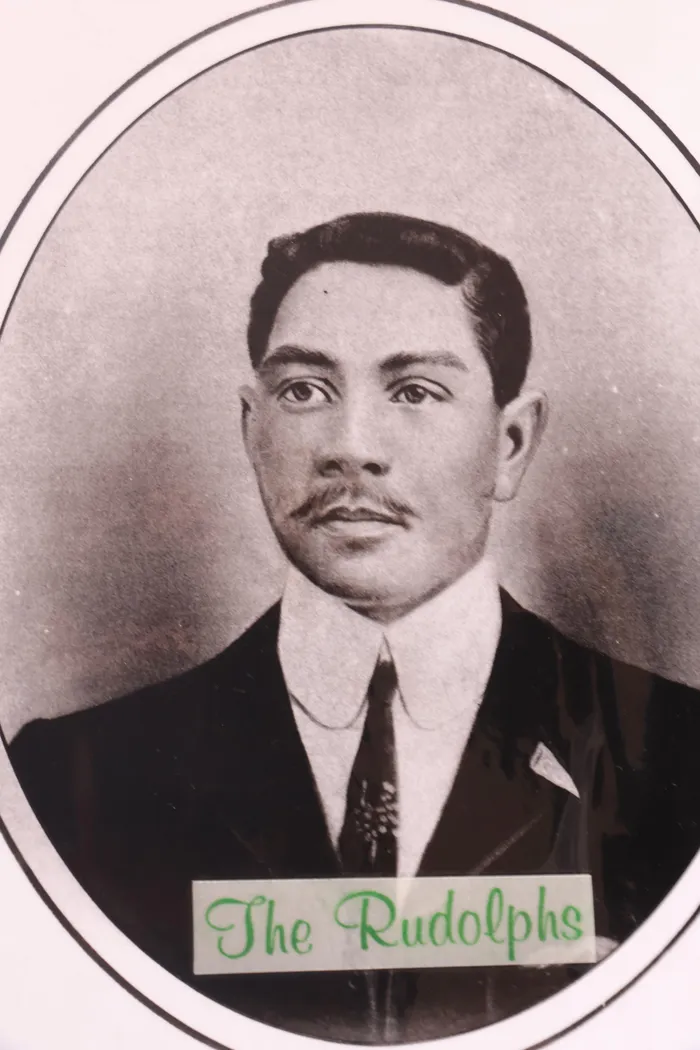
Julia Damstra’s father Arthur Rudolph was a tailor in District Six. He met his grandchildren but could not tell them that he was their grandfather, to hide his daughter’s secret.
Image: Supplied
Damstra went to the archives when he wanted to know more about his grandmother.
“I went to look at her death certificate and her file, which was in tact. I also visited churches, and you will be amazed at what you discover once you start looking. I had help from staff at the Western Cape archives,” he said.
“Julia’s race was classified as mixed on her birth certificate. But later on her marriage certificate she was European because she passed for white. Her own children were classified as European. Her husband completed their birth certificates.”
With this basic information, Damstra started tracing his grandmother’s siblings. He wanted to know more about the family his father met but did not know.
“Julia had two sisters and three or four brothers. I met as many as I could. My dad and I went to meet them,” said Damstra.
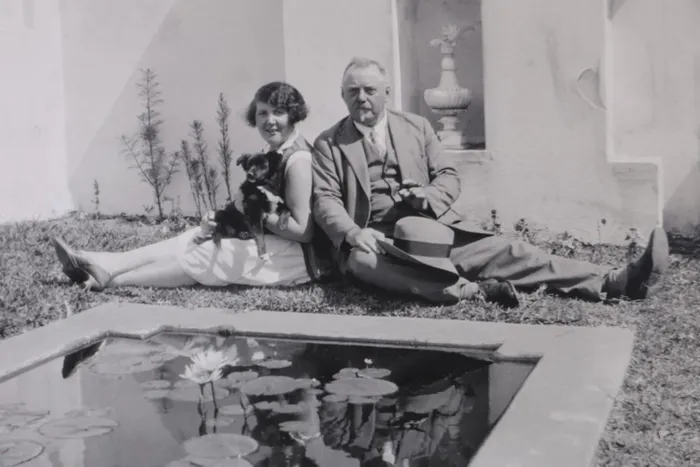
Julia Damstra and her husband Mello Damstra at their house ‘Palermo’ in Oranjezicht.
Image: Supplied
What they discovered was shocking. His grandmother’s family lived at 101 Canterbury Street in District Six while she ended up living with her husband and children not far from there in a house ‘Palermo’ in Oranjezicht.
“My grandmother continued to meet her siblings in secret. They met in the Company’s Garden at the aviary. They looked at the birds and could talk to each other. They didn’t make it obvious,” said Damstra.
Julia’s father Arthur Rudolph was a tailor.
“She took her sons to her father who made them suits but he could not say that he was their grandfather,” said Damstra.
Damstra said even though Julia maintained contact with her family secretly, “she would look in the window when her family passed her in the street”.
Community historian Kammie Kamedien, who was also at the event, explained that “when a family member walked past a coloured who was ‘playing white’ the one who pretended looked into the window so they did not embarrass them”.
The Afrikaans term for this was “venster kykers”, which literally translated to ‘window watchers’.
“There were also people who moved up north so you didn’t meet people from your childhood,” said Kamedien.
“Passing for white was a real survival strategy under the Population Registration Act 1950 and apartheid’s racial classification system. Venster kykers in Cape Town and ‘going up north’ on the Kimberley train were two of the most common patterns in the Western Cape.”
He added: “It was risky. If you were recognised by a former neighbour or teacher, you could be reported, lose your job, and be forcibly reclassified back to Coloured under the Group Areas Act. That’s why it was done quietly.”
Damstra said he “always wondered if people knew my grandmother was mixed”.
There were people who knew and in one incident his grandmother’s secret affected Douwe.
“My father was engaged to be married to a woman named Margaret. He was excited. Then Margaret broke off the engagement. She was going to England where her family was from. Someone had gone to her parents and told them my father was mixed. My father was very upset,” said Damstra.
When he reached out, Julia’s family “were very happy".
“Some of them had heard about it throughout their lives. When they met me it was real.”
He discovered that Julia was the eldest of her siblings and “looked after her brothers and sisters when their mother died”. He spoke to his father’s cousin, the daughter of Julia’s sister Ruth who lives in Australia. She said his involvement with the family “put a plaster on the pain and the hurt and there’s been a healing”.
“Ruth’s pain was the loss of a mother figure when Julia left. I came and made the pain go away. I’m the only one who could have sorted it out. Time had to pass,” he said.
Damstra compiled all the research about his grandmother and her family. He found an artist who made a milliner’s box — in honour of grandmother who was a milliner — and labelled it ‘Julia’s Secret’. It is on display at the District Six Museum.
“The idea of the box was to put Julia back with her family and link her with the present, which is me. I wanted to make something that could memorialise her because Julia was cremated so she is scattered,” said Damstra.