Major vaccination drive to protect 14 million cattle from Foot and Mouth Disease in South Africa


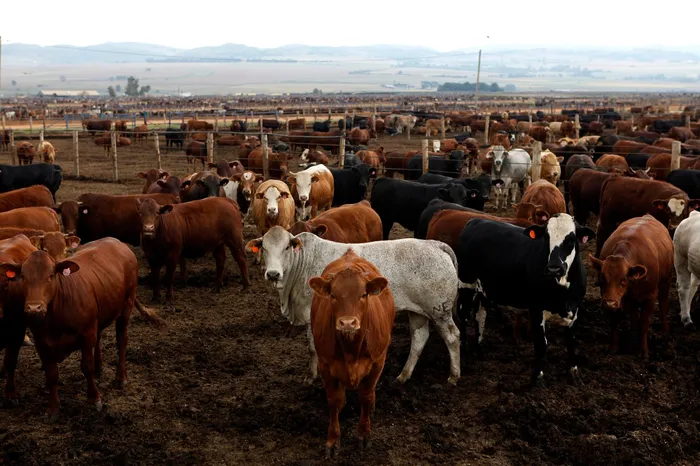
Agriculture Department aims to vaccinate 14 million cattle amid intensified fight against Foot and Mouth Disease
Image: REUTERS/Siphiwe Sibeko
South Africa has escalated its Foot and Mouth Disease (FMD) response, with the Department of Agriculture confirming a major vaccine rollout aimed at protecting the country’s estimated 14 million cattle herd by December 2026.
Minister of Agriculture John Steenhuisen announced that the arrival of a further two million doses of the Dollvet vaccine from Turkey brings total vaccine imports secured since late February to eight million doses.
He said the latest shipments mark a turning point in the government’s intensified effort to contain FMD and stabilise the livestock sector.
“With an additional 5 million doses expected to arrive shortly, South Africa’s total imported vaccine volume will rise to 13 million doses. When combined with the 2 million BVI vaccine doses secured last year, the country will have landed 15 million doses by the end of May 2026,” Steenhuisen said.
The Department’s vaccination strategy is aimed at covering 80% of the national herd, approximately 14 million cattle, by December 2026, a scale officials say is critical to achieving long-term disease control and protecting food security and rural livelihoods.
Steenhuisen said the programme reflects government’s determination to safeguard the agricultural economy.
“With an additional 5 million doses expected to arrive shortly, South Africa’s total imported vaccine volume will rise to 13 million doses,” he said.
“This sends a clear signal of our determination to protect the national interest, defend our livestock industry, and win the war against FMD.”
Officials say the mass vaccination drive is central to the country’s ambition to achieve and maintain “FMD free with vaccination” status, while reducing repeated outbreaks that have caused major economic losses in farming communities.
The Department of Agriculture has emphasised that the programme will also strengthen South Africa’s ability to meet international animal health standards, thereby protecting export markets and improving sector resilience.
Steenhuisen also highlighted the importance of regional coordination in controlling the disease, noting that FMD cannot be contained by borders alone.
“One of the clearest lessons from South America is that you cannot defeat this disease in isolation. Cows do not carry passports. If one country acts alone, the risk remains for everyone,” he said.
“That is why we are working closely with our neighbours to build a truly regional response.”
He added that South Africa is pushing for the establishment of a SADC antigen bank to ensure faster access to vaccines across the region during outbreaks, reducing reliance on lengthy international procurement systems.
The Minister is expected to chair a SADC Agriculture Ministers’ meeting in Zimbabwe later this month, where discussions will focus on livestock movement control, traceability systems and coordinated disease response frameworks.
Steenhuisen also assured farming communities that government remains committed to ending the cycle of repeated outbreaks.
“We have seen the pain, the uncertainty and the economic damage this disease has inflicted on farming communities across our country,” he said.
“I have made a commitment that if we continue implementing this plan at scale and with urgency, this must be the last major Foot and Mouth Disease outbreak to devastate our people.”