Operation Prosper: South African Defence Force's impact on Cape Flats gang violence


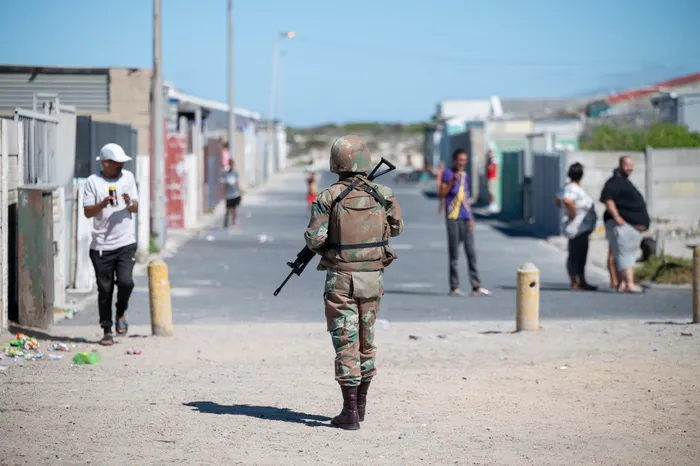
The South African National Defence Force said its deployment on the Cape Flats is having an impact with several guns confiscated and arrests made.
Image: Armand Hough / Independent Newspapers
While violence continues in the Western Cape because of gang violence, authorities insist that the objectives of Operation Prosper remain firmly on track, with the SANDF insisting that their deployment is beginning to yield tangible results.
Nearly a month after the first patrols rolled out on 1 April in Mitchells Plain, soldiers, police, Metro Police, Traffic Police and Law Enforcement have maintained a visible presence across some of the Cape Flats’ most underserved communities. The joint operation, launched to clamp down on entrenched gang activity, extortion and violent crime, continues to see boots on the ground both day and night.
The deployment forms part of a broader national intervention announced by President Cyril Ramaphosa during his State of the Nation Address on 12 February 2026. At the time, Ramaphosa outlined plans for the SANDF to be deployed across nine provinces hardest hit by serious and violent crime, with a specific focus on stabilising gang-ridden hotspot areas identified through crime intelligence. The operation is expected to run for a full year to address the ongoing challenges of gang violence.
When armoured convoys first entered Mitchells Plain and surrounding areas, reaction from residents was mixed. While some welcomed the additional security presence, expressing hope that it would bring relief to communities long plagued by shootings and organised crime, others questioned the long-term effectiveness of military involvement in civilian policing.
Since then, authorities say a range of coordinated interventions have been rolled out. These include high-density patrols, roadblocks, stop-and-search operations, vehicle control points, inspections of liquor-licensed premises, and checks targeting undocumented individuals in identified hotspots.
According to operational data released for the period between 1 April and 28 April, the joint forces have recorded a series of enforcement successes. A total of 23 firearms have been confiscated, along with 146 rounds of ammunition. Officers also seized a hand grenade, identified as an M26 explosive device, in what authorities have described as a significant breakthrough in removing high-risk weaponry from communities.
In addition, 36 dangerous weapons, including knives, were confiscated, while stolen goods such as cellphones and cameras were recovered. Authorities also reported the seizure of illicit abalone and rock lobster valued at more than R45,000, alongside drugs with an estimated street value exceeding R4.1 million. Liquor confiscated during enforcement operations amounted to more than R262,000.
The operation has also resulted in a series of arrests across various categories. These include 23 arrests linked to illegal firearms and ammunition, 191 drug-related arrests, 31 arrests for illegal liquor dealing, and 41 arrests connected to serious offences such as assault with intent to cause grievous bodily harm, murder, and possession of dangerous weapons. A further 29 individuals were arrested for immigration-related offences.
One of the more notable breakthroughs came during a joint operation with the SAPS Anti-Gang Unit, where five suspects aged between 23 and 40 were arrested on charges related to the illegal possession of firearms, ammunition and explosives. In Delft, patrols led to the discovery of two firearms and ammunition at a residence, resulting in the arrest of a 23-year-old man. In a separate incident, a 35-year-old suspect was taken into custody after an M26 hand grenade was found in his home.
Further operations led to the arrest of another 35-year-old man found in possession of a 9mm firearm and ammunition, while a 36-year-old suspect was arrested for drug possession. In total, that specific operation resulted in the seizure of five firearms, a substantial quantity of ammunition, and the explosive device.
The SANDF have emphasised that the continued success of Operation Prosper will hinge on intelligence-driven policing. Real-time information is expected to guide targeted interventions such as raids, cordon-and-search operations, and vehicle checkpoints, enabling law enforcement to identify and apprehend individuals involved in criminal networks.