Beyond academics: the role of heart culture in school readiness


Beyond the checklist: Why ‘Heart Culture’ Is the key to school readiness
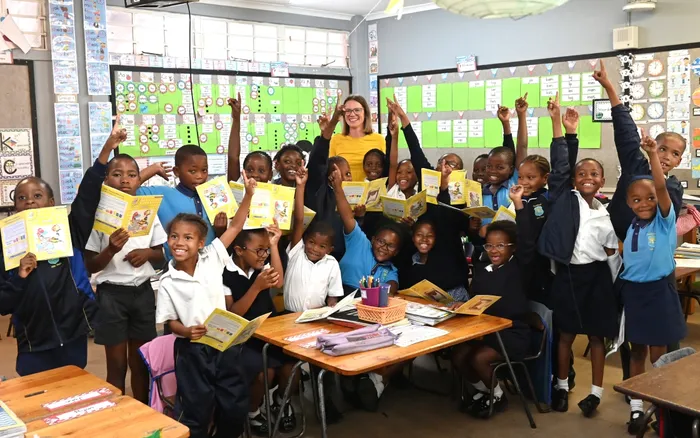
Image: Ayanda Ndamane/ Independent Newspapers
School readiness is a milestone that looms large for every parent. We all want to feel confident that our children can handle the transition to formal education, yet in our eagerness to prepare them for the next step, we risk missing something essential.
True preparation for Grade R is not found in a high-pressure academic sprint; children do not get ready for school by feeling pressured. They get ready by feeling like they belong.
Long before a child can hold a pencil, recognise sight words, or count with confidence, they are internalising a much deeper curriculum. They are learning who they are in the world. They are discovering if they are safe, if their voice matters, and whether mistakes are something to fear or simply a natural part of the learning process.
These early messages shape how a child enters every later learning space. The pedagogical framework at Dibber (International Preschools) is grounded in this very understanding: childhood has intrinsic value. When children feel seen and respected, and when strong early relationships are established, the foundation for all future learning is laid.
Too often, readiness is reduced to a sterile checklist of academic markers. However, true readiness encompasses far more. A child may be able to recite numbers but feel paralysed in groups; they may know their letters yet struggle to separate from a parent; they might have difficulty recovering from disappointment or joining in with play.
Real readiness is not just academic knowledge—it is emotional and social confidence. When children experience warmth, predictability, and emotional safety, they are far more able to engage with complex learning. Dibber’s framework promotes a Heart Culture—a positive atmosphere where everyone is included and cared for. It is an environment where children know they can truly be themselves.
This foundation of inner security is not an optional extra; it is the heart of school readiness. When children feel supported, they are more likely to take risks, ask questions, solve problems, and bounce back when things do not go to plan. These are the skills that matter most—not about making children perfect, but about helping them become capable. Grade R is designed to build the foundations for formal learning, such as following instructions and active listening, noticing patterns and communicating ideas, and managing emotions and participating with confidence. With these foundations, children do not just cope in Grade R and Year 1; they settle and thrive.
Readiness forms in small, quiet moments: a warm welcome, an educator kneeling to listen, or a child being encouraged to solve a problem independently. Crucially, a child’s worth must not be tied to performance. Praise based solely on success teaches a dangerous lesson: that value depends on outcomes.
This approach is not about lowering expectations, but about understanding what real preparation looks like. Drawing on the Nordic approach, the focus is placed on the whole child—social, emotional, cognitive, and physical. Through play-based, interactive experiences, children can wonder, move, and collaborate at their own natural pace.
Ultimately, school is about more than learning facts; it is about building relationships, routines, and resilience. A child who gains these skills through play and connection does not fall behind—they arrive stronger. They listen better because they feel safe, and they keep trying because they have already felt the satisfaction of mastering small things every day. By providing loving guidance, space to play, and a strong sense of belonging, we aren't holding children back. We are helping them become truly ready for the world.
(Ursula Assis, Country Director of Dibber International Preschools, South Africa)