Celebrating the dedication to rescued big cats at LIONSROCK


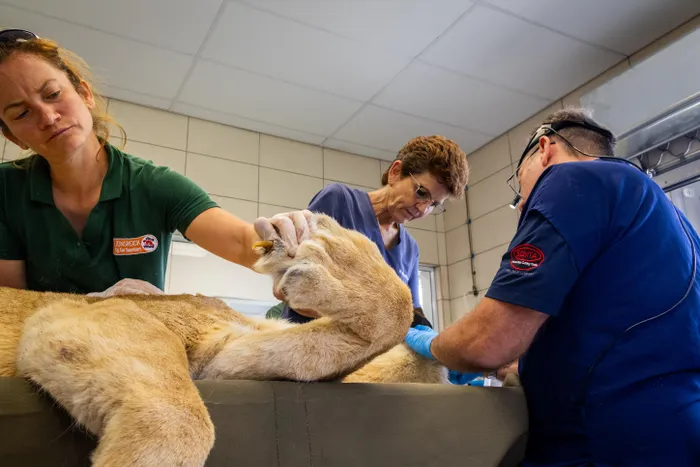
LIONSROCK vet Christine Steyrer, Professor Gerhard Steenkamp and his assistant Michelle Cruywagen during dental procedure of lioness Khawla at LIONSROCK Big Cat Sanctuary in Bethlehem, South Africa.
Image: FOUR PAWS
While many imagine veterinary medicine as a fast-paced environment of surgeries and stethoscopes, the work at LIONSROCK Big Cat Sanctuary in Bethlehem, Free State, is defined by collaboration, patience, and a lifetime commitment to its rescued residents.
Ahead of World Veterinary Day on April 25, 2026, the global animal welfare organisation FOUR PAWS is recognising the dedicated team at LIONSROCK, which provides lifelong care to around 100 rescued lions, tigers, and leopards.
At the core of this effort is Dr. Christine Steyrer, the resident veterinarian since 2020, whose practice reflects the complexity of modern wildlife veterinary medicine. “People often think the vet makes all the decisions,” Dr. Steyrer explains. “But at LIONSROCK, every medical outcome depends on collaboration, from animal caretakers and logistics teams to international FOUR PAWS experts. The animals’ benefit because we work together.”
Dr. Steyrer’s shift to working at a true sanctuary, rather than a private practice, has necessitated a different approach. Many of the big cats arrive from backgrounds of neglect or exploitation, often suffering from chronic health conditions that require long-term, individualised management. “As a vet, I’ve learnt that patience is just as important as clinical skill,” she said. “You’re not only treating an illness, you’re supporting an animal’s physical and emotional recovery over years.”
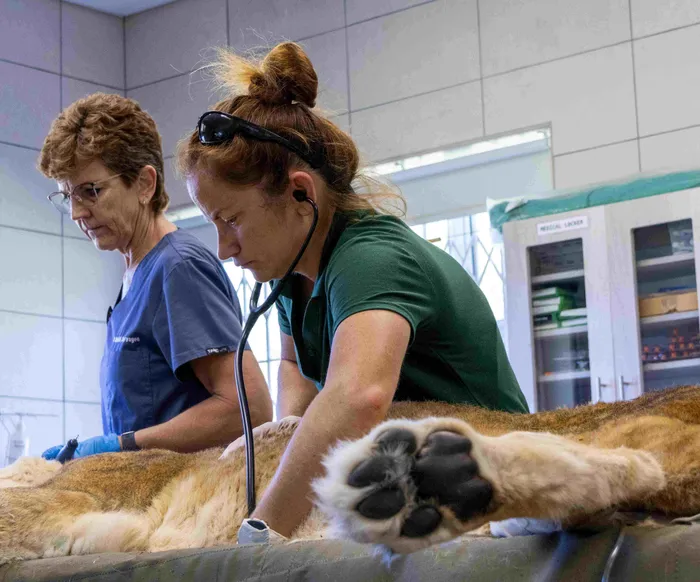
LIONSROCK vet Christine Steyrer during dental procedure of lioness Neida at LIONSROCK Big Cat Sanctuary in Bethlehem, South Africa.
Image: FOUR PAWS
This philosophy has driven the adoption of specialised equipment and new techniques on site to reduce stress and transport risks for the animals. The team utilises portable digital X-ray units, ultrasound machines, and advanced anaesthetic monitoring systems for detailed diagnostics. Preventive healthcare, geriatric care, and tailored pain management plans are now a central part of the daily routine.In a major step forward, Dr. Steyrer has also embraced positive reinforcement training alongside animal caretakers, which allows some health checks to be performed without requiring full anaesthesia.
“It improves safety for the animals and allows us to monitor their health more regularly,” she said. The success of any medical procedure hinges on this seamless network of people. Caretakers and volunteers are often the first to notice subtle changes in an animal's behaviour or appetite. The veterinary team ensures medication and emergency supplies are always ready, while international FOUR PAWS colleagues offer specialist advice for complex cases.
This multi-continental coordination was recently tested when Dr. Steyrer assisted in the FOUR PAWS emergency mission at the former Zoo Luján in Argentina. The month-long assessment, described as the largest of its kind in Latin America, involved urgent veterinary care for over 60 big cats and two bears. “What we encountered during the emergency mission reminded us why diversity and inclusiveness in veterinary medicine matter,” Dr. Steyrer said.
“Different experiences, cultures and skills make us stronger and help us respond better to animals in need.” Ultimately, for Dr. Steyrer, her role extends beyond professional achievement; it connects to a deep sense of purpose. “As a vet, you don’t just treat animals,” she said. “You advocate for them. And when you’re supported by an organisation like FOUR PAWS, you can do that properly.”
At LIONSROCK, veterinary care is measured not just by clinical results, but by the quality of life ensured for the rescued big cats. “It’s teamwork – and the big cats are the real winners,” Dr. Steyrer said.