South Africa's stray animal crisis: urgent solutions needed for World Stray Animal Day


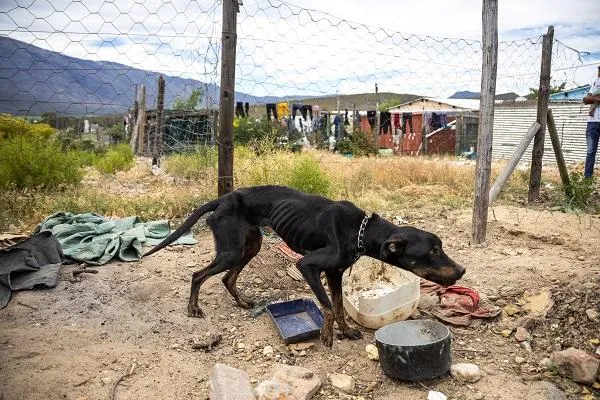
About 4.05 million dogs and cats in South Africa are homeless.
Image: FOUR PAWS
Ahead of World Stray Animal Day on 4 April global animal welfare organisation FOUR PAWS is sounding the alarm on South Africa’s growing stray animal crisis, an issue impacting animal welfare, public health, and community safety.
FOUR PAWS has released urgent new data highlighting the scale of the crisis. About 4.05 million dogs and cats in South Africa are homeless, which is roughly 22% of the country’s estimated 18.6 million companion animals (dogs: 13.4 million, cats: 5.2 million). Of the homeless population, an estimated 3.4 million are strays and 650,000 are housed in shelters.
The organisation pointed to unmanaged reproduction as a key driver of this relentless population growth. In Langa, a census found nearly 90% of dogs and cats unsterilised. “Stray animal management is a One Health issue,” says Fiona Miles, Director of FOUR PAWS South Africa. “When dogs and cats roam without care, it’s not only the animals that suffer, but communities also face increased risks of bites, disease transmission and unsafe environments. Humane, evidence-based solutions are urgently needed.”
The stray population is also directly linked to serious public health threats, notably rabies. Surveillance data show human cases are confirmed annually, particularly linked to dog bites. A retrospective, NICD-led review in Limpopo (2011–2023) recorded 98,743 animal bite cases and 32 human deaths due to rabies. The review found a 100% fatality rate among confirmed cases, many of whom did not complete the Post-Exposure Prophylaxis (PEP) courses, highlighting a need for better awareness and access to care.
“We call on government to embed these principles into national and municipal legislation,” Miles adds. “South Africa has an opportunity to lead by example, ensuring that animal welfare and human health go hand in hand.” FOUR PAWS advocates for proactive interventions such as responsible pet ownership, sterilisation, identification/microchipping, and vaccination, which are widely recognised as more effective and humane than euthanasia.
Municipal frameworks, such as the City of Cape Town’s Animal Keeping By-law (2021), already include mandatory sterilisation and permitting provisions to curb overpopulation and improve community safety.FOUR PAWS encourages authorities to scale humane, science-based interventions by enacting legislation.
Call to Action
The organisation issued a three-point Call to Action:
- Government: Embed humane companion animal population management through national and municipal laws to promote responsible ownership, sterilisation, identification and vaccination.
- Communities and pet owners: Vaccinate, sterilise, microchip and keep pets safely at home; report bite incidents promptly and seek PEP.
- Civil society and experts: Collaborate on data-driven interventions and public awareness to protect people, pets, and public spaces.
FOUR PAWS invites the public to learn more about the movement and its advocacy at www.four-paws.org.za.