Will Cape Town’s N2 security wall truly curb crime?


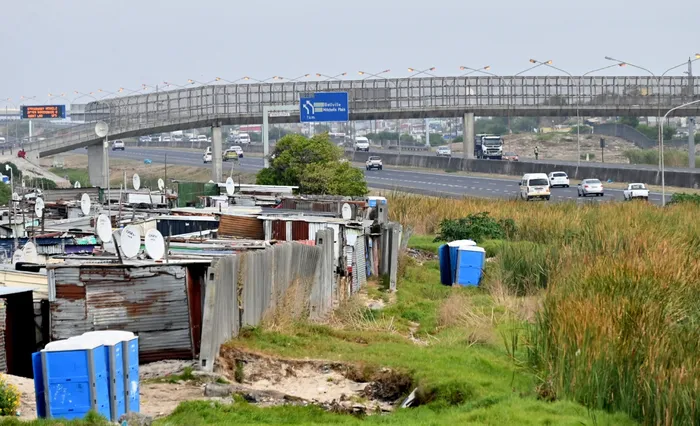
Cape Town's proposed 3m high, 8km security wall along the N2 Highway aims to curb crime but sparks debate over inequality.
Image: Ayanda Ndamane / Independent Newspapers
Acting police minister Firoz Cachalia warns that the planned R100 million security wall along Cape Town's N2 may reduce attacks but will not stop crime.
Cachalia made the remarks in a written Parliamentary reply after Build One SA (Bosa) leader Mmusi Maimane asked whether the City of Cape Town’s proposed N2 safety project would work better than simply putting more police on the road.
The N2 Edge Safety Project includes building a security barrier along parts of the N2 highway near Cape Town International Airport.
The project, allocated about R114m in the metro's adjustment budget, will cover 8km of the busy route used by thousands of commuters every day, travelling between the airport and the CBD.
The three-metre high wall is meant to reduce smash-and-grab attacks, stone-throwing incidents, and robberies that have long plagued the stretch of road, often referred to locally as the “N2 hell run”.
It was announced shortly after Karin van Aardt, 64, was fatally stabbed at a traffic light just off the highway after leaving the airport complex on December 5.
Three men have since been arrested in connection with her murder.
They remain behind bars.
Cachalia said: "The SA Police Service has not determined that the N2 safety project proposed by the City of Cape Town constitutes a substitute for sustained visible policing or enhanced investigative capacity."
He added: "While the construction of a highway wall and/or barrier along the N2 may contribute to situational crime prevention by restricting pedestrian access to the roadway and potentially reducing certain opportunistic crimes directed at motorists, infrastructure interventions cannot replace core policing functions."
Cachalia said the construction of the wall will not, in itself, directly address organised criminal activity.
"To address safety concerns impacting nearby residents and road users, the police continue to implement sustained operational measures," he said.
"[The measures include] high-visibility patrols, intelligence-led operations, targeted deployments of specialised units where threat assessments require, collaboration with municipal law enforcement agencies, and focused investigative efforts aimed at securing arrests and successful prosecutions.
"Effective crime reduction requires an integrated approach combining environmental design interventions with sustained policing, intelligence, and prosecutorial action."
Asked when construction is scheduled to begin, the name of the appointed contractor and the current status of the project, the city's urban mobility political head, Rob Quintas, told IOL: "Stakeholder engagements are currently under way, and once formal agreements have been reached from all stakeholders, the city will communicate at the appropriate time."
“The N2 hell run” is the nickname given to the stretch of highway because of repeated attacks on motorists travelling along the route.
According to data from the Cape Town Metro Police, about 2,215 crime-related incidents were recorded along the N2 and nearby R300 corridor between November 2024 and November 2025.
These included robberies, shootings and attacks on vehicles.
Figures from the same data set show that 42 incidents of bricks being thrown at vehicles were recorded in the airport precinct between April 2024 and March 2025.
President Cyril Ramaphosa, during his State of the Nation Address in February, said the army had been deployed to parts of Cape Town to assist police in fighting violent crime and gangsterism on the Cape Flats.
The deployment, which will last until March 31 2027, comes as authorities continue to battle high levels of gang-related violence in several communities across the metro.
A recent Western Cape Gang Monitor report by the Global Initiative Against Transnational Organised Crime said gang violence in the province has continued to worsen and has followed an upward trend for several years.
The report noted that gang-related murders in the first six months of 2025 were 58 higher than in the same period in 2024, after gang killings had already doubled between 2020 and 2024.
The monitor also found that gang activity remains concentrated in areas such as Hanover Park, Manenberg, Mitchells Plain, Delft and Elsies River, where rival gangs control different territories and regularly clash over drug markets, extortion and control of neighbourhoods.
The report also said illegal firearms, extortion rackets and drug trafficking continue to fuel gang operations, while some gangs recruit children and young teenagers as lookouts, couriers or gunmen.
In some cases, children have been caught in crossfire or drawn into gang activity at a very young age.