South Africa's agricultural sector celebrates first plum exports to China


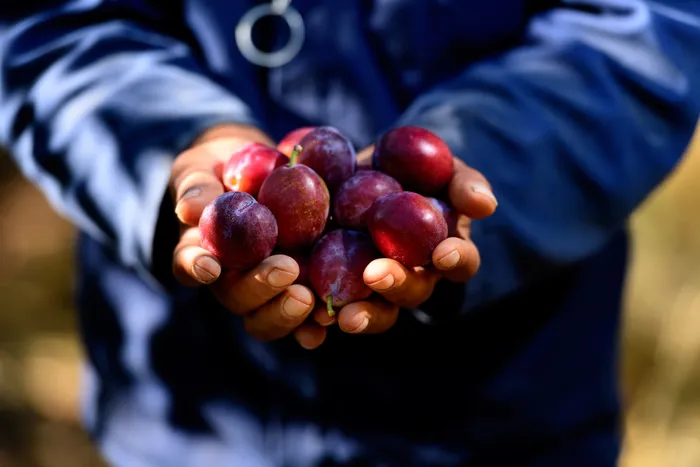
South Africa launches plum exports to China, marking a new era for agriculture.
Image: Jaco Wolmarans
In a momentous occasion for South Africa's agricultural sector, Minister of Agriculture John Steenhuisen, alongside His Excellency Ambassador Wu Peng of the People’s Republic of China, visited the Freshness First Packhouse in the picturesque town of Franschhoek . This landmark visit was marked by the preparation of the first shipment of stone fruit—approximately 20,000 cartons of premium plums, specifically the revered African Delight and Ruby Star varieties—destined for the lucrative Chinese market.
This shipment signifies the formal commencement of the stone fruit trade protocol, a strategic initiative poised to significantly transform the local deciduous fruit industry.
In his address, Minister Steenhuisen underscored the importance of this venture, stating that the entrance into the Chinese market has evolved into a fundamental necessity for South Africa’s economic revitalisation rather than merely an opportunity.
“Today, the Chinese market is a strategic necessity, not merely an opportunity for South Africa’s agricultural resilience,” he said. He reflected on the collaborative journey he undertook with Ambassador Peng, expressing satisfaction in achieving this pivotal milestone.

Minister of Agriculture John Steenhuisen, accompanied by Ambassador Wu Peng of the People’s Republic of China, visited the Freshness First Packhouse in Franschhoek on Wednesday, where the first shipment of stone fruit was prepared for export to China.
Image: File Phando Jikelo / Parliament of RSA
This historic export follows the signing of a bilateral trade agreement that allows South African agricultural products zero tariffs when entering the Chinese market, thereby enhancing local farmers' competitive edge on the global stage.
Currently, South Africa captures a mere 0.4% share of China’s substantial annual agricultural imports, which total an impressive $200 billion. However, officials are optimistic about significantly increasing this figure, aiming to double the current R400 million export value over the subsequent four years.
“South Africa has the capacity to provide the quality and quantity of fruit that consumers in China desire,” Minister Steenhuisen asserted, expressing confidence in the anticipated growth of volumes exported to China. This initial shipment is but the first phase of an overarching strategy that encompasses the expansion of trade protocols for cherries and blueberries later this year, indicating an ambitious trajectory for South Africa's fruit export potential.
The DA also heralded this success as a monumental achievement for the agricultural sector, indicative of the tangible benefits that this agreement brings to farmers, exporters, and agricultural workers alike. The swift implementation of this trade access was particularly commended for its significance in the agricultural sector, where timing and efficiency are crucial for sustaining farm incomes and job security.
By diversifying its buyer base and tapping into the burgeoning demand in emerging markets such as China, South Africa's agricultural landscape can cultivate resilience against external trade fluctuations that have increasingly characterised a volatile geopolitical environment.
This protocol with China may potentially unlock hundreds of millions of rand in export value over the coming years, supporting new employment opportunities on farms, while stimulating investments throughout the agricultural value chain, including logistics, transport, and packaging. The agreement thus heralds a future ripe with promise for job creation, projected to generate approximately 350 new jobs directly within farms and packhouses, with an additional 600 jobs linked to allied industries.
Minister Steenhuisen's discussions with his Chinese counterpart, Minister Sun Meijun, also addressed the resumption of beef trade from specific South African regions alongside advancements regarding foot-and-mouth disease (FMD) regionalisation. Furthermore, a technical team from the General Administration of Customs (GACC) has been invited to inspect South African cherry and blueberry orchards and facilities, which could secure access to these lucrative markets in the near future.
As South Africa continues to fortify its trade ties with China, enhanced infrastructure investments can be observed in the transformation of railways, ports, and highways, significantly improving logistics and market access for local farmers. This initiative aligns seamlessly with China's Belt and Road Initiative (BRI), which prioritises infrastructure development across Africa.
Minister Steenhuisen encapsulated the essence of this burgeoning relationship, stating, “China has been South Africa’s largest trading partner for more than a decade, and our bilateral trade continues to deepen. We value China’s ongoing cooperation and the shared commitment to exploring opportunities within our agriculture sector and look forward to building on this partnership through future agreements that benefit both our countries.”