UWC scientists develop groundbreaking low-cost screening test for cancer, TB, and long Covid-19


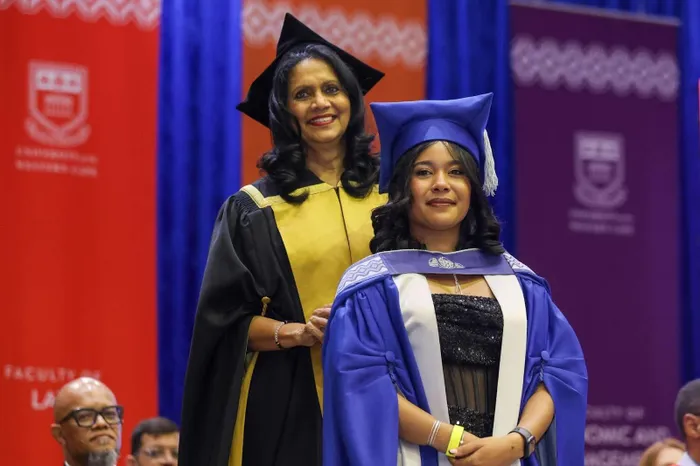
Dr Jaymi Leigh January during her graduation in December 2025.
Image: Shelley Christians/UWC
Scientists at the University of the Western Cape (UWC) have developed a low-cost, highly sensitive, rapid screening test that could significantly improve the early detection of cancer, tuberculosis, and long Covid-19 - all considered as major public health challenges in South Africa.
Developed at UWC’s SensorLab, the new rapid electrochemical sensor promises faster and more affordable screening, offering hope for earlier diagnosis, improved patient outcomes, and reduced pressure on the country’s already strained healthcare system.
In the latest study published in the peer-reviewed international journal Bioelectrochemistry, researchers from UWC and the University of Ghent in Belgium report that the device can detect even hidden Covid-19 infections by identifying extremely small amounts of the virus’s spike protein in blood samples.
The sensor was able to pick up concentrations as low as 0.04 picograms per millilitre - a level far below the detection limits of many existing diagnostic tools. The presence of these proteins in the blood signals hidden infections is a warning signal of these hidden infections.
In earlier research, scientists, led by Dr Jaymi Leigh January from the Department of Chemistry as part of her PhD research, also used the sensor technology to detect certain cancers by measuring levels of a protein linked to the disease. The protein, called macrophage-capping protein or CapG, is known to be overproduced in several cancers, especially breast, ovarian and gastric cancers. High levels of CapG in the body can signal the presence or progression of cancer.
In 2024 research, the novel technology was also proven effective in detecting interferon gamma (IFN-γ), an important immune system marker that signalled active TB infection. TB remained a leading cause of death in South Africa, with about 270 000 people living with the disease in 2023, and 56 000 dying from the disease.
Dr January, one of the newest graduates from the SensorLab, said the research was especially important for South Africa, which continues to face a heavy burden of both infectious diseases and non-communicable diseases such as cancer and TB. She noted that the country urgently needed affordable and accessible diagnostic technologies to improve early detection and treatment.
Established in 2002, the SensorLab has grown into one of South Africa’s leading research centres, surpassing 100 PhD graduates in December 2025. The laboratory focuses on developing smart, low-cost electrochemical sensors and biosensors using nanotechnology to diagnose diseases and monitor environmental pollutants in food and water.
The centre’s work is aimed at producing portable diagnostic tools that can deliver fast and reliable results at clinic level, reducing reliance on expensive and complex laboratory equipment and helping to improve healthcare access in underserved communities.
“It (research) addresses an urgent and very real South African health challenge… the need for accessible, sensitive, and affordable disease diagnostics in a country carrying a disproportionate burden of both communicable and non-communicable diseases,” Dr January said of the latest research.
While TB remained the biggest killer, affecting mostly poorer communities where access to advanced laboratory diagnostics was limited, Dr January said similarly “cancer continues to impose a growing and often silent burden on public health, while the Covid-19 pandemic starkly exposed the vulnerability of our healthcare systems to rapid, large-scale infectious disease outbreaks”.
“Despite their importance, current diagnostic techniques for these diseases are often expensive, infrastructure-dependent, time-consuming, and reliant on highly trained personnel, making them inaccessible to many communities. This research is therefore critical because it seeks to overcome these limitations by developing sensitive, cost-effective, and portable biosensing technologies that can enable earlier detection, improved disease monitoring, and more timely treatment,” she said.
In her thesis, Dr January and fellow researchers - including her supervisor, Prof Emmanuel Iwuoha from the Department of Chemistry, Olivier Zwaenepoel, associate researcher from the University of Ghent in Belgium, UWC’s postdoctoral fellow Dr Nelia Sanga, and co-supervisor Prof Jan Gettemans from the University of Ghent’s Department of Biomolecular Medicine - demonstrated that the sensor could detect even the tiniest traces of Covid-19 spike protein by producing measurable light-based electrical signal, making the results fast and easy to read.
Tests showed that the sensor was effective across a wide detection range and worked not only in laboratory solutions but also in human blood serum, suggesting real-world clinical potential.
Researchers report that the device is stable, reliable, and highly reproducible, making it suitable for routine screening. Because it targets spike protein linked to persistent viral reservoirs, researchers believe the sensor could help identify patients at risk of long Covid-19 earlier than current methods allow.
Dr January said by aligning advanced biosensor innovation with South Africa’s specific disease burden and healthcare realities, “this work contributes directly to improving health equity, strengthening disease management, and supporting the long-term sustainability of human health in the country”.
Dr January who is a recipient of the DSTI–Dr Ivy Matsepe-Casaburri Fellowship, awarded through the South African Women in Science Awards to support emerging women scientists, said of her PhD journey: “Rather than defining this journey by challenges or lows, I view every experience along the way as a formative moment that strengthened me, refined my thinking, and taught me invaluable lessons about discipline, resilience, and purpose.”
She attributed her success to the support of her supervisors, family and co-researchers from the Sensorlab.