Cape Town's Tweede Nuwe Jaar: a new route for the Kaapse Klopse Carnival


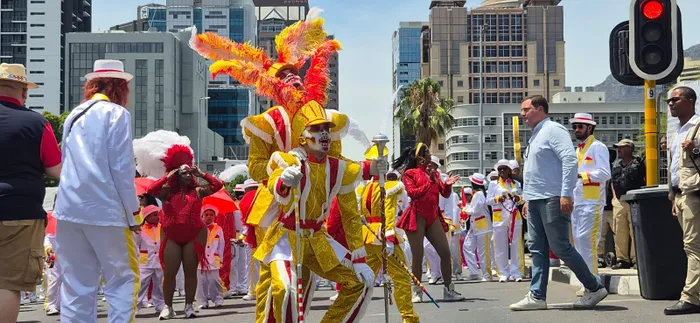
Cape Town mayor Geordin Hill-Lewis get in on the groove at the annual Kaapse Klopse Carnival march in Somerset Road in Sea Point.
Image: Tracy-Lynn Ruiters
The rhythmic beat of drums and the infectious sound of goema filled the air as Cape Town celebrated the annual Tweede Nuwe Jaar, honouring the vibrant culture and heritage of the Kaapse Klopse. This year marked a notable shift in tradition as Klopse troupes kicked off their performances from Somerset Road, making their way towards DHL Greenpoint Stadium—a change from previous years’ routes that added a new dimension to the longstanding event.
Though the colourful spectacle typically lights up the city’s cultural calendar, the turnout this year was strikingly subdued compared to the vibrant gatherings of past celebrations. With the parade falling on a Monday, many had returned to their work routines, leading to a reduced number of spectators. Others lingered on the thought that the event's usual exuberance felt somewhat diminished this time around.
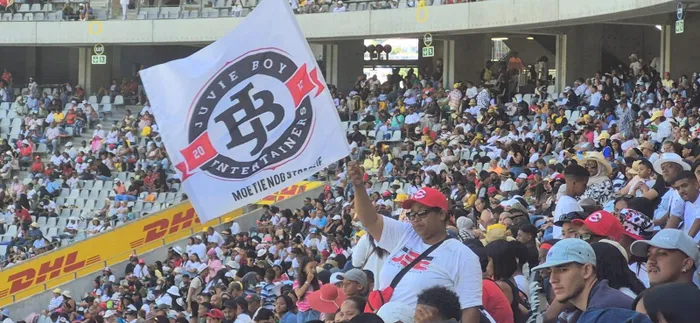
The crowd at the Cape Town Stadium welcome the different troupes of the annual Kaapse Klopse Carnival.
Image: Tracy-Lynn Ruiters
Nevertheless, the unyielding spirit of the celebration persevered. Early risers, some as young as three weeks old, demonstrated their commitment to this cherished tradition. Among them was 26-year-old Ashieka Stuart, who arrived with her infant daughter. “I come every year and I’m introducing her at a very young age,” Stuart shared. “However, this year it’s not nice, en op ’n Maandag. This has been tradition for 40 years with my parents and grandparents, and I want my daughter to also experience it.”
Shameez Abrahams and her children, Zaria (8) and Zabier Africa (6), set the tone early, camping out on Somerset Road from 6am with a small inflatable pool in tow. “The pool was for him to sleep in. We got a lekker spot in the shade,” Abrahams explained. “We do it for the kids, to teach them heritage and culture. It’s an ongoing tradition.”
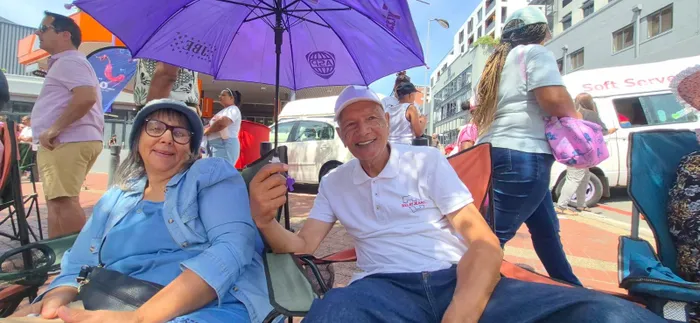
Longtime attendees Sandra and Clive Cox, have been part of the celebrations for more than four decades,
Image: Tracy-Lynn Ruiters
Longtime participants Sandra and Clive Cox, who have been attending the celebrations for over four decades, expressed their unwavering love for the event despite organisational changes. “The best route is the old route,” Clive lamented. “We’re sitting here now and you can’t even go opposite. Everyone is sitting on one side. You feel blocked in, the Klopse are walking on the other side of the barricade that separates the roads. It’s not the same.”
As the troupes progressed down Somerset Road toward the stadium, confusion turned to frustration for some spectators who faced a wait of nearly five hours to gain entry. “You pay to get in, travel to get here early for a nice spot and then you’re told to wait in the sun,” voiced one attendee through the growing crowd.
Despite the setbacks, the essence of the celebration remained intact for many. Monique Muller exemplified resilience, stating, “We will make sure to bring the gees. We come every year. Today we are three generations—my mom, myself and my daughter. Nothing is going to break the Klopse gees.”
City of Cape Town traffic spokesperson Kevin Jacobs noted that the city had anticipated a crowd of approximately 100,000, comprising around 80,000 spectators and 20,000 minstrels. Cape Town Mayor Geordin Hill-Lewis officially opened the parade at midday, inviting residents and visitors to immerse themselves in what he described as “the original sound of Cape Town.”
“What a special, unique privilege it is to be here today,” the mayor declared. “This is a cultural practice you will not see anywhere else in the world. It is globally unique to Cape Town and deeply entrenched in our city’s beloved and beautiful heritage.”