Indigenous midwives in South Africa: navigating Healthcare Challenges


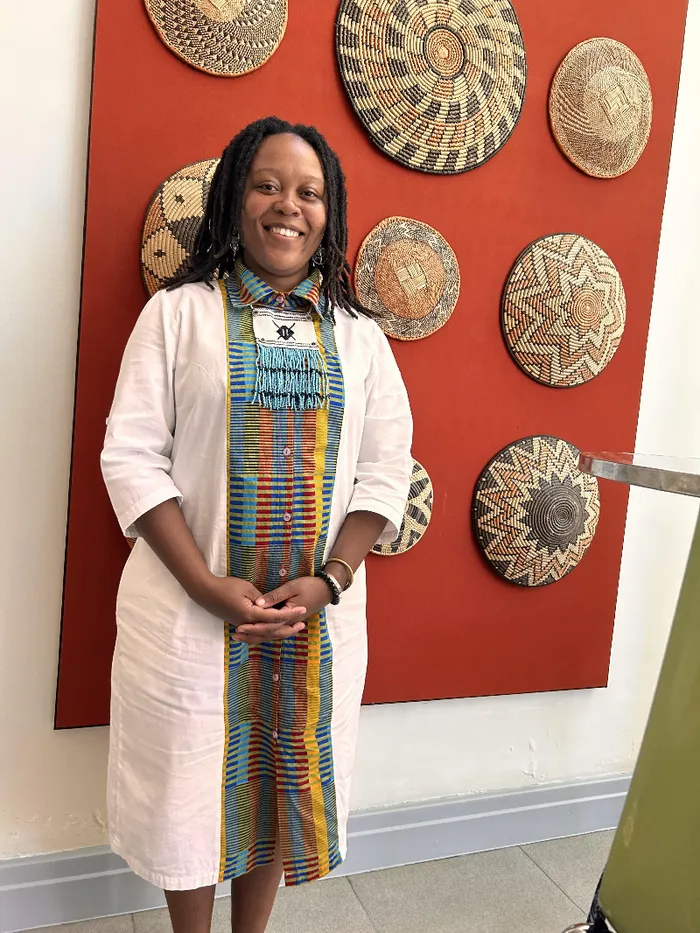
Happyness Nokwatu Raselabe, a masters student in forensic linguistics.
Image: UWC
In rural South Africa, indigenous midwives have historically provided critical maternal care, guiding generations of women through childbirth safely and effectively. Yet, despite their invaluable contributions, these traditional birth attendants continue to operate at the margins of the country's healthcare system, struggling for recognition and support.
This assertion comes from Happyness Nokwatu Raselabe, a master’s student in forensic linguistics at the University of the Western Cape (UWC). Speaking at the inaugural Scholarship of Learning and Teaching (SoLT) Conference held at UWC from 1 to 3 December, Raselabe highlighted the systemic discrimination faced by indigenous midwives within South Africa’s policy framework. She described it as half-heartedly recognising these community practitioners while simultaneously demonising them.”
Central to this discourse is the archaic Witchcraft Suppression Act 3 of 1957, a remnant of colonial legislation that criminalises traditional healing practices. The law not only perpetuates harmful stereotypes, labelling these practitioners as “witch doctors,” but also undermines their status as legitimate healers in the eyes of formal healthcare systems. Over three decades into the country’s democracy, this outdated law remains part of the South African statute books despite widespread calls for repeal.
Raselabe's research sheds light on the challenges faced by women in rural areas, particularly in the Eastern Cape, where access to prenatal and postnatal care remains limited. Many pregnant women must travel arduous distances—often as far as 15 kilometres—under perilous conditions, just to seek essential healthcare. In one harrowing example, she documented an instance in the Wild Coast where a woman gave birth to twins on the roadside, aided by an indigenous midwife, after traversing dangerous terrain including overflowing rivers. Unfortunately, upon reaching the clinic, the midwife was reprimanded by healthcare workers, who treated her life-saving intervention as unlawful rather than commendable.
This lack of collaboration between western-trained healthcare professionals and traditional practitioners is not just a regional issue but a nationwide concern. Despite the National Health Act of 2003 advocating for a unified healthcare system, Raselabe argues that it fails to adequately recognise indigenous healthcare practitioners, limiting formal acknowledgment to Western-trained professionals. “This effectively places traditional health practitioners outside the mainstream healthcare system,” she notes, emphasising the need for a legislative overhaul that re-evaluates the role of traditional midwives.
The World Health Organisation (WHO) backs the integration of traditional and Western medicine, advocating for policies that respect cultural practices and traditional knowledge. However, Raselabe warns that South Africa's current healthcare framework presents significant barriers, including inefficient regulatory mechanisms. Although the Traditional Health Practitioners Act of 2007 finally provides legal recognition for practices including those of indigenous midwives, the absence of functional regulatory councils leaves much to be desired.
Raselabe proposes a paradigm shift towards greater collaboration between traditional health practitioners and their Western counterparts. She argues for reform of the one-sided referral system that exists, in which only traditional practitioners refer patients to Western doctors. This imbalance perpetuates mistrust and undermines patient care, particularly in rural areas where health facilities are often 30 to 50 kilometres away, making access to care a formidable challenge.
Her poignant question reverberates throughout the discourse: “If we speak of decolonisation and, as a country, claim to recognise indigenous knowledge systems, why do we still have laws that contradict each other?”
As indigenous midwives continue to navigate a healthcare landscape fraught with discrimination and neglect, the urgent call for policy reform resonates louder than ever. The future of maternal health in South Africa hinges on the recognition and integration of these vital community practitioners, whose wisdom and support have endured for generations.
Happyness Nokwatu Raselabe, a masters student in forensic linguistics.
Image: UWC