University of Pretoria researchers awarded 2025 Breakthrough Prize in Fundamental Physics
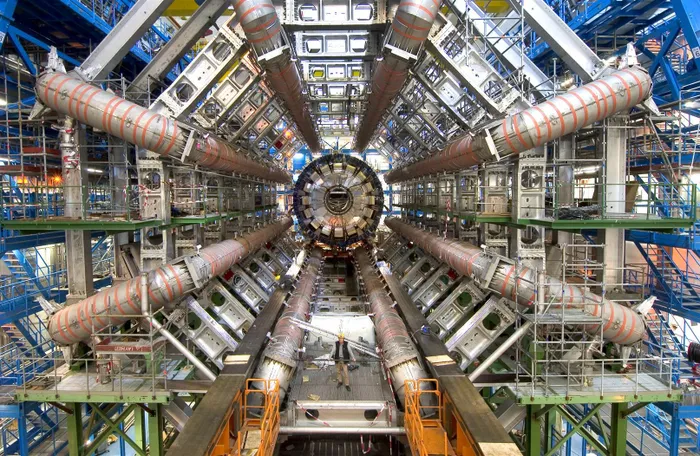
ATLAS Detector, one of the major particle detectors at the Large Hadron Collider.
Image: UP
In a remarkable achievement for South African science, two researchers from the University of Pretoria (UP), Professor Lerothodi Leeuw and Professor Muaaz Bhamjee, alongside their colleagues at the European Organisation for Nuclear Research (CERN), have been awarded the esteemed 2025 Breakthrough Prize in Fundamental Physics. This accolade is in recognition of their significant contributions to the ATLAS experiment, which operates at CERN's Large Hadron Collider (LHC), the world’s largest and most potent particle accelerator located near Geneva.
Professor Leeuw, who has recently assumed the role of Head of UP’s Department of Physics in the Faculty of Natural and Agricultural Sciences, expressed his enthusiasm.
“To be part of research and an international team searching for currently unknown particles that constitute dark matter and the related new physics, as well as being involved in the upgrade of equipment to do so, is phenomenal – not to mention the recognition in the 2025 Breakthrough Prize in Fundamental Physics.”
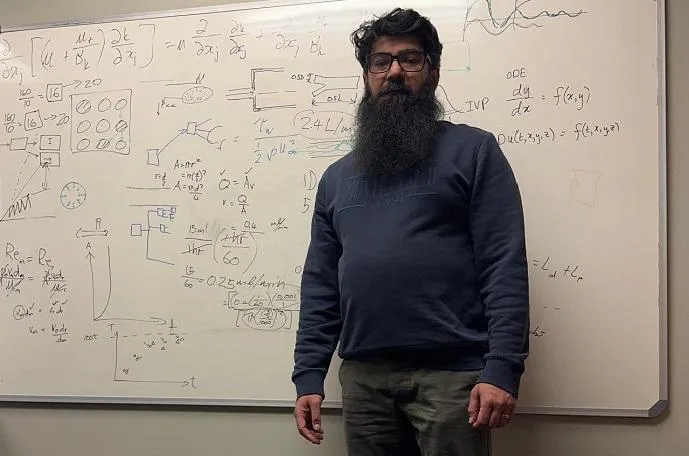
Prof Muaaz Bhamjee
Image: UP
The ATLAS experiment serves as a general-purpose particle physics project aimed at maximising the discovery potential of the LHC. The collider propels protons and ions to near light speed and is capable of conducting over a billion particle interactions per second. These complex collisions yield valuable insights into the fabric of the universe, including investigations into dark matter through exotic Higgs decay analyses. Such studies are situated at the cutting edge of fundamental physics, traversing beyond the parameters set by the Standard Model.
Involvement in this prestigious initiative places UP at an international crossroads of scientific exploration. Both professors play vital roles in the SA-ATLAS, one of four groups operating under the broader South African CERN (SA-CERN) programme. Their work not only encompasses the search for elusive dark matter but also extends to crucial upgrades of the ATLAS detector, the largest ever built for a particle collider.
Professor Bhamjee, serving as UP’s institutional representative for the programme, noted that the ATLAS experiment is a monumental collaborative effort, comprising over 5,500 members globally, including nearly 3,000 scientific authors.
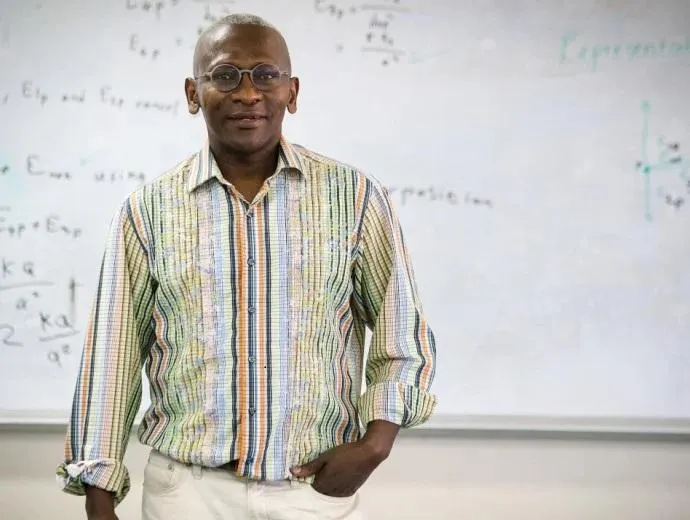
Prof Lerothodi Leeuw
Image: UP
The collaboration of South African researchers with the ATLAS experiment began in 2010, marking the inclusion of institutions such as the University of Johannesburg, the University of KwaZulu-Natal, the University of the Witwatersrand, and the University of Cape Town. UP, as the ninth member, underlines a growing representation of South African academia in high-energy physics.
Prof Wynand Steyn, Dean of the Faculty of Engineering, Built Environment and IT, views this recognition as a pivotal opportunity for fostering interdisciplinary collaboration.
“This project is exciting for several reasons. The level and impact of the work is, of course, important, but for me, the fact that we play on this global stage as two collaborating faculties from UP is the cherry on the cake.”
As the SA-CERN programme continues to thrive, driven by iThemba LABS—South Africa’s leading facility for accelerator-based sciences—a new path forward is emerging for high-energy physics and engineering within the nation. Prof Bhamjee emphasises that UP’s engagement in the SA-ATLAS experiment will bolster South Africa's impact in the international scientific community while nurturing local research capabilities and partnerships.
Reflecting on the significance of this recognition, Prof Barend Erasmus, Dean of the Faculty of Natural and Agricultural Sciences said, “Imagine what else we can achieve by leveraging the collective expertise of these faculties.”
The enthusiasm resounds among faculty members, as the collaborative efforts promise advancements in scientific knowledge, innovation, and the cultivation of future generations of scientists and engineers.