Dr Hafiza Parkar: revolutionising wound care with innovative skin replacement technology
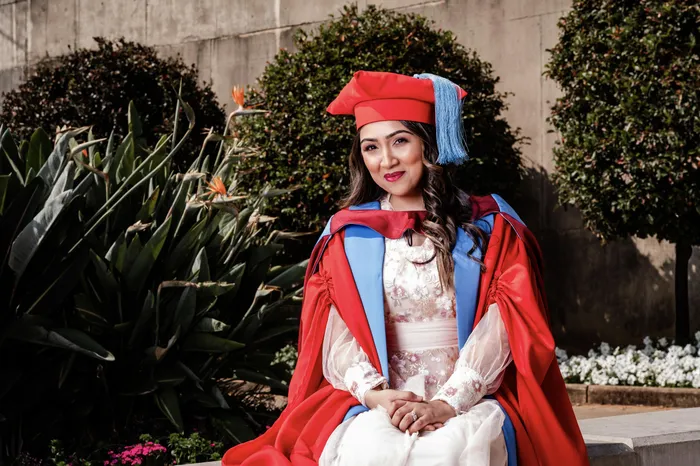
Dr Hafiza Parkar, a newly minted PhD graduate from the University of Pretoria (UP)
Image: Suppled
In a remarkable advancement for the field of medical healing, Dr Hafiza Parkar, a newly minted PhD graduate from the University of Pretoria (UP), has developed a pioneering skin replacement product that has the potential to transform the treatment of complex wounds. This innovative solution could soon offer an effective alternative to traditional skin grafts, particularly benefitting patients with chronic wounds left to heal through secondary intention such as ulcers and burns.
Dr Parkar, now a lecturer at the the University of Pretoria's Department of Pharmacology, celebrated her graduation on 2 September 2025 during UP's Spring Graduation ceremony. The crux of her research lies in the creation of advanced dermal substitutes—acellular dermal scaffolds (ADS)—that replicate human skin, a significant leap toward addressing the limitations posed by current gold-standard treatments that rely on skin grafts.
“Current treatments are constrained by factors like donor availability, immune rejection, and patient comorbidities,” Dr Parkar explains. “Acellular dermal scaffolds provide a promising alternative, as they are cost-effective and reduce rejection risks while maintaining the skin’s natural extracellular matrix.”
Dr Parkar’s study employed novel decellularisation methods to enhance healing in secondary intention wounds, as demonstrated in animal models. These approaches not only accelerated wound healing but also set the groundwork for subsequent collaboration with Dr Alison Ridel from UP's Forensic Anthropology Research Centre to develop 3D bioprinted ADS. This technology aims to produce customisable scaffolds tailored to patient-specific needs, enhancing healing further.
Dr Parkar's eight-year journey to achieving her PhD was marked by significant challenges and perseverance. "Creating a material capable of healing wounds without traditional grafting felt like an impossible task," she reflects, recalling how the initial suggestion from her supervisor, Professor Duncan Cromarty, prompted both disbelief and motivation.
Her path was riddled with obstacles, including the forced relocation of laboratories following renovations in 2018, a devastating fire that halted progress, and the disruptions caused by the COVID-19 pandemic. Nevertheless, Dr Parkar displayed remarkable resilience, pivoting her focus to educating healthcare practitioners and diving into 3D bioprinting technology, a skill that proved essential to her research.
The breakthroughs in her research gained momentum with her permanent appointment to the Department of Pharmacology in 2022 and subsequent connections forged through international collaborations stemming from her innovative skills. These advancements culminated in successful final trials at CSIR, where she overcame the final hurdle of consolidating eight years of intensive research into a comprehensive dissertation.
“This journey was never just about me,” Dr Parkar emphasises. “It was about the people I needed to meet to reach the finish line, and the people who needed to meet me so I could be part of their journey.” Now, as both a lecturer and mentor, she stands poised to make further strides in 3D bioprinting technology, bringing about groundbreaking changes in translational medicine.
As Dr Parkar succinctly puts it, “Life isn't about waiting for the storm to pass; it’s about learning to dance in the rain. And I danced my feet off.” With her optimism and groundbreaking research, she is on the brink of changing the future of wound care.