Fire fighting efforts under scrutiny after Tokai fire
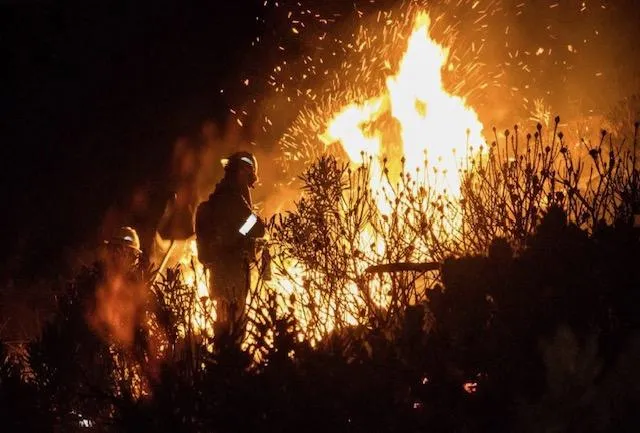
Firefighting teams fought to contain a fire in the Table Mountain National Park (TMNP) that spread from Tokai to areas far south of the Peninsula.
Image: John Murry / Volunteer Wildfire Services
As rain swept across the Cape this week, it brought long-awaited relief to the charred slopes of Tokai, Noordhoek, Silvermine and surrounding areas. With the fire finally contained, the focus is turning to the scale of the destruction, the extraordinary firefighting efforts, and growing public scrutiny around the City of Cape Town’s fire preparedness.
The blaze consumed over 2,800 hectares of Table Mountain National Park, much of it fynbos — a fire-adapted vegetation unique to the Cape. While this ecosystem will eventually regenerate, not all damage can be undone. Slower-moving wildlife, including tortoises, chameleons, and snakes, were especially vulnerable.
"The loss of life is hard to see," said Belinda Abraham of the Cape of Good Hope SPCA. "Unlike the fynbos, which will regenerate, these lives are lost forever."
Still, stories of survival brought some hope. SPCA teams, working closely with SANParks, have now covered nearly half of the burned terrain, relocating animals to untouched safe zones known as refugia. Among the rescues were two puff adders — one of them burned but recovering.
In a moment that rallied the public, Holly, a beloved family dog missing since the fires began, was found and reunited with her owner.
“The fire took so much,” Abraham said. “But today it gave us a beautiful reunion.”
On the ground, the response involved between 120 and 250 firefighters at any given time, drawn from SANParks, the City of Cape Town, Volunteer Wildfire Services, Enviro Wildfire Services, and Provincial Disaster Management. The fleet included up to 19 City fire vehicles and six SANParks trucks, supported by four helicopters that conducted 1,515 water drops — each carrying approximately 1,000 litres.
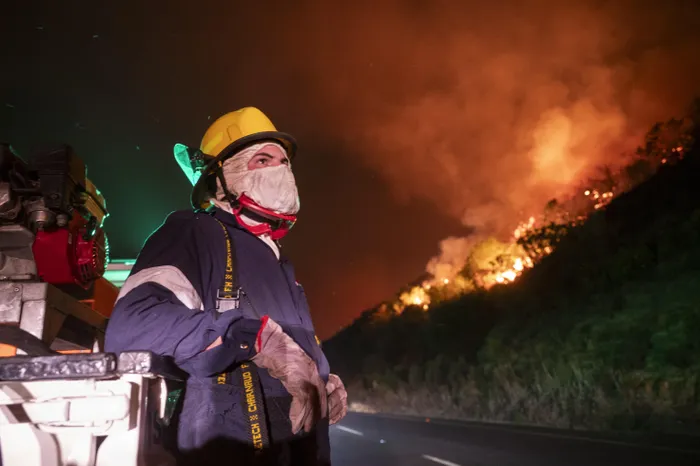
Firefighters worked long hours to fight the devastating fire
Image: Arman Hough/Independent Newspapers
“We are proud of the excellent working relationship between all partners,” said Charles Phahlane, senior communications manager for SANParks Cape Region. “The coordinated efforts and swift response ensured no lives were lost and no homes were affected — even as the fire spread rapidly across multiple fronts.”
The City has since announced a proposed R17 million increase in fire and rescue funding as part of its draft budget.
Mayco member for Safety and Security, JP Smith, acknowledged the intensity of the Tokai fire and the critical role played by frontline responders.
“The magnitude of this incident reminds us once more of the threat of fire in our city, but also why it is so critical to keep investing in our Fire and Rescue Service,” he said. “That is why we have proposed just over R17 million to further increase staffing and resources.”
He said over the long weekend, more than 100 City firefighters worked alongside SANParks, NCC Environmental Services and Volunteer Wildfire Services to contain the blaze, with an Incident Management Team activated to coordinate the complex effort in 12-hour rotations.
On 27 April, 12 major pumpers, five strike teams and five water tankers were deployed to the scene, which remained active for several days. Across the City, firefighters also responded to 357 other incidents — including 214 fires — while maintaining cover at all 32 fire stations.
While Smith commended the teams for keeping lives and homes safe, he confirmed concerns about the fire’s origin and its unexpected reignition. “There is some concern about how the fire started and then reignited after seemingly being subdued, but our firefighters have been holding the line with aplomb,” he said.
Yet not everyone shared the same confidence in the City’s state of readiness. GOOD Party councillor Roscoe Palm issued a statement criticising what he described as “gaps in oversight and preparedness.” According to Palm, “What was deployed to fight the Tokai fires is not what mayor Geordin Hill-Lewis said was available.”
Palm pointed to discrepancies in official figures: “The Mayor said there were 55 major pumpers and 22 water tankers available. But according to JP Smith, what was actually deployed in Tokai was just 12 major pumpers, five water tankers, and five strike teams.”
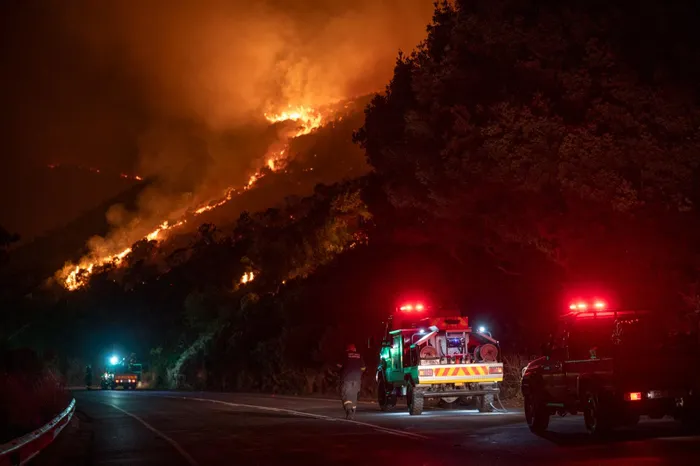
Approximately 250 firefighters from multiple agencies worked tirelessly throughout the night to contain the wildfire burning in the central and south sections of Table Mountain National Park.
Image: Armand Hough / Independent Newspapers
Palm accused city officials of choosing public relations over preparedness and also criticised working conditions for firefighters, stating they are being “failed by the very system that relies on their bravery.”
He described policies around sick leave, overtime and penalties for operational decisions — like vehicles bogging down in wet zones — as punitive.
“GOOD is calling for a full review of the City’s fire strategy. “The incoming model of 'specialised' fire stations must be interrogated,” said Palm.
“Firefighter rotations must be fair, capacity-building, and free of political favouritism.”
Bas Zuidberg, Chairperson of the Far South Peninsula Community Forum, also offered praise and concern in equal measure.
“We are very grateful for the way these brave men and women battled the fires. I won’t knock them,” he said.
“However, I do believe the City of Cape Town needs to step up its efforts in managing large open pieces of land. Not all properties are owned by SANParks.” He also noted that some residents were forced to pay tolls at Chapman’s Peak while evacuating, calling for better coordination and communication.
“We have to thank the dear Lord on our knees that there wasn’t more wind and that there was rainfall. It’s all good and well to have documents that map out safety plans, but they need to be enforced and shared with residents beforehand so we can work together.”
Weekend Argus