Experts weigh in on the devolution of the Metrorail
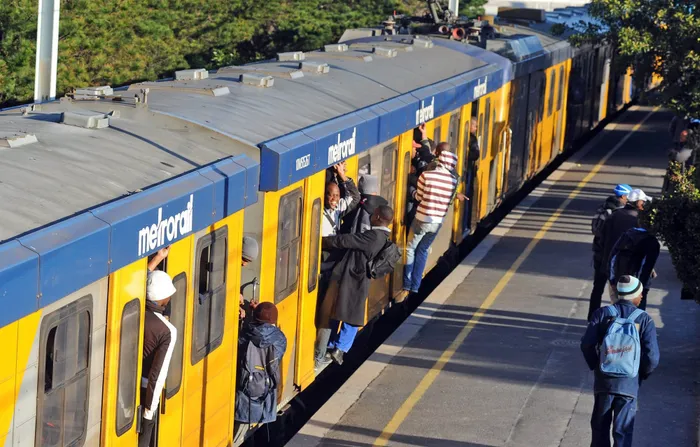
Trains on some of the critical corridors have become a rare sight in Cape Town as the service remains suspended. Picture: DAVID RITCHIE
Public transport experts support the City of Cape Town’s move to explore the privatisation of the rail network service.
Mayor Geordin Hill-Lewis recently announced that the City had been given the green light to do a feasibility study on running the Metrorail service in the city.
The feasibility study is expected to commence on July 1.
Mayco member for Urban Mobility Rob Quintas said the intention of the study was to inform the City of the associated financial costs and risks, and which functions of the passenger rail system it should take over, if any, and how to phase this takeover.
He said the team undertaking the study consisted of experts in rail operations and rail engineering, project management and transport planning.
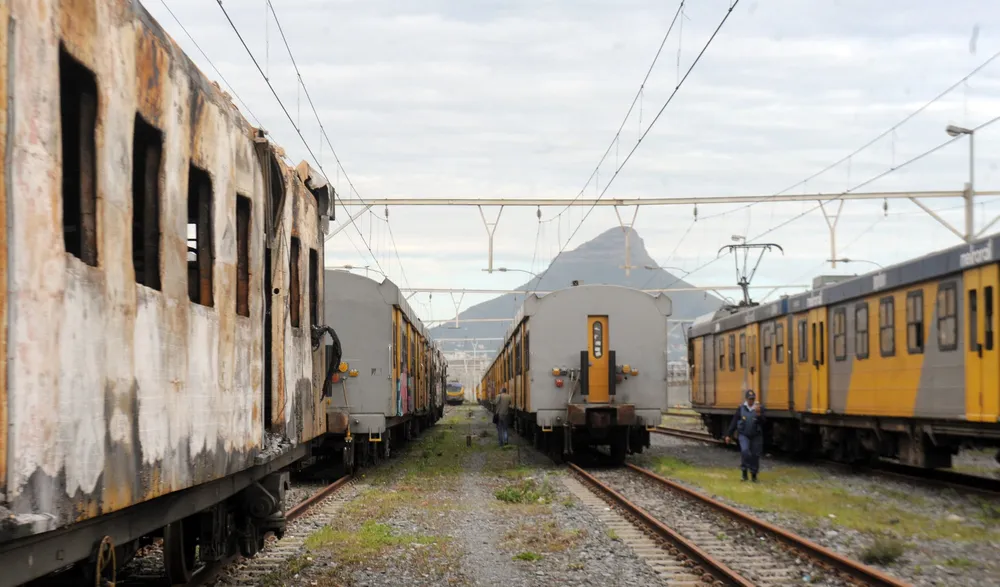
Acts of vandalism, arson, cable theft and destruction of the rail infrastructure have paralysed the Metrorail service on critical lines in Cape Town.
Lack of safety for train drivers and passengers has also continued to plague the service.
In February, the Passenger Rail Agency of South Africa (Prasa) reported to the Western Cape Provincial Parliament’s standing committee on transport and public works that pre-Covid Prasa operated 444 train trips on a weekday in Cape Town. But this year there were only 153 train trips across the city on a weekday, a 66% reduction in the service.
Parliament was also told in 2021 that before the collapse of the critical Central Line, more than 66% of residents in Cape Town relied on Metrorail.
An expert in transport economics at Stellenbosch University, Professor Stephan Krygsman, believed that some of the problems would occur independently of whether the City or Prasa controlled the service.
“The devolution can only take place if the network, rolling stock and signalling is in place and functions. The cost to repair the infrastructure will be very high and the Metro may not be willing to carry this initial cost.
“The Metro will also have to figure out how to limit vandalism and theft which is really a problem associated with poverty. This can be achieved with effective policing, adequate funding, using the right technology and important, buy-in from all so that the system belongs to the people. You are much less likely to vandalise something that is heavily used and in demand by fellow citizens than something that lays idle,” said Krygsman.
Director of the Centre for Transport Studies at the University of Cape Town (UCT) Professor Roger Behrens said the City’s move was not unique to South Africa.
“There’s a trend across the globe to unbundle large monopolies in the rail systems and the approach in other cities was to put out some operations of the rail service to concessions, where private companies would bid for rights to run the rail service on a performance quality basis or specified service levels.“
He said the City did not have the capacity to take over the operations of the rail system internally but that it could build the capacity over time.
“It's also a huge financial risk. There would need to be careful scrutiny,” cautioned Behrens.
He said new train sets would have to be either purchased or refurbished and the City would not be in a strong position to negotiate with suppliers.
“From an economics point of view it would make sense that Prasa continues to maintain and acquire rolling stock and lease it to private partners,” he added.
The former City manager and international expert on economic urban development Andrew Boraine agreed that there was a strong argument that, in principle, metropolitan commuter rail systems should be managed as close to the users as possible, to ensure greater accountability and responsiveness to users.
“In addition, the commuter rail system cannot be upgraded and operated in a vacuum but should be integrated with other public and private transport systems, as well as with non-motorised transport, pedestrianisation and the use of public spaces.
“Good public transport is thus critical to a city not just for efficiency and environmental reasons, but also to address inequality,” said Boraine.
Quintas said the financial costs associated with the devolution plan would form part of the study.
“A critical component is the financial viability of the City taking over passenger rail, and our ability to afford and maintain the system. Budget allocation and subsidisation will require detailed and ongoing engagement with the National Department of Transport and the Treasury,” he said.
Krygsman believed that the City might be interested in taking over the role of the operator for the passenger services and possibly the rolling stock.
“The Metro or a dedicated company can then be responsible to provide the local rail commuting service using the rail network.
“I assume that Prasa will be responsible for maintaining the track and possibly the stations with the City then becoming the main operator and be responsible for ensuring the scheduling of the trains and providing the services, collecting fare revenue, etc. They may pay a track access fee to access the network. Public transport is best co-ordinated at the local level because it is the local government that is most knowledgeable about transport planning and co-ordination of the transport function in the city,” said Krygsman.
Before Covid-19 Golden Arrow Bus Service’s (GABS) holding company, Frontier Transport Holdings, also explored the idea of becoming a rail operator and invested in a proposal in 2018.
GABS spokesperson Bronwen Dyke-Beyer said the plan was based on a public private partnership.
“The (unsolicited) proposal is for a pilot project rail corridor concession which would be based on a partnering and collaborative model comprising Frontier Transport Holdings, Prasa and the government. The primary aim would be to use private capital to stabilise, optimise and further develop a selected rail line in Cape Town,“ she said.
She said the proposal was submitted to the provincial government and Prasa in 2018 but due to administrative changes, there were delays.
Dyke-Beyer said Frontier Transport Holdings was now engaging with Quintas and also facilitating a meeting with Hill-Lewis to further discuss its proposal and how the company “would be the ideal partner” to assist in ensuring that rail was returned to an optimal state.
The experts called for collaboration among stakeholders to ensure that the rail network system was up and running in an efficient manner.
“It is unlikely that a single entity on its own will be able to solve the complex challenges facing the commuter rail system, and therefore stakeholders should start from a position of needing to work together.
“This includes the three spheres of government, commuter organisations, business, civil society, and transport experts, among others,” said Boraine
.