Cape Town struggles to deliver basic service as shacks mushroom


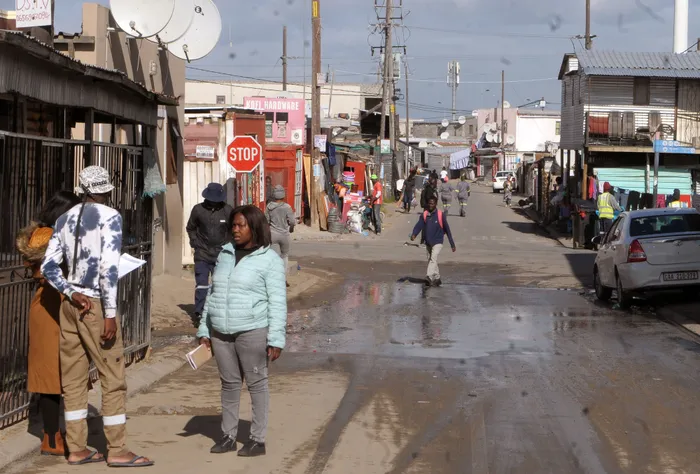
Increasing inadequate sewage systems are a problem as informal housing population increases. Picture: Tracey Adams/African News Agency (ANA)
THE Cape Town City Council is under pressure to solve mushrooming informal settlements as the Department of Human Settlement in the Western Cape is concerned about the planning and delivery of basic services.
The department revealed that latest figures show an increase of 186 new settlements, a 24.1% increase from last April.
“The province currently has 958 informal settlements with 527 of those falling within the City of Cape Town region and 431 outside the City,” said department spokesperson Marcellino Martin.
Martin said the informal settlements made it difficult for the department to keep up with bulk services such as sewerage, solid waste management and electrification.
Cape Town City Council’s mayoral committee member for human settlements Malusi Booi said various areas in the metro had been unlawfully occupied over the past two years, including in Dunoon, Khayelitsha, Mfuleni, Kraaifontein, Delft and Philippi.
Chairperson of the SA National Civic Organisation (Sanco) in Dunoon, Sinethemba Matomela, said an uncontrollable increase of these settlements in his area was due to employment opportunities nearby.
Matomela said in the formal houses there were issues such as the blockages of drains.
“Dunoon is surrounded by many industrial factories, so now it is overcrowded and people come looking for jobs. We have 21 informal settlements and nine of them are new informal settlements without water and ► no ◄ toilets,” he said.
The head of research and advocacy at the Ndifuna Ukwazi lobby group, Michael Clark, said: “The vast majority of people who occupy vacant land do so out of dire necessity, often exactly because they have been waiting patiently for housing or access to land that has never materialised.
“With the onset of a pandemic in which the home was our first line of defence, facing loss of income and unlawful evictions, the housing backlog may simply be too long for most people to wait,” he said.
Resident Nontuthuzelo Mapuza lives in one of the new Dunoon settlements.
She said she was forced to find another place because she was unable to pay rent.
“We cannot afford the rent and we stayed under the bridge. There are toilets here, but no electricity and we do not get the municipal dustbins.
“The municipalities arrived and gave us forms. We do not have taps for water as well,” she said.
Mayco member for water and sanitation Zahid Badroodien said: “For this financial year, the City’s water and sanitation directorate has planned sewer upsizing in Mnandi Street, Dunoon.
“This project is currently in the execution stage. For the 2022/23 financial year, the department is planning sewer upsizing for Usasaza Street, Dunoon.”
The City’s water and sanitation directorate said it would reach its target of replacing 26 000m of sewer pipeline by the end of June to accommodate urban growth.
The City halted new property developments for 144 areas in September because its sewerage system could not sustain it.
The City stated at the time that clearance for new developments to connect to the sewerage system had to wait for the completion of the upgrades to the Potsdam, Zandvliet and Macassar Waste Water Treatment Works.
Badroodien said the projects were under control.
In the Potsdam upgrade, he said the mechanical and electrical contract is out for tender, which closes on April 29, and the civil contract would be advertised for tender on April 14.
In the Zandvliet upgrade, the project was expected to be completed by 2024.
In the Macassar upgrade, Badroodien said: “A professional engineering services provider was appointed in November. The project is now in the advanced phase of Stage 1: inception (pre-design/programming), with investigations into the existing conditions and limitations, and the overall technical planning of the project is well under way.”