Clash between foreigners over farm jobs in Robertson


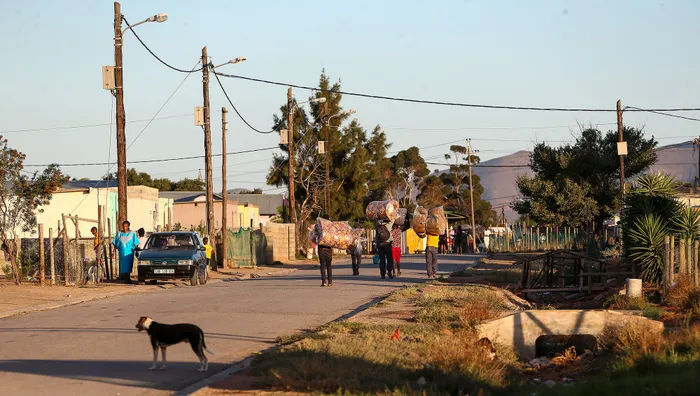
Violent clashes in Robertson erupted between Lesotho and Zimbabwean nationals over employment on local farms. Picture: Leon Lestrade, African News Agency
ON THE eve of Human Rights Day, activist and champion of human rights Chris Nissen slammed the violent Robertson clashes between desperate farmworkers pitted against each other for work as a setback for our democracy.
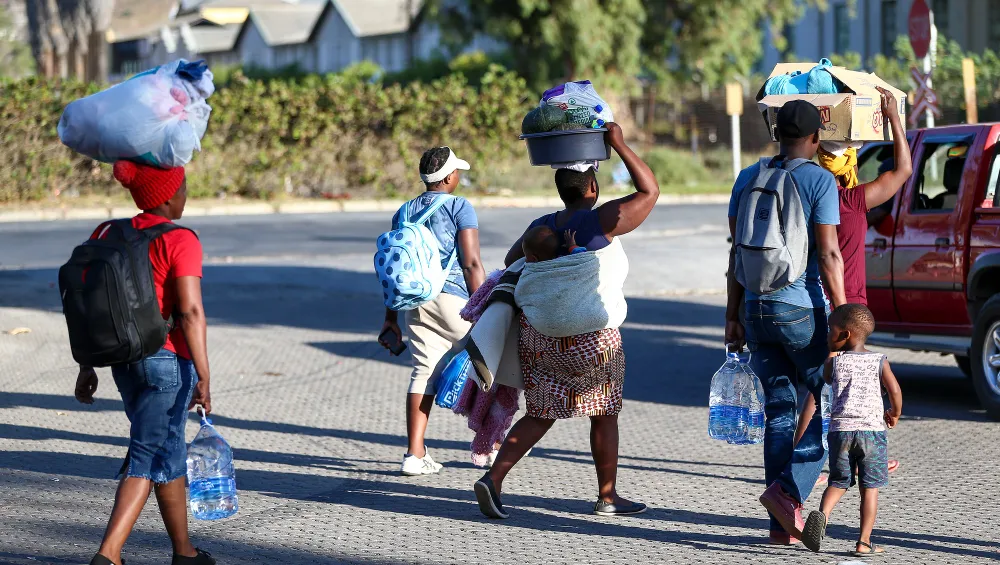
Tensions between the workers from Lesotho and Zimbabwe boiled over in Nkqubela, which left hundreds of Zimbabweans homeless and forced to take refuge at a local police station.
The violence erupted on Thursday due to alleged discriminatory employment practices on farms which saw Zimbabweans favoured for jobs over seasonal workers from Lesotho.
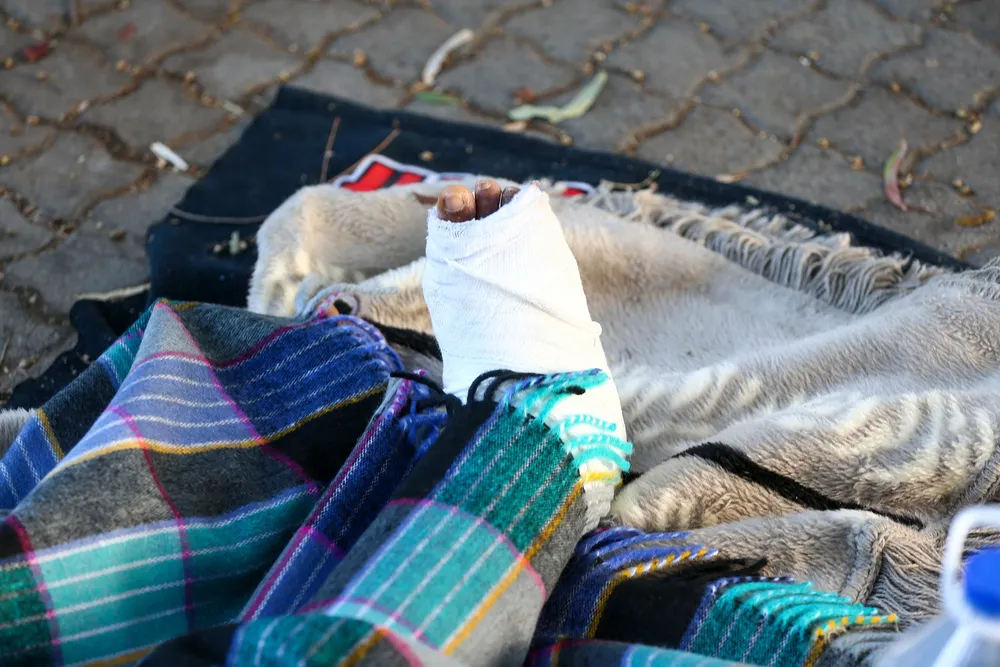
Confrontations in the area left one person hospitalised, and 17 people sustained minor injuries, two of which were children. Many homes were torched.
Nissen said what happened highlighted how the country had a lot of work to do to uphold the rights of all, despite their nationality.
Scenes of stranded foreigners clutching their meagre belongings, hoping to find safely, abounded in the town.
Langeberg mayor Schalk van Eeden said a Nkqubela community meeting was called earlier in the week where unemployed locals voiced their unhappiness over labour brokers employing foreign nationals and taking their jobs. At the meeting, farmworkers agreed to a protest.
But the protest led to workers blocking the entrance to Nkqubela with burning tyres and throwing rocks at vehicles to try to prevent contractors from loading workers onto vehicles.
Van Eeden said: “The protest then turned into a fight between Lesotho and Zimbabwean nationals.”
Owner and contractor of Farming Agriculture Woman Empowerment, Geraldine Jansen-Willemse, 34, said she received a call on Thursday from workers who told her they could not enter their place of work.
“The Lesotho people came and blocked the road. They didn’t allow the Zimbabweans, who were being transported by truck, to go to the farms. They started attacking the trucks, throwing stones, then they moved towards the town.”
Jansen-Willemse who is responsible for providing farms with contract workers, said she was shocked by what happened.
“People were beaten so badly that they have broken bones.
“Some farmers prefer the Zimbabweans because they are not lazy and they do their work. Everyone also gets paid the same.”
However, farmworker activist Alvina Abrahams said farmers should be honest.
“If you look at the farming system, the farmers are evicting our people for cheap labour and giving the jobs to foreigners. Our people, who worked the farm all the years, don’t get the jobs at all. Now the foreigners are turning on the foreigners.
“The government needs to step in here to look at what is happening on our farms and something very drastic needs to be done because it’s infringing on our human rights.”
Nissen, who visited the town on Friday, said even though talks were ongoing to try to resolve the issue, the infringement on human rights was a huge concern.
“When we met with them (we) learnt about unfair labour practices, mainly tied to job opportunities,” he said.
“There are people who feel they have to compete for a job due to nationality. We are trying to resolve these issues, but for that to happen we need to come together.
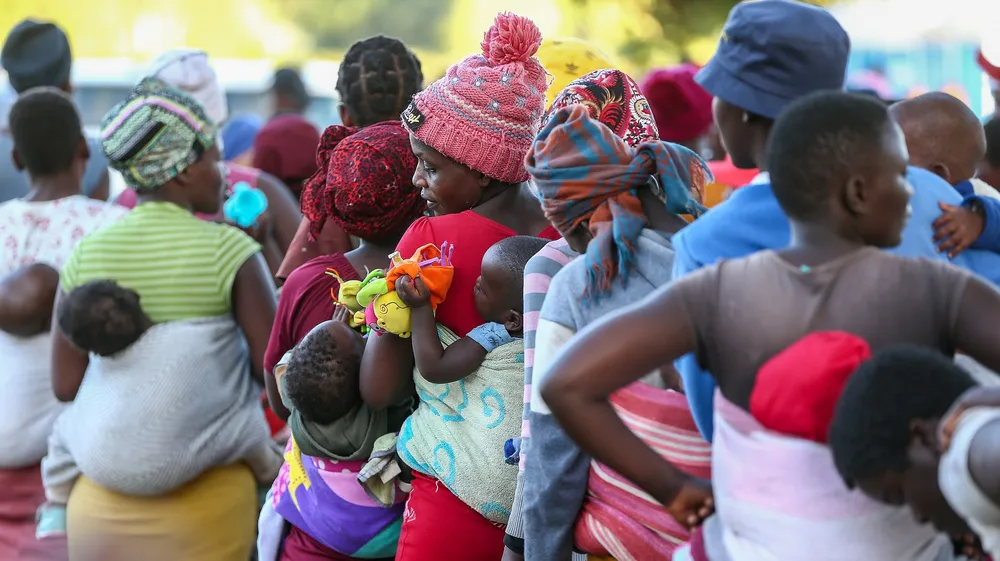
“Now on the issue of human rights, looking at how those babies had to sleep on the street without blankets, and not because they decided to, but because they were forced to, is an infringement of their human rights.
“They are also protected under the Constitution.
“But there was violence, and this just shows that we as a whole still have to do much more to uphold human rights and the much-celebrated Constitution.”
By yesterday afternoon the area was calmer, but Nissen said the displaced people were still too afraid to return to their residence.
“The fear is that the attacks will flare up during the night.”
The clashes have sparked a debate on the employment of foreign workers.
UDM leader Bantu Holomisa said the fact that two groups were fighting on South African soil was a clear indication that the government, especially Home Affairs, did not have figures on who was in the country legally or illegally.
“Immigration is out of control. It is a result of the government’s failure, especially Home Affairs, to deal with the high number of people entering the country illegally.
“We do not know how many of them are legally or illegally in our country. They’ve got easy access to IDs and may well be able to vote during our national and local government elections,” Holomisa said.
Holomisa urged President Cyril Ramaphosa to convene a meeting of South African Development Community leaders to deal with the scourge of illegal immigration.
Similar sentiments were expressed by the IFP and Cope. IFP national spokesperson Mkhuleko Hlengwa described illegal immigration as a “perennial headache”.
Hlengwa called on the government to urgently intervene to stop the clashes in the Western Cape, and to counter the spread of Operation Dudula – a controversial group campaigning against undocumented foreign nationals – to KwaZulu-Natal.
The parties also expressed concern about Operation Dudula in Gauteng where various businesses in the Johannesburg CBD, Hillbrow and other suburbs such as Orange Grove were raided. Demands were made for South Africans to be employed at major retail shops. They also demanded the closure of foreign-owned shops, accusing their owners of selling drugs and of human trafficking.