Don’t judge by racial identity
|Published


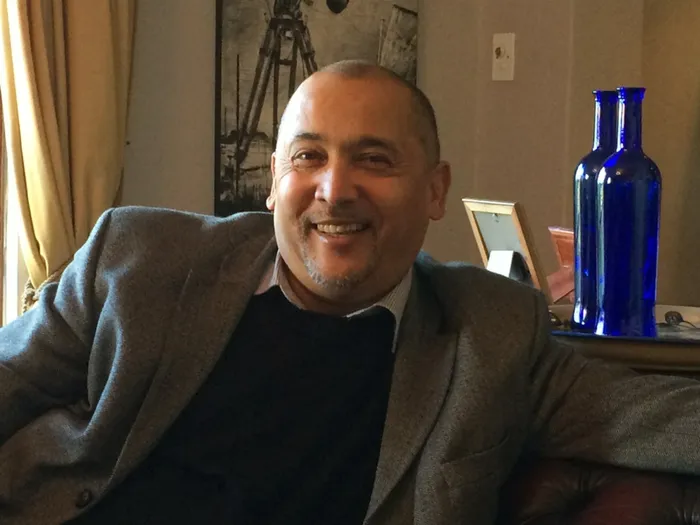
Ryland Fisher Picture: African News Agency (ANA) Archives Ryland Fisher Picture: African News Agency (ANA) Archives
I was thinking of white privilege a lot this week, especially after seeing Jervis Pennington’s intriguing one-person play, An Extraordinarily Ordinary Life, at the Alexander Bar and Theatre, my favourite small theatre venue in Cape Town.
For those who can remember back to the early 1980s, Pennington was the frontman for a boy band called The Soft Shoes, who won a competition called Follow That Star, an earlier version of Idols.
They sold quite a few records but disappeared completely after a few years of popularity. Pennington subsequently did some other things in the entertainment industry but later found himself destitute and living on the streets of Cape Town.
The play should have had a bigger audience and here’s hoping that a bigger venue will give him an opportunity to tell his amusing stories and sing his specially-written songs about love and societal problems.
As someone who grew up poor on the Cape Flats, I could relate to many of the things he shared about growing up as a poor white in Johannesburg, especially having the same stuff on your school sandwiches day after day - when you were lucky to have sandwiches.
He grew up during the years of apartheid, but clearly, he did not take much advantage of his “white privilege” in those days. Please don’t get me wrong: white privilege is a reality and many whites, including those who were poor, benefited and took advantage of it.
But there were probably a few whose lives were so terrible that they did not even realise that they were entitled to this privilege. And then there were those who shunned their privilege.
In the apartheid days, we assumed that blacks were the good guys, because of apartheid oppression and exploitation. We assumed that whites were the bad guys, for the same reasons. But there were more than a handful of whites who were prepared to make the ultimate sacrifice, despite coming from privileged backgrounds.
Many years ago, when I was head of the journalism department at Peninsula Technikon, a leader of the SRC came to see me about enrolling a young woman into our programme. I explained to him that there was a very lengthy application process, including an interview after shortlisting, which she clearly did not do.
He eventually told me I should accept the young woman as a student - I have no idea what their relationship was - because he did not want to have to accuse me of being racist. Both him and the young woman were African. I asked him to leave my office. Later, my staff said that I was either brave or foolish to act so harshly against an SRC leader.
What I saw, however, was not a leader, but someone who was using his race to get others to bend rules for people like the young woman who did not even bother to apply to study in the department, but who would then insist on being accepted.
I was not going to allow myself to be bullied by a racist. We need to guard against treating everyone in the same way, based on their race. And this applies to blacks as well as whites.
* Fisher is an independent media professional. Follow him on Twitter: @rylandfisher
** The views expressed here are not necessarily those of Independent Media.