Festival Enterprise Catalyst: a new strategy for job creation in the creative sector
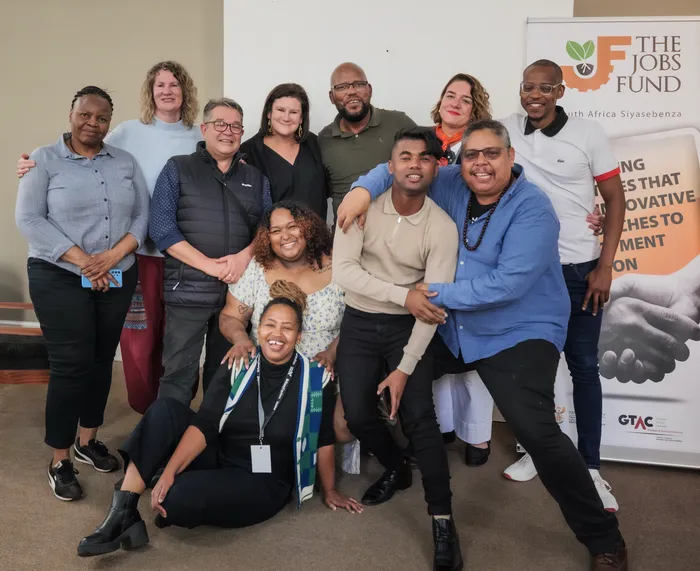
Members of the Festival Enterprise Catalyst and representatives of The Jobs Fund were at the 2025 Toyota Woordfees.
Image: Gys Joubert
Arts leaders gathered at Stellenbosch Woordfees in Stellenbosch have issued an urgent call to protect South Africa's creative sector amid growing funding uncertainty and a lack of clear policy direction.
National Arts Festival Chairperson, Professor Siphiwo Mahala, Nasionale Afrikaanse Teater-Inisiatief (NATi) CEO, Cornelia Faasen, Head of Concerts SA, André le Roux and National Arts Festival CEO, Monica Newton, were united in their call for deeper collaboration between government, the private sector and the arts community to maintain a healthy creative eco system.
“We're experienced both in policy and bureaucracy, many of us having worked in government, and in our areas of creative development,” said Le Roux.
“We're asking the government to sit down with us and work out a strategy that truly serves the creative sector, building it into the jobs and growth engine it has the potential to be. The world is rapidly absorbing content from Africa. The time is now.”
Echoing this sentiment, Faasen remarked on the instrumental role of the arts in bolstering South Africa's delicate democracy. She highlighted how festivals, the lifeblood of the arts, provide a platform for genuine human connection and dialogue. “In an age marked by the polarisation prevalent on social media, festivals serve as essential infrastructure, fostering environments for engagement,” she stated.
Newton further expanded on the importance of festivals in the creative landscape, framing them as the research and development engine for the sector. “Festivals fund innovation. They’re where products are tested and refined,” she explained, noting that these events not only create job opportunities and skill development but also enable cultural celebration and audience growth.
A noteworthy initiative discussed was the Festival Enterprise Catalyst (FEC), launched in 2024 in partnership with several leading festivals and the Jobs Fund of National Treasury. The FEC aims to showcase the tremendous potential of the sector to foster job creation and mobility, having already generated over 300 jobs and industry training in areas like technical production and performance.
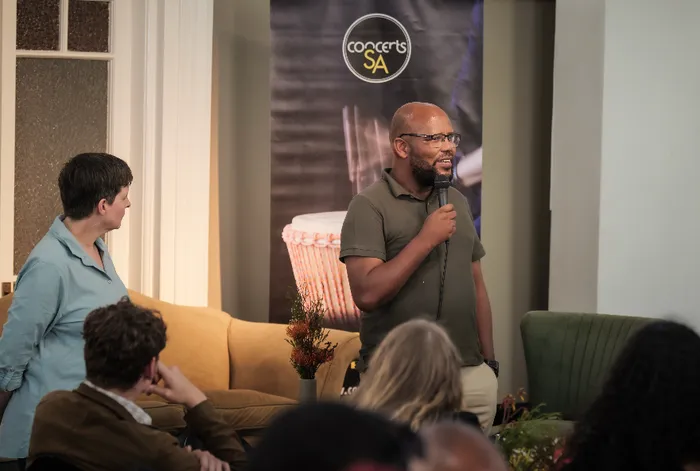
The Jobs Fund's senior technical advisor and team Leader, Lionel Kunene, speaks at the Toyota Woordfees discussion about the Festival Enterprise Catalyst.
Image: Gys Joubert
However, amidst these positive strides, Professor Mahala raised alarms over recent shifts in funding strategies from the Department of Sport, Arts and Culture. The cessation of support for flagship festivals has occurred without prior consultation or a clear policy framework, escalating concerns for the sustainability of the creative sector.
“We need engagement,” Mahala stressed, highlighting that artists and festivals are integral to South Africa’s cultural identity and tourism appeal. He firmly stated, “The arts are not a luxury – they are vital to nation-building, social cohesion, and economic development.”
The overarching consensus of the panel was clear: the arts are far from being a “nice to have.” They are foundational to the social and democratic fabric of South Africa, deserving recognition and investment from government and business alike. Newton encapsulated this sentiment poignantly: “The arts are the vanguard of society. Without them, South Africa would be a far less connected, expressive and hopeful place.”