Exploring the experiences of Afrikaners in the U.S. through 'The Chance'


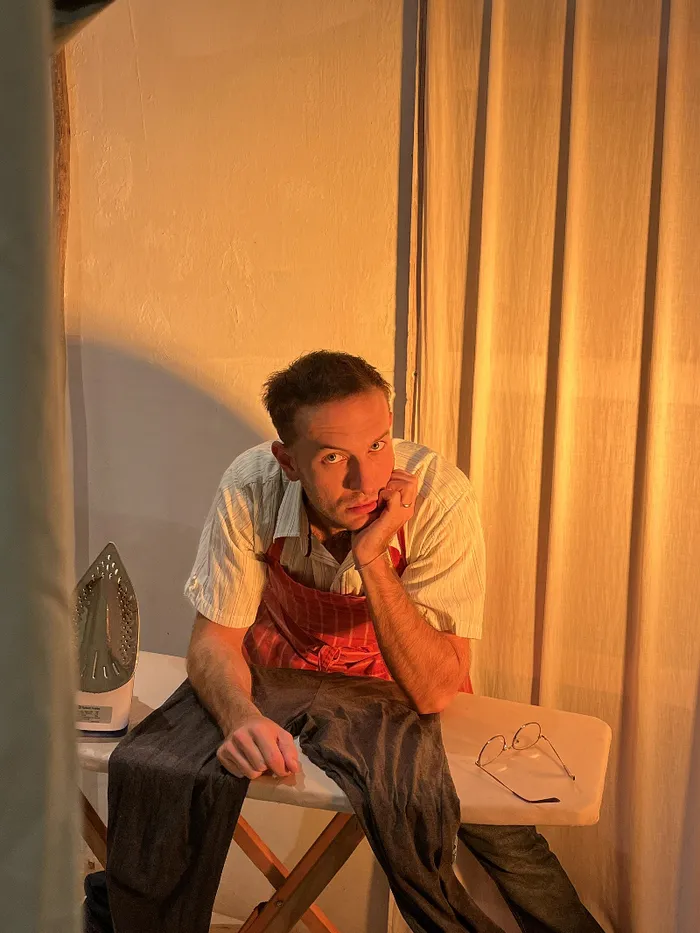
Actor Henu Baden portrays a young Afrikaner who moved to the United States after that country’s president allowed white South Africans entry on a refugee ticket.
Image: Supplied
Afrikaners who moved to the United States (U.S.) as so-called refugees have made news headlines and their experience is now being explored in a new stageplay, The Chance.
The play’s writer and director Aldo Brincat debuted the work at Toneelhuis in central Cape Town on 12 May this week. This date marked a year since the first Afrikaners landed in the U.S. after that country’s president Donald Trump reportedly “established a specialised refugee programme prioritising white South African Afrikaners”.
This was based on “claims that Afrikaners face systemic, race-based persecution and land seizure". Thousands of Afrikaners have been admitted to the U.S. under this programme.
Brincat’s play focuses on a fictitious young couple, Martinus and Leticia, who “were among the first batch of ‘refugees’ to arrive in Washington” and now “struggle to make a life in the U.S.”
“We meet this couple some time in the future — 700 days since they landed, to be exact — and things are not quite going according to plan,” reads the play’s synopsis.
Actor Henu Baden performs the roles of Martinus and Leticia, relating the couple’s various challenges while trying to settle in a new land. This impacts their marriage.
Brincat said he did not know any Afrikaners who moved to the U.S. and based the play on “what I saw online and articles I read”.
“I was interested in the process of upheaval and attempts of assimilation,” he said.
Leticia finds a job as a nurse at a hospital, starts picking up an American accent to assimilate, but feels miserable. She wants to go home to her family.
Marthinus, who was hoping to find work as a farmer, is struggling too.
“He is left in this limbo: unemployed, looking after the wife and there is snow outside,” said Brincat.
Aiming to show the couple had moved to another country, Brincat wrote the play predominantly in English while the characters speak some Afrikaans.
As Leticia speaks of wanting to return home, Marthinus reminds her: “We knew it would be different.” He encourages her to persevere to 900 days when to “feel home”.
The one-hour play does not debate the merits of the refugee status that Afrikaners have claimed or their narrative that they are facing a “genocide” in South Africa. It is an exploration of self-imposed exile and its implications for a young couple.
Baden, who is an Afrikaner, said the play “forced me to look” at the refugee claim and the move that others had made to the U.S.
“The majority of Afrikaners think the people who go to the U.S. are all idiots. We saw the photos of them arriving and we assume we knew what was happening,” said Baden.
“Many farmers believe that it’s not the right thing to do. People who left are called traitors, as in the play as well.”
Baden did not accept only the assumptions, but also researched the situation.
“I went to look at how the applications work. I went to look at what they have to do. Some of them are opportunists and others believe they are going to a better life. I had to look at this from all the different angles,” he said.
“I am white and Afrikaans and when I saw this script I thought it was juicy. But I was tentative. I wondered whether it would be too political or too on the nose. But it’s really a story about a relationship.”
He reflected on how Leticia “didn’t want to go to America and now she has to earn the money”.
“She has to deal with the Americans every day while Marthinus sits at home. The traditional roles are reversed. She thought that’s not what he promised and she resents him,” said Baden.
“I performed this play for my father when we were still in the rehearsal stage. I performed it in my granny’s garage at 6:30am. He said the couple had problems before they left. They could have moved wherever and the problems aren’t just going to go away.”
While the stories of thousands of Afrikaners who moved to the U.S. a year ago would all have their own nuances, the questions about their survival in a new country would likely be quite similar. Brincat wanted to explore this aloud.
The Chance will return to Cape Town. It will be performed at Drama Factory in Strand from 6 to 10 August. It will then play at Toneelhuis, at 61 Loop Street in the city centre, from 11 to 16 August.