Counting the costs: Assessing the cost of damage in the Western Cape


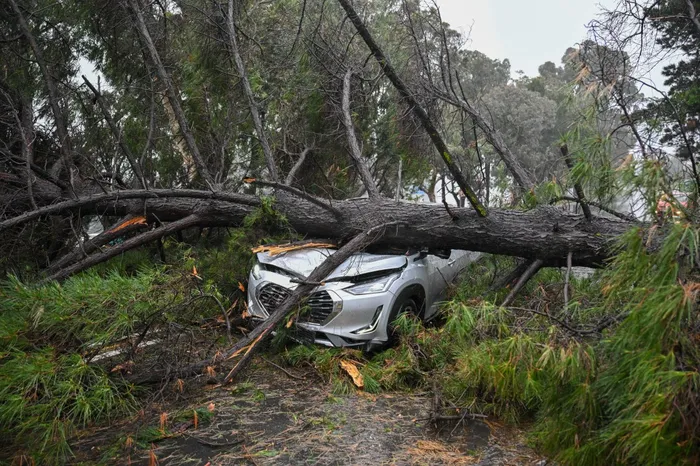
A tree lies on top of a damaged vehicle in Uys Krige Drive near Panorama after strong winds and heavy storm conditions swept across Cape Town.
Image: Henk Kruger/Independent Newspapers
Torrential rain, flooding, uprooted trees and gale-force winds that battered parts of the Western Cape in recent days have triggered a sharp rise in insurance claims, as residents and businesses begin counting the cost of the destruction.
The storms, which triggered Level 8 weather warnings from the South African Weather Service, left a trail of destruction across parts of Cape Town and surrounding areas, with homes flooded, roofs blown off buildings, vehicles damaged by uprooted trees and infrastructure severely affected.
The full extent of the devastation is also beginning to emerge, with the City of Cape Town indicating that a detailed damage assessment for claims and grant application purposes will form part of ongoing storm recovery operations.
According to preliminary information released by the City, damage has already been confirmed at at least 50 City facilities. Based on rough repair estimates of around R500 000 per facility, the City’s early estimate of damages already stands at approximately R25 million.
Insurance companies say they are now dealing with a growing number of weather-related claims, particularly linked to structural and property damage.
According to Precious Nduli, Discovery Insure Chief Commercial Officer, the insurance comapny has seen an increase in weather-related claims following the recent storms.
“We have seen an increase in weather-related claims following the recent storms in the Western Cape,” Nduli said.
“We are still receiving claims, but given the current volume and intensity of rainfall, flood-related property damage will likely account for the majority of claims, more so than vehicle-related damage.”
Nduli explained that damage caused by storms, flooding, strong winds and fallen trees is generally covered under standard home, vehicle and business insurance policies, depending on the terms and level of cover.
“Damage caused by storms, strong winds, flooding, and fallen trees is covered under standard home, vehicle, and business insurance policies, depending on the terms and level of cover,” she said.
“For certain policies, Discovery Insure will also waive the excess for weather-related claims.”
She added that many policyholders are often unaware that standard short-term insurance policies already provide protection against severe weather events.
“In most cases, standard short-term insurance policies already provide cover for weather-related events, including storms and flooding,” Nduli said.
She said while most storm-related claims are generally straightforward, issues can arise where long-term neglect or poor maintenance contributed to the damage.
“With severe weather events like this, we don’t generally expect a high number of disputes around cover,” Nduli said.
“Most exclusions on building and contents claims are usually linked to wear and tear or poor maintenance over time, rather than sudden storm-related damage.”
Natasha Kawulesar from OUTsurance said the company had also experienced a spike in claims linked mainly to structural damage.
“The recent storms in the Western Cape have caused much damage and left many people in difficult situations,” Kawulesar said.
“From an insurance claims perspective, there has been an increase in claims, with most claims relating to building and property damage.”
Kawulesar said damages resulting from storms, flooding and strong winds are covered under comprehensive vehicle, building, contents and standard business insurance policies.
“Our priority is ensuring our clients are taken care of,” she said.
She added that OUTsurance had relocated assessment staff from other provinces to the Western and Eastern Cape to help process claims faster.
“We encourage clients to prioritise their safety and to take reasonable measures to limit further damages,” Kawulesar said.
“If emergency assistance is needed, we should be informed as soon as possible.”
Meanwhile, Sherry Sibeko from Miway Insurance warned that severe weather can quickly turn small maintenance problems into costly financial setbacks.
“Winter preparation protects both your home and your budget,” Sibeko said.
“Insurance is essential, but so is routine maintenance to reduce preventable risks before they become costly problems.”
Sibeko urged homeowners to inspect roofs for cracked tiles, rust, leaks and sagging areas before more cold fronts hit the province.
As temperatures continue dropping, Sibeko also urged residents to safely inspect heaters, fireplaces and gas installations before regular use during winter.
She encouraged policyholders to review their insurance cover to ensure their insured values accurately reflect current rebuilding and replacement costs.
“Underinsurance can also leave homeowners paying a large share of repair costs,” Sibeko said.
“It is important to understand excesses, exclusions and maintenance obligations, as insurers may reject claims linked to long-term neglect rather than a sudden insured event.”
Insurance companies further advised residents to document all damages with photographs, keep repair invoices and notify insurers promptly after severe weather incidents.
“Prepare before the next cold front hits,” Sibeko said.
“A well-maintained home, the right cover and a clear response plan, can turn a major financial blow into a manageable setback.”