Fueling crime and financial strain: How rising petrol prices impact South Africa


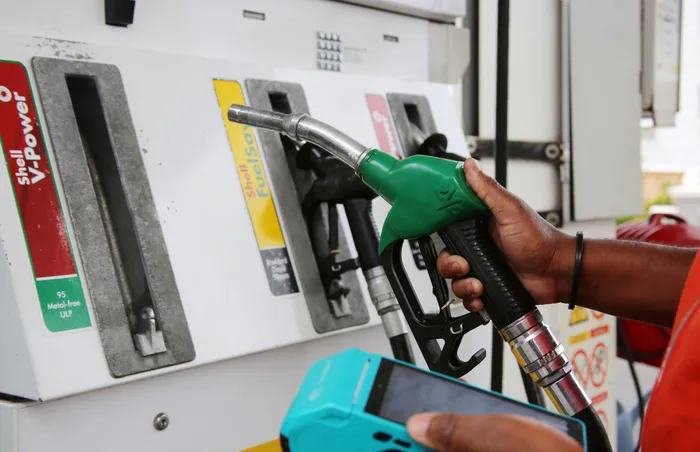
Petrol prices have increased
Image: Tumi Pakkies / Independent Newspapers
As South Africans grapple with another steep fuel price increase, concerns are mounting that the growing financial pressure on motorists could lead to opportunistic crimes, including petrol theft, fraud and other economically driven offences.
The latest fuel adjustment saw petrol prices increase by R3.27 per litre, while diesel surged by R5.27 per litre, placing additional strain on households already battling the rising cost of living.
The impact is now being felt far beyond the pumps.
Private forensic expert Calvin Rafadi has warned that increasing petrol and diesel prices are likely to contribute to a rise in “drive-off” fuel theft incidents, where motorists fill up and flee without paying.
According to Rafadi, these incidents are not new, but worsening economic pressure may intensify the trend.
“We are likely to see more opportunistic crimes linked to fuel costs. Drive-offs tend to increase when motorists are under severe financial strain,” he explained.
His warning comes amid growing public attention around a viral incident involving a motorist in a black Ford Fiesta allegedly filling up at a Cape Town petrol station before speeding off without paying.
Rafadi said petrol stations need to urgently strengthen preventative measures, including installing high-quality surveillance cameras and introducing physical deterrents such as speed humps to slow fleeing vehicles.
He also raised concern about the impact these incidents have on petrol attendants.
“In many cases, attendants are held financially liable for fuel theft, with deductions made directly from their salaries. That places enormous pressure on workers who are already struggling financially,” he said.
According to Rafadi, many fuel theft incidents are carried out by organised and opportunistic criminals who use stolen vehicles or false registration plates, particularly during night shifts when supervision is reduced.
He further warned that diesel theft remains a major concern at truck stops, mining depots and state-owned entities where large quantities of fuel are stored.
“Sites linked to entities such as Eskom and Transnet pipelines remain vulnerable to criminal syndicates targeting diesel,” he said.
While traditional siphoning of fuel from vehicles has become more difficult due to modern anti-theft systems, Rafadi said criminals continue adapting their methods.
He also cautioned the public against falling victim to illegal loan sharks during financially difficult times.
“These operators often unlawfully retain ID books and personal documents, which can later be used for fraud and identity-related crimes,” he warned.
The broader impact of rising fuel prices is also raising concerns among labour organisations, economists and civil society groups.
The Motor Industry Staff Association (MISA) said there was “no doubt” South Africans were under immense financial pressure, warning that the latest fuel increase is deepening the country’s cost-of-living crisis.
“There is no doubt that South Africans are feeling a lot of pressure financially. The fuel price hike is definitely going to have an impact on behaviour. It is deepening the cost-of-living crisis and making it harder for workers to make ends meet,” the organisation said.
MISA explained that the fuel increase could not be viewed in isolation, as households were simultaneously being hit by several other economic pressures.
“The increase in fuel must not be removed from the impact of the Eskom tariff increase of 9% which was imposed in April. It also cannot be separated from the impact of higher food costs, as reported by the Pietermaritzburg Economic Justice and Dignity Group.”
The organisation added that soaring paraffin prices and taxi fare hikes announced earlier this week were further worsening the situation for struggling households.
“At the same time, high paraffin costs and higher taxi fares which were announced by taxi associations at the beginning of the week are also deepening the crisis. Ordinary South Africans are having a very difficult time right now,” MISA said.
The association warned that the financial strain could also affect workplaces, with some employees potentially unable to afford transport to work.
“There is likely to be an increase in absenteeism in general in the workplace, caused by the fact that people cannot afford to pay for petrol, transport and food,” the organisation said.
While MISA acknowledged that fuel theft incidents happen regardless of fuel prices, it said economic hardship may contribute to an increase in opportunistic crimes such as “drive-offs”.
“It is possible. It happens whether the fuel price is high or not,” the association said.
The organisation also stressed that petrol attendants cannot automatically be held liable for stolen fuel without proper labour procedures being followed.
“If a motorist fills up and drives off, this is an act of theft. An employee must take reasonable steps to prevent fuel theft. There is a process in place regarding that and it is possible that an employee may be held liable if it is found that they were negligent.”
However, MISA emphasised that deductions from workers’ salaries cannot happen without due process.
“Money cannot be deducted unilaterally without going through a formal process or hearing to establish whether the employee is indeed liable,” the organisation explained.
MISA urged motorists to adopt fuel-saving measures such as carpooling and using public transport where possible, although it admitted that such coping mechanisms “only go so far”.
The organisation also called on government to intervene more decisively.
“Government must urgently extend relief to paraffin users or risk deepening inequality and hardship. They must ensure transparency in fuel pricing and stabilise the economy,” MISA said.
The association further urged employers to protect workers from the economic fallout.
“Employers, in turn, must protect jobs and support workers through retrenchment moratoriums. Protecting households and workers must be the cornerstone of South Africa’s response to global instability.”
Environmental justice organisation The Green Connection said the fuel crisis should also be viewed as an opportunity for South Africa to rethink its dependence on fossil fuels.
Spokesperson Maria Welcome said rising petrol prices highlighted the need for a fair and accountable transition towards cleaner and more affordable energy alternatives.
“In every crisis there is opportunity, but only if the transition away from fossil fuels is planned fairly and the costs are not pushed onto workers and poorer communities,” she said.
The organisation called for greater investment in safe public transport, electric vehicle incentives for taxi and bus operators, and targeted support for vulnerable groups such as coastal fishing communities heavily dependent on fuel.
Welcome said South Africa’s strong solar resources could also play a major role in improving long-term energy security and reducing dependence on volatile global fuel markets.
Financial experts have also warned that the latest fuel hike could have long-term economic consequences.
According to Thys van Zyl, chief executive officer of Everest Advisory Services, the latest fuel announcement created additional uncertainty after the Department of Petroleum and Mineral Resources was forced to correct an error in its diesel price calculations for May 2026.
“The Department had to revise its initial announcement of a R6.19 per litre diesel increase to R5.27 after a calculation error was identified,” Van Zyl explained.
He said the error occurred because only 0.93 cents was applied instead of 93 cents in fuel levy relief, leading to an overestimation of the increase.
“Although the error was corrected relatively quickly, such conflicting announcements add to uncertainty. In an environment where fuel prices are already heavily influenced by global factors, this makes planning more difficult for both households and businesses and undermines confidence in short-term forecasts.”
Van Zyl said the incident highlighted just how sensitive South Africa’s fuel pricing mechanism had become.
“It shows that prices are not only dependent on international market movements, but also on administrative accuracy. Even small errors can have a meaningful impact on perception and planning.”
According to Van Zyl, the sharp rise in international oil prices remains the biggest driver behind the increases.
“Geopolitical tensions, particularly in the Middle East, have disrupted supply and pushed prices higher. These factors are largely beyond South Africa’s control and carry the greatest weight in the current price increase.”
He warned that while temporary fuel levy relief had softened the blow for consumers, the support was expected to be phased out from July.
“These measures have made a meaningful difference. Without this intervention, petrol could have increased by R5 to R6 per litre, and diesel by as much as R10 to R14 per litre.”
Van Zyl added that higher fuel prices would inevitably increase the cost of living because more than 70% of goods in South Africa are transported by road.
“Higher transport costs feed directly into the price of goods and services, particularly food. This places additional pressure on inflation and household budgets.”
In conclusion Van Zyl warned that if temporary fuel levy relief is withdrawn in July while global oil prices remain high, further fuel price increases cannot be ruled out.