Suspension of National Police Commissioner: Ramaphosa's commitment to fighting crime


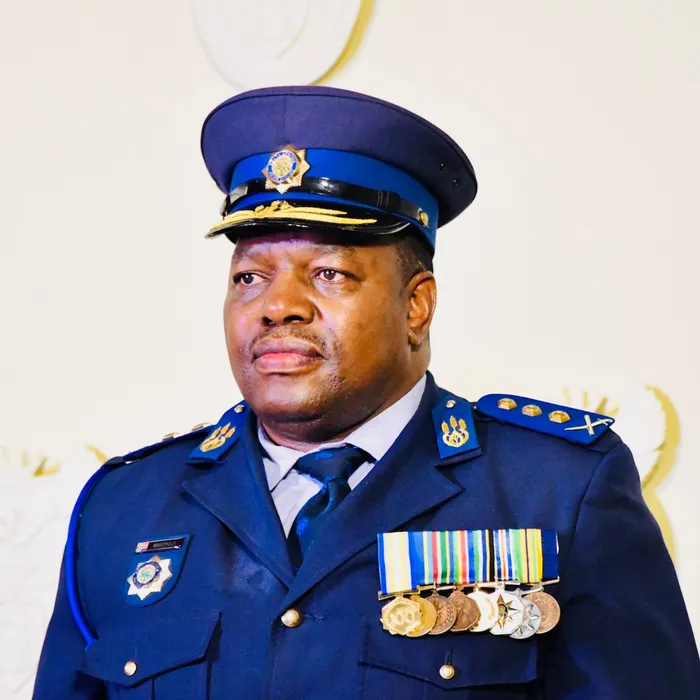
National Police Commissioner Fannie Masemola has been suspended
Image: Picture: Siyabulela Duda/GCIS
President Cyril Ramaphosa has moved to reassure South Africans that the fight against crime and corruption remains on track, following the precautionary suspension of National Police Commissioner General Fannie Masemola, a decision that has drawn broad political support despite concerns about leadership instability within the South African Police Service (SAPS).
Masemola’s suspension comes after his appearance in court on charges linked to an alleged R360 million SAPS contract. While he has maintained his innocence, Ramaphosa emphasised that the seriousness of the charges necessitated decisive action.
“In the State of the Nation Address in February, I said that our primary focus this year is on stepping up the fight against organised crime, corruption and violence,” Ramaphosa said, framing the move as part of a broader effort to restore integrity within law enforcement.
He stressed that the decision was guided by the principle that law enforcement agencies must act “without fear, favour or prejudice,” adding that accountability and transparency remain central to rebuilding public trust.
To ensure continuity, Ramaphosa appointed Puleng Dimpane as Acting National Commissioner, expressing confidence in her experience and leadership.
Dimpane brings close to two decades of experience within SAPS and the broader public sector. She has served in senior management roles, most recently as Divisional Commissioner for Financial Management Services, where she oversaw budgeting, expenditure controls and governance systems within the police service.
Her career has spanned policing, strategic management and financial oversight, and she has been described by the Presidency as having a reputation for professionalism and integrity.
Her appointment also marks a significant moment as one of the few women to occupy the top leadership role in SAPS, even in an acting capacity.
However, her appointment has not been without scrutiny.
Wouter Wessels, spokesperson on police for the Freedom Front Plus, said the party supports the President’s decision, arguing that evidence presented before the Madlanga Commission and Parliament’s ad hoc committee left Ramaphosa with little choice.
Wessels said the development reflects a deeper, long-standing crisis within SAPS, noting that no national police commissioner has completed a full term since George Fivaz. He argued that this instability has contributed to declining public trust and persistently high crime levels.
He also raised concerns about Dimpane’s appointment, pointing to her tenure as SAPS chief financial officer during a period marked by serious financial irregularities. While not accusing her of wrongdoing, Wessels said the circumstances do little to inspire confidence.
According to the Freedom Front Plus, the challenges within SAPS extend beyond individuals and instead point to systemic failures in senior leadership appointments. Wessels stressed that meaningful reform will require broader institutional changes rather than isolated interventions.
“The responsibility ultimately lies with the President to appoint capable and credible leadership,” he said, adding that restoring public confidence will depend on officials whose conduct is beyond reproach and focused on public safety.
Despite these concerns, several political formations have welcomed Ramaphosa’s move. The National Coloured Congress (NCC) applauded what it described as decisive action, claiming it had long called for Masemola’s suspension.
The party said the move signals that a long-overdue clean-up within SAPS is underway, urging the public to support efforts to expose corruption across state institutions.
Parliament has also backed the decision. Ian Cameron described the suspension as a necessary step to restore stability and credibility within SAPS, particularly at a time when public confidence is under strain.
Cameron emphasised that the suspension does not imply guilt but said accountability at senior levels cannot be compromised. He argued that South Africans must have confidence that those tasked with enforcing the law are held to the highest standards.
He added that the decision should set a precedent across the policing system, ensuring misconduct and maladministration are met with consistent consequences. Transparency in investigations, leadership accountability and restoring community trust were highlighted as key priorities.
The Portfolio Committee has called on Acting Commissioner Dimpane to entrench accountability across the organisation, including instituting internal disciplinary processes against officials implicated in matters linked to the Madlanga Commission and parliamentary investigations.
Cameron warned that a reactive approach to governance undermines democratic principles, stressing that accountability must be embedded in everyday operations rather than emerging only during crises.
Further scrutiny is expected on procurement practices within SAPS, which have repeatedly been flagged as a source of corruption and instability. Ramaphosa himself acknowledged this, noting that procurement weaknesses were identified in both the Zondo Commission and the Madlanga Commission.
He said urgent steps are being taken to insulate procurement processes from manipulation, with reforms forming part of broader efforts to restructure public procurement systems.
The President also highlighted progress in combating crime, pointing to reductions in contact crime over the past two financial years and ongoing initiatives targeting gender-based violence, organised crime and gang activity. Collaboration between SAPS and the South African National Defence Force has further strengthened these efforts.
At the same time, a SAPS task team investigating matters arising from the Madlanga Commission has made significant progress, leading to several arrests.
Ramaphosa acknowledged that the situation remains concerning but urged South Africans not to lose confidence in law enforcement.
“It is understandably a cause of great concern for all South Africans that the National Commissioner of Police is in court facing criminal charges,” he said. “However, we should not allow this development to weaken our determination or diminish our ability to fight against crime and corruption.”