First liquid nitrogen limb salvage surgery in South Africa: a game-changer for Ewing’s sarcoma


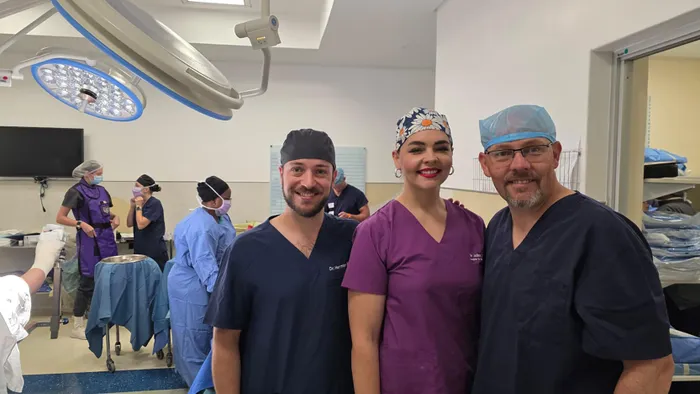
Medical first: Dr Herman Breet, Dr Jadine Du Plessis, and Dr Jaco Viljoen (left to right) performed South Africa's first liquid nitrogen limb salvage surgery at Netcare Unitas Hospital this week.
Image: Supplied
For most teenage boys, the diagnosis of an aggressive bone cancer like Ewing’s sarcoma signals the end of a carefree childhood. For one Pretoria schoolboy, it initially meant the devastating prospect of losing his leg or, at best, living with a metal prosthesis that would ban him from contact sports forever.
However, this week at Netcare Unitas Hospital, a surgical team led by orthopaedic oncologist Dr Jaco Viljoen rewrote the medical script. In a marathon four-and-a-half-hour procedure, the team successfully performed a hip and limb salvage using a sophisticated liquid nitrogen dipping technique—the first of its kind in the country.
The procedure involved the precise removal of a 24-centimetre section of the teenager’s femur (thigh bone) where the malignancy was located. While the bone was outside the body, it was immersed in liquid nitrogen at a staggering -179°C.
This extreme temperature serves a dual purpose. It destroys the cancerous cells with absolute precision. Unlike traditional radiation, which can brittle the bone, or prosthetics, which don't adapt to a growing body, this nitrogen treatment preserves the bone’s structural architecture.
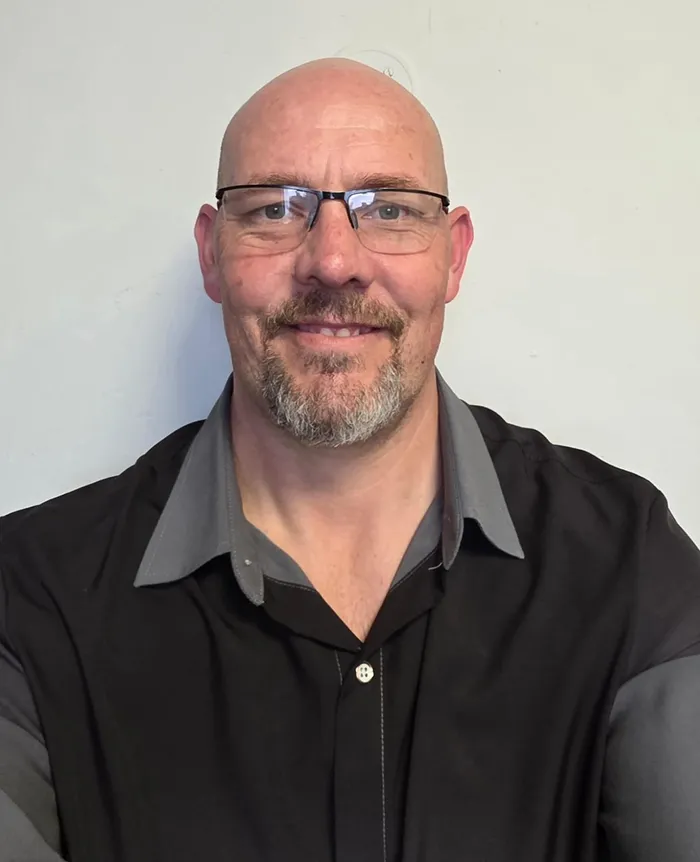
Dr Jaco Viljoen, orthopaedic surgeon specialising in oncology, who performed South Africa's first liquid nitrogen limb salvage procedure at Netcare Unitas Hospital.
Image: Supplied
Once "cleaned" of cancer, the bone was reimplanted and secured with surgical pins.
"When I explained that conventional surgery meant no more contact sports, I saw the devastation in his eyes," says Dr Viljoen, who had been preparing for this specific scenario for a decade. "When I mentioned there might be another way—a chance he could play sport again—their faces lit up."
Ewing’s sarcoma is the second most common bone tumour in children and adolescents, accounting for up to 15% of all bone cancers. Standard treatments often involve replacing the bone with a large metal prosthesis, which can limit mobility and require multiple follow-up surgeries as the child grows.
By using the patient's own bone, Dr Viljoen has ensured that the leg can continue to develop naturally. "His own bone will regenerate and integrate with the surrounding tissue," Dr Viljoen explained. "For a young person, that’s game-changing."
The early signs are remarkably promising. Just one day after the complex surgery, the patient was alert and had already taken his first assisted steps with a physiotherapist.
For this keen rugby and cricket player, the procedure offers more than just the removal of a disease; it offers the return of a future. As Dr Erich Bock, managing director of Netcare’s hospital division, noted: "This is about more than innovation. Dr Viljoen and his team haven’t just treated cancer—they’ve preserved a young man’s dreams."