Dark clouds gather for economy as Middle East war drags on: consumers to feel the impact


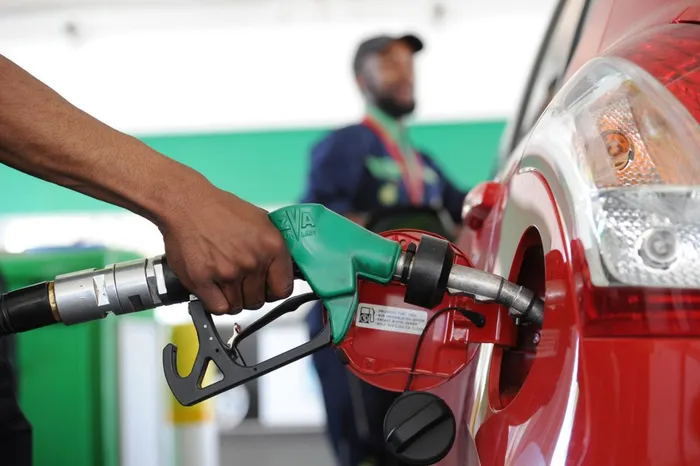
The price of fuel is set to increase next Wednesday. The increase cost in fuel will impact your pockets in many ways
Image: Karen Sandison / Independent Media
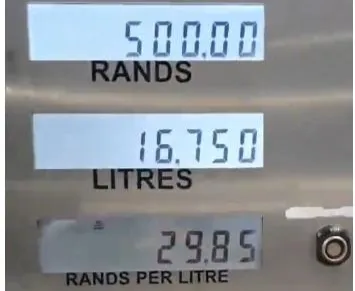
Petrol prices are expected to increase soon
Image: Video screengrab
The dark clouds of economic hardship are gathering as the US/Israel war on Iran continues unabated with the resultant oil price increase about to impact almost everything in the SA economy.
Such is the concern that Finance Minister Enoch Godongwana announced that the Cabinet had formed a committee to assess the effects of the ongoing Middle East conflict, especially with regard to growing fuel prices.
Another sign of headwinds looming for the economy is the South African Reserve Bank's Monetary Policy Committee (MPC) decision to leave the interest rate unchanged, following other Central Banks.
The petrol price is expected to rise by R5 a litre on Wednesday and the diesel price, because of laxer regulations, is expected to rise by R10 earlier in the week. This will result in increases in taxi fares, bus fares and other transport costs, especially in the freight and logistics sectors which will be passed on to the consumers.
Dawie Roodt, chief economist at the Efficient Group, said the full impact is still uncertain, but early signs point to a difficult few months ahead.
“We don't know what's going to happen. And it really depends… it depends on how long the oil price is going to remain where it is.”
He warns that while inflation has remained relatively contained so far, the effects of rising fuel, electricity and input costs will begin to show from April, with inflation likely climbing sharply and placing pressure on interest rates and economic growth.
“I can't see how we're going to get to 1.6%… I think we're probably going to see another 1% or even less,” he said, adding that this would mean South Africans are effectively getting poorer.
South African exporters are worried, not only about getting their produce and products to their destinations because of the closing of the Strait of Hormuz, but also about the rising costs brought on by rising fuel costs and tariffs.
In a recent interview with Xinhua, Ralph Mathekga, a senior expert at the Liechtenstein-based Geopolitical Intelligence Services, said that while the immediate impact on exports remains limited, some perishable products could face challenges.
"I can imagine perishable citrus food and beef products might experience some difficulties reaching markets such as Saudi Arabia and the Gulf states in general," Mathekga said, adding that most other agricultural commodities are not currently at significant risk.
However, he warned that indirect effects of the conflict, particularly through energy markets, are likely to place considerable pressure on farmers.
"The price of diesel, a key cost for agricultural operations, is expected to rise sharply from April.
Mathekga warned that this will impact production, as tractors and most farming machinery run on diesel.
"Fertilizer costs are also likely to increase, further raising costs. Although domestic food prices have yet to reflect these pressures, consumers may begin to feel the impact in the coming weeks. Higher fuel costs are expected to push up transportation and distribution expenses, which are closely linked to diesel prices," he warned.
"We have not seen prices rising yet, but I think in a month or so we will begin to see this," he said.
Mathekga also highlighted the importance of key global shipping routes, particularly the Strait of Hormuz, noting that any disruption would affect both oil supplies and agricultural trade flows.
Economist prof. Raymond Parsons of the North-West University Business School, said the country is now facing multiple cost pressures at once, describing April as a turning point.
“South Africa faces triple price shocks on April 1: the spike in fuel prices, higher levies and carbon tax as well as increased Eskom tariffs.”
He said both businesses and consumers will feel the strain, with inflation risks now rising again and interest rates likely to remain higher for longer.
Recent domestic headline and producer inflation data have been supportive of the new 3% inflation target, but the outlook has now deteriorated sharply as a result of global price pressures. the present MPC stance is therefore a prudent one in changed economic circumstances.
Salem Nyati from the Momentum Group Foundation agrees that the impact will be felt far beyond the petrol pump.
“With a record fuel hike looming in April, South Africans will feel the impact beyond the pump, as higher petrol prices drive up food, transport and household costs.”
Nyati cautioned consumers against relying on credit to cope, warning that “approval does not equal affordability”, and urged households to rethink budgets and cut back where possible.
Environmentalists see the oil crises as a clear sign to move away from fossil fuels and urged the government to invest more in green energy.
Maria Welcome, speaking on behalf of several environmental groups, said South Africa’s dependence on imported fossil fuels not only affects energy security but also has environmental consequences, making a shift to renewable energy increasingly urgent.
Looking back at the 1970s oil crisis, Welcome said the key lesson is the danger of overreliance on a single energy source.
She said sustained high fuel prices could begin to shift behaviour particularly if public transport moves toward electric, renewable-powered systems but warns against using the current crisis to justify expanding fossil fuel production.
“A short-term fuel shortage cannot be solved by ramping up South Africa’s own fossil-fuel production… we simply don’t have the refining capacity to make a difference quickly.”