Easter dreams on the line: Cape Town's Fish hawkers fight for survival amid snoek shortage


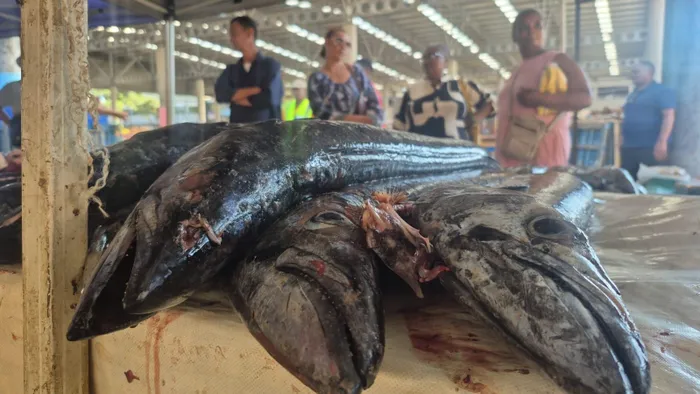
Fish at the Town Centre is the main attraction this time of the year
Image: Tracy-Lynn Ruiters
As the Easter weekend approaches, fish hawkers across Cape Town are bracing for one of the busiest trading periods of the year, as demand for fresh fish surges in preparation for traditional holiday meals.
For many traders, the next two weeks are not only about meeting demand, but also about securing enough income to sustain their families through the months ahead.
Yet this year, hawkers say they are under growing pressure due to a continued shortage of snoek one of the Cape’s most important and culturally significant fish species.
Cape snoek remains a staple food for many South Africans, particularly in low-income households, and is also a vital lifeline for small-scale fishing communities. But after years of relatively stable catches, concern is growing about the long-term sustainability of the fishery.
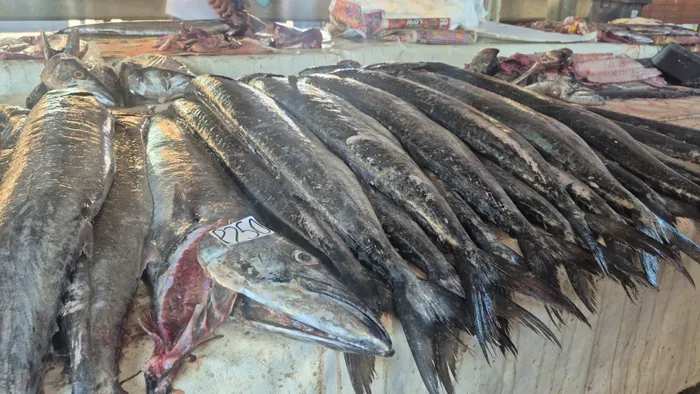
Fish hawkers are gearing up for a busy Easter season
Image: Tracy-Lynn Ruiters
Declining catches have placed strain on local fishers and opened the door to increased imports of Barracouta (Thyrsites atun) from New Zealand, often sold as snoek in local markets. This shift has raised questions about the future of coastal livelihoods and the reliability of supply chains that many communities depend on.
At the Klipfontein fish market, situated between Johnson Road, hawkers, that have been plying their trade for years, said the Easter rush is now unfolding against a backdrop of rising uncertainty. Mr Brown, known locally as “Don’t Go Around”, has worked in the trade for decades as one of four bakkie operators in the area.
“We sell fresh snoek every day,” said Brown. “The price of the snoek depends on the size of the snoek and it’s never the same every day. We also give discounts, so we try our utmost best to render good service to the community.”
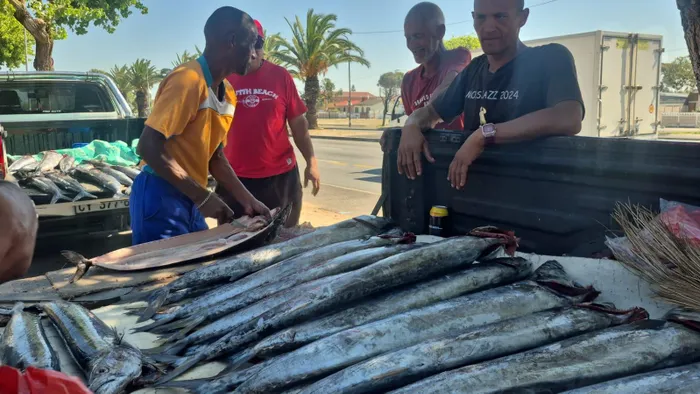
Cape Town fishermen are concerned about the dwindling availability of snoek, a popular fish around Easter.
Image: Tracy-Lynn Ruiters
He added that while conditions have become more difficult, the commitment to the trade has not changed. “This market has become very different and difficult but the love for it is the same.”
Hawkers said the shortage is increasingly being linked to a combination of environmental pressure and industrial-scale fishing activity.
Some local fishers argue that large international trawlers, equipped with advanced technology and powerful lighting systems that attract fish, are contributing to reduced availability in traditional fishing areas. Smaller operators say they are often left with limited catches after long trips at sea.
"Before we would have one bakkie load come back from Ysterfontein with about 200 snoek on it, you sell it chop-chop, and within the next two hours there is another bakkie. Now you hardly sell about 25 fish a day," said one hawker.
As a result, many hawkers now travel further up the West Coast including to Port Nolloth and Lamberts Bay in search of stock. These journeys often begin in the early hours of the morning and come with rising fuel costs, tighter margins, and added pressure to ensure fish reaches Cape Town markets while still fresh.
Town Centre hawker Desna Abrahams, affectionately known as “Antie”, said the situation is becoming increasingly difficult for small traders and fishers alike.
“Trawlers are picking up all the fish now. By the time our boats must go and catch the fish, there’s nothing,” she said. “They use a certain light on the water and it draws the fish. Then they take all the fish. By the time our guys must go out, there’s no fish. They waste the diesel, the petrol, and catch nothing.”
Abrahams said the impact is felt throughout the entire supply chain, from fishers at sea to customers at the market stall. “Now you have to come and explain to your customers why the price is so expensive. We are a small business, but we try to make a living. But still then the government still take from us with tax and everything.”
She added that the seasonal nature of the shortage is becoming more pronounced. “It looks like when it comes to Easter, then the fish disappears. You must leave at two or three in the morning to go and buy fish from the boats. The petrol is going up again.”
Abrahams described the urgency of competing for limited supply before boats land and other traders arrive.
“You're in a hurry because you need to get there before the boats come in. The customers are waiting and people prefer fresh fish. You can’t give them packed fish.”
She added that despite the hardship, the trade continues to support many livelihoods. “We’re just plainly struggling.”
A customer who travelled from Paarl to buy fish for Easter echoed the strong demand for fresh produce despite rising prices. “I come here every year for the fresh fish and I know I am going to get quality for my money,” she said.
Scientific concern grows over Cape snoek sustainability
Beyond market pressures, new scientific research is raising fresh concerns about the long-term future of Cape snoek.
A recent study by Dr Sihle Mthethwa from the Department of Genetics at Stellenbosch University highlights the vulnerability of the species and suggests that it may not be as ecologically uniform or resilient as previously believed.
Mthethwa’s research found that Cape snoek populations are split into distinct genetic groups that do not freely interbreed, even within the same waters. His analysis suggests that there may be at least two genetically distinct groups in South Africa, with a possible third stock shared with Namibia.
“This challenges the idea that Cape snoek is a single, resilient resource,” Mthethwa said. “Instead, it emphasises the need for careful, locally tailored management to protect this iconic fish – and the communities that depend on it for the future.”
His study involved collecting samples across the Southern Hemisphere, including South Africa, New Zealand, Chile, and remote islands, and analysing their DNA to map evolutionary history, population structure, and gene flow.
The findings also point to a recent genetic bottleneck, indicating a decline in genetic diversity that could make the species less able to cope with environmental changes and fishing pressure.
“There is also evidence of a recent genetic bottleneck, meaning genetic diversity and numbers have declined in recent generations,” Mthethwa explained.
“This loss of diversity can make the species less able to cope with environmental change and fishing pressure.”
He warned that treating all snoek as a single stock could mask overfishing in specific populations, increasing the risk of local collapse even when overall catch numbers appear stable.
“Sustainable management must be based on genetic evidence, not just catch numbers,” he said, calling for stock-specific management, improved monitoring, and stricter oversight of imports and labelling.