Assessing South Africa's human rights: a challenging journey ahead


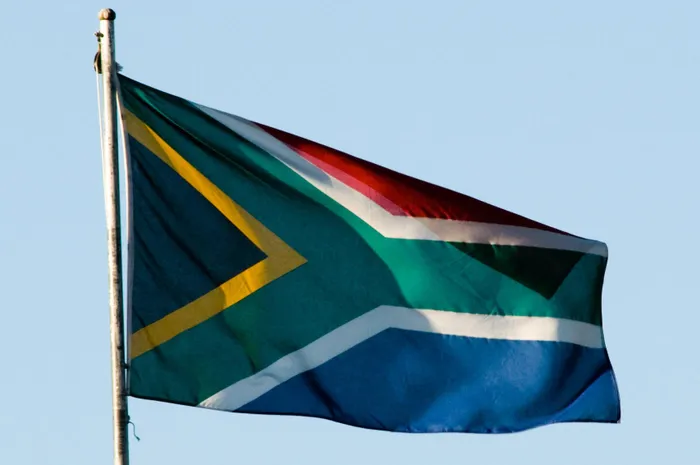
South Africa is celebrating 32 years of Democracy
Image: Wikimedia Commons
While South Africa has garnered respect for its human rights record., the demons of inequality, crime and service delivery are threatening the gains made in the long run.
An analytical assessment by human rights experts and analysts reveals a deeply uneven picture: strong protections for civil liberties on one hand, but ongoing struggles in socio-economic rights, public safety, and service delivery on the other.
In a score card out of 10 their assessment shows a human rights landscape marked by stark contrasts.
The right to life is the lowest-scoring right at 3/10, reflecting the impact of violent crime and gender-based violence across communities. Freedom of expression is the highest at 9/10, reflecting strong constitutional protections, an independent media environment, and active public debate. Other rights fall in between, including housing at 7/10, education at 6/10, water and sanitation at 6/10, and freedom of choice at 5/10, showing uneven progress in socio-economic rights.
Across multiple expert assessments, a consistent pattern emerges. The combined average scores from the analytical assessment, academic commentary, and civil society evaluations place housing at approximately 6.25/10, education at 5.9/10, water and sanitation at 5.75/10, freedom of expression at 8.25/10, freedom of choice at 6.5/10, and the right to life at 3.6/10. These averages reflect both constitutional strength and uneven implementation on the ground.
Professor Thuli Madonsela, director of the Centre for Social Justice (CSJ) in the Faculty of Law at Stellenbosch University said South Africa’s democratic transition represents a clear break from its past. Madonsela explained that there is no doubt in her mind that things are better than they used to be before April 27, 1994.
Madonsela stated that legal equality is one of the country’s most important achievements. She explained that no one can be denied an opportunity or preferred in the distribution of opportunities, resources and privileges because of their devalued identity.
She highlighted this as a foundational shift away from apartheid-era legislation, including the Glen Grey Act of 1896 and the Natives Land Act of 1913. She also noted progress in social protection under Section 27 of the Constitution, including child support grants and the Social Relief of Distress (SRD) grant.
Madonsela cautioned that progress remains incomplete. She said things are not as good as they could and should be, citing ongoing violence, gender-based violence, and low conviction rates.
She highlighted that while access to housing, education, water, and sanitation has improved, inequality, corruption, landlessness, and weak governance continue to undermine delivery. Madonsela also noted that civil and political rights remain a major strength, stating that South Africa performs well above many peers in civil liberties, although informal political pressure may still shrink civic space.
Professor Fiona Anciano of the University of Cape Town’s Department of Political Studies explained that South Africa has made significant progress in establishing and protecting fundamental human rights such as education, water, energy, and sanitation, but said there is still much work to be done.
Anciano said pervasive economic inequality threatens the realisation of rights for all citizens. She added that high levels of violent crime mean that in practice the right to freedom of movement and the right to life are not secure.
Anciano noted that while South Africa has a strong constitutional framework, implementation is uneven.
She said that on paper the country has progressive policies, but the quality of services varies widely depending on location. She added that informal settlements in particular often lack adequate sanitation and dignity.
Anciano also highlighted that civil liberties remain strong, stating that the media is not controlled and there are no repercussions for criticising the government.
Her ratings reflect this mixed reality: housing 7/10, education 6/10, water and sanitation 6/10, freedom of expression 9/10, freedom of choice 9/10, and right to life 4/10.
From a community and advocacy perspective, Siya Monakali of Ilitha Labantu said that while there have been important legislative and policy strides, particularly on gender-based violence, many poor and working-class communities still experience rights as ongoing struggles rather than guarantees.
Monakali explained that housing inequality remains severe, noting that more than two million households remain on housing waiting lists. He rated housing at 5/10, citing overcrowding, informal settlements, and insecure tenure. Education is also rated 5/10 due to overcrowded classrooms, poor infrastructure, and violence in schools.
Monakali highlighted that water and sanitation are rated 4/10 due to ageing infrastructure and significant system losses. He said freedom of expression is rated 7/10, but warned that activists and whistleblowers often face intimidation and threats.
Freedom of choice is rated 5/10 due to poverty and unemployment, while the right to life is rated 3/10, reflecting the severe impact of violent crime and gender-based violence.
Anele Gqasana, a GBVF coordinator in Langa, explained that governance capacity plays a decisive role in how rights are experienced locally.
She rated housing 6/10, education 6.5/10, water and sanitation 7/10, freedom of expression 8/10, freedom of choice 7/10, and the right to life 5/10. She noted that Cape Town demonstrates how stronger local governance can improve the realisation of rights, even in township environments.
Adding a more critical civil society perspective, human rights activist Zona Morton gave an overall human rights score of 3/10. Morton said she based her assessment on multiple factors and careful consideration.
She argued that while South Africa has one of the most advanced constitutions and comprehensive bills of rights, government and Chapter 9 institutions have failed the majority of vulnerable citizens. She emphasised that human rights protection cannot exist only on paper but must translate into active implementation.
Morton questioned the effectiveness of oversight institutions, asking where Chapter 9 bodies are when children and women are raped and killed, or when gang violence prevents schoolchildren from safely walking to school.
She added that in many communities, gang control restricts freedom of movement and places entire neighbourhoods under constant threat, with gunfire affecting daily life and endangering elderly residents. Morton said that unless Chapter 9 institutions begin actively enforcing the Bill of Rights, human rights outcomes will continue to deteriorate.
Taken together, the assessments reveal a consistent national pattern. South Africa has built a strong constitutional democracy with globally recognised rights protections, but implementation remains uneven and deeply shaped by inequality, geography, and governance capacity.
Ultimately, the country’s human rights journey reflects both transformation and tension.