WATCH: Charles Appolis sentenced to 22 years for the murder of Strand mom of three, Nadia Lotz


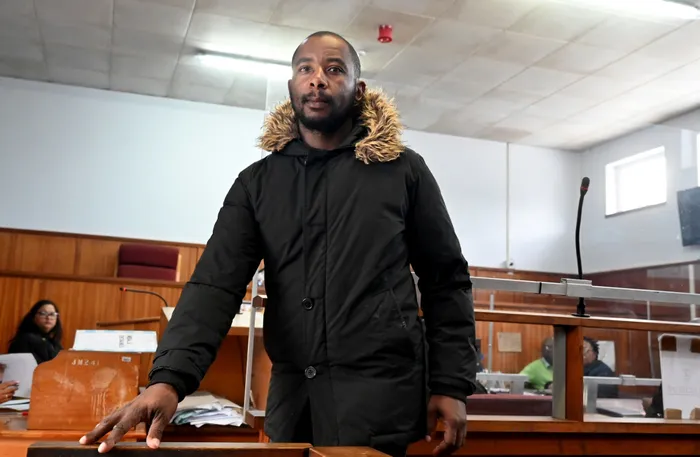
Charles Appolis
Image: Ayanda Ndamane/ Independent Newspapers
After more than three years of court proceedings, delays and emotional testimony, a chapter has finally closed for the family of Nadia Lotz.
The Strand Regional Court on Thursday sentenced her boyfriend, Charles Appolis, to 22 years’ direct imprisonment for her murder, bringing legal finality to a case that has gripped the community and highlighted the ongoing crisis of gender-based violence in South Africa.
Tensions were high in the courtroom as the sentence was handed down, with Lotz’s family present throughout proceedings. Emotions ran deep as the judgement marked the end of a long and often painful legal process.
In delivering sentence, Magistrate René Hindley outlined the court’s reasoning, weighing both the personal circumstances of the accused and the seriousness of the offence.
Appolis, 39, has a Grade 10 education and was unemployed at the time. He was in a long-term relationship with Lotz, and the couple shared three children two daughters aged 8 and 9, and a son aged 3. The court heard that the children are currently in the care of family members.
He has been in custody since 4 March 2023 and has one previous conviction dating back more than 10 years.
The defence, through Hannelie Lombaard, argued that the crime was not premeditated and that those involved had been under the influence of alcohol. It was further submitted that the incident was reported immediately and that there were factors justifying a lesser sentence.
However, the State described the offence as extremely serious, reading a victim impact statement into the record and highlighting that the accused showed no remorse. The prosecution further argued that Appolis prolonged the matter by taking it to trial and pointed to a history of domestic violence in the relationship.
Magistrate Hindley also placed the case within a broader societal context, noting the disturbing increase in the murder of women in South Africa. The court heard that, on average, a woman is killed every two to three hours, underscoring what was described as an ongoing epidemic of violence against women.
“The feelings of the community at large must be recognised when the court imposes sentence,” Hindley noted, emphasising the seriousness of crimes committed within domestic relationships.
The court said it is clear that the accused killed Lotz “without thinking” and then disposed of her by throwing her out of the vehicle. Hindley further considered the demeanour of the accused during the trial, describing an apparent lack of emotion and concern for the victim.
“He showed no emotion and did not concern himself with what the victim was going through,” the court noted.
While the court accepted that the crime was not premeditated, and took into account the accused’s time already spent in custody, it found that substantial and compelling circumstances justified deviating from the prescribed life sentence.
However, given the seriousness of the offence and the public interest, the court ruled that a lengthy custodial sentence was warranted.
Appolis was sentenced to 22 years’ direct imprisonment and declared unfit to possess a firearm in terms of the Firearms Control Act.
Lotz was killed on 4 March 2023 in a brutal attack while seated in a vehicle. She was stabbed three times and had her throat slit before being thrown from the moving car, later dying from her injuries.
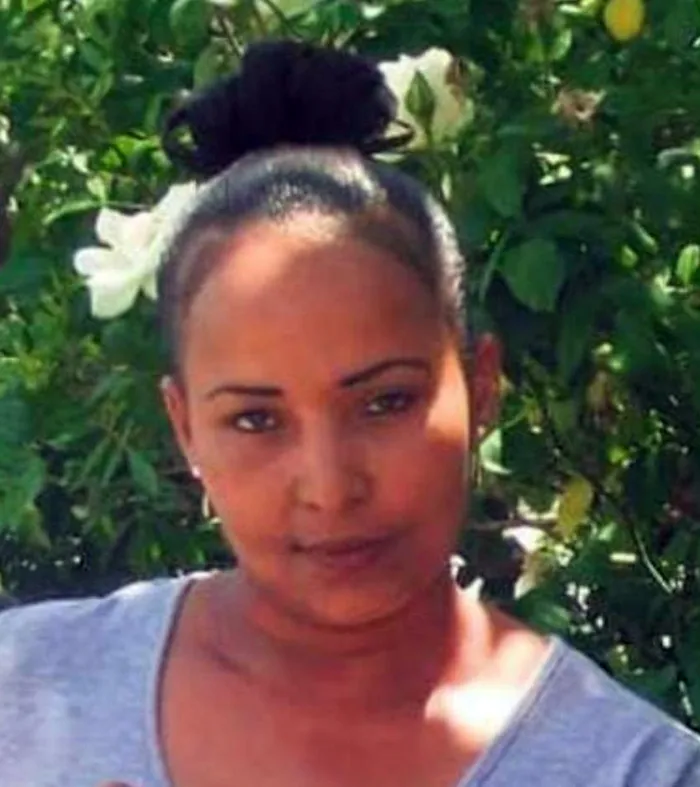
Strand mom-of-three Nadia Lotz, 32
Image: Supplied
Reacting to the outcome, Hendrik Lotz, the victim’s uncle, said the family was satisfied with the sentence.
“Three years we’ve been walking in and out of this court waiting for justice to be served. Today we got it and we got closure,” he said.
On the other side, Edith Appolis, a cousin of the accused, said the family respects the court’s decision and hopes he reflects while serving his sentence.
“We must remember there are victims that are still left behind, and that is the children. So for their sake, we hope he changes,” she said.
Also responding, Kaylynn Palm, Head of Action Society’s Action Centre in the Western Cape, said the sentencing represents an important step toward justice after a long and painful process.
“This sentence confirms that brutal violence must carry real consequences. Nadia lost her life in a horrifying attack and her family has had to endure years of court proceedings to reach this point. While no sentence can restore what was taken from them, accountability is essential for justice to have meaning,” Palm said.
Palm also highlighted the lasting impact on the children connected to the case.
“The deepest tragedy is that the biggest victims of this crime are Nadia and Charles Appolis’ children. They have effectively lost both parents as a result of this act of violence. These are the silent victims who will carry the consequences of this crime for the rest of their lives.”
Action Society reiterated that improving conviction rates remains one of the most effective ways to reduce violent crime.
“When the justice system investigates properly, prosecutes effectively and ensures that perpetrators are sentenced, it sends a clear message that violence will have consequences,” Palm said. “Certainty of punishment remains the most powerful deterrent available to any justice system.”
The organisation said it will continue to support victims’ families and monitor serious violent crime cases to ensure accountability.