Empowering young mothers: insights from the 3rd African Workshop on Women and HIV


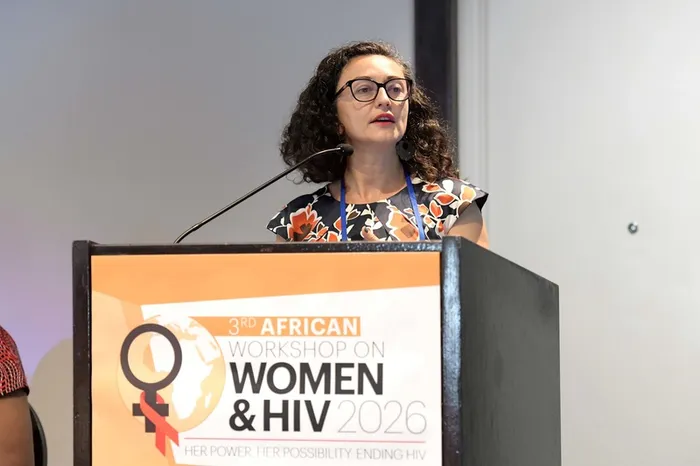
Associate Professor Elona Toska
Image: Loot
As Africa braces for a staggering increase in its adolescent population, projected to reach nearly one billion by 2050, the challenges facing pregnant women and young mothers intensify. Addressing these challenges through tailored support services is crucial, according to Elona Toska, an Associate Professor at the University of Cape Town (UCT) Centre for Social Science Research. Her insights were shared during the recent 3rd African Workshop on Women and HIV held in Cape Town on 12–13 March.
The workshop, focused on enhancing the quality of life for women living with HIV, reducing transmission rates, and integrating care systems, shed light on the urgent need for support mechanisms that cater to the unique experiences of young mothers in South Africa.
A multi-faceted approach to maternal health
Delivering a presentation titled “From research to reality: Outcomes and insights from a multi-pronged referral system for adolescent mothers living with and affected by HIV in South Africa”, Toska outlined the findings from a research project called “Help empower youth brought up in adversity with their babies and young children (Hey Baby)”. This initiative, a collaboration between UCT and the University of Oxford, has been underway in the Eastern Cape since its inception in 2018.
Toska emphasised the complexities of adolescence in the context of HIV, highlighting how young women navigate relationships, unintended pregnancies, and motherhood. “There’s a lot of shared pathways and factors that drive both HIV exposure and the risk of becoming pregnant during adolescence,” she explained.
Understanding early motherhood
The onset of early pregnancy is often unplanned among adolescent girls, Toska noted. However, she stressed that love and dedication permeate their roles as mothers, even if circumstances are challenging. “These young women often need support to get by,” she remarked.
Through the Hey Baby project, the research team has actively engaged over 1,000 adolescents, currently assisting an evolving cohort of 1,700 children. Unlike typical healthcare interventions, Toska highlighted the project's social science approach, focusing on listening to young mothers rather than imposing clinical solutions. “We try to understand life as it happens with young people and provide referrals as needed,” she stated.
Factors influencing referrals
Data from detailed one-on-one interviews conducted with 630 participants reveal the diverse needs of these young mothers. Topics addressed ranged from mental health to household violence and school attendance. Critically, those living with HIV were found to require distinct support related to medication compliance.
Toska introduced a structured referral system, categorising cases into emergency and non-emergency. Emergency referrals addressed urgent issues, including suicide ideation, sexual abuse, and complications with antiretroviral treatment. “A third of adolescents recruited for the mother and baby study are living with HIV,” she revealed, indicating their unique experiences often encompass concerns around their children’s health and potential HIV exposure.
Empowering young mothers through education
The research findings signal a pressing need for greater educational support for adolescent mothers, illustrating that those who continue their schooling are significantly less likely to require referrals. “This highlights the importance of keeping young mothers in school and supporting their specific needs,” Toska advocated.
For instance, the research found that while one-third of participants needed a single referral across interviews, the necessity for multiple referrals grew among mothers living with HIV, underscoring the evolution of their circumstances as their children grow. “What you need when your baby is under six months old is very different from what you require when your child is three years old,” Toska observed.
Ultimately, these findings present a clarion call for policymakers and healthcare providers to design holistic services that support the multifaceted lives of adolescent mothers, driving better health outcomes and enhancing their overall well-being in communities across South Africa.