87-year old, Ellen Malan's murder: a painful reminder of justice delayed for families


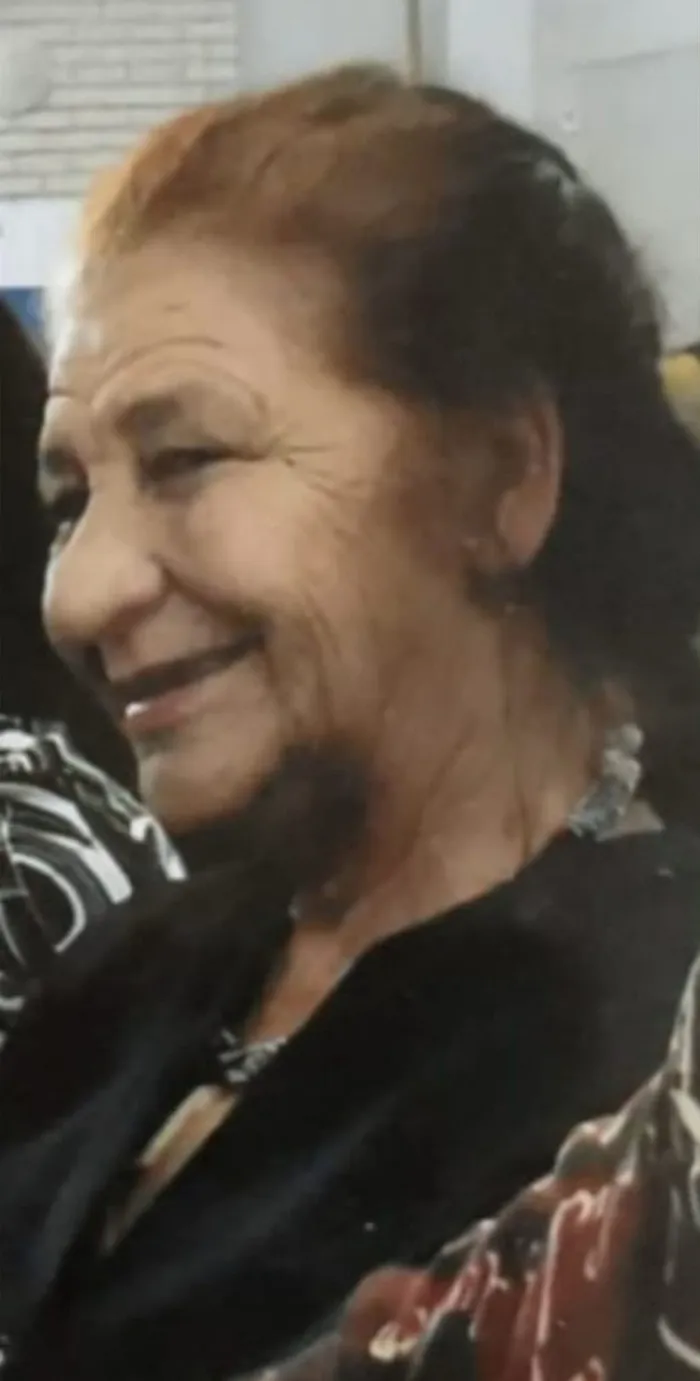
Ellen Malan, 87, was found strangled in her Tafelsig home on Saturday September 28, 2024
Image: Supplied
The brutal murder of 87-year-old Ellen Malan, a pensioner remembered as the “grandmother of the community,” is fast becoming a haunting symbol of a justice system under strain and one of a growing number of serious criminal cases that have ground to a halt without answers.
Malan was killed in her Tafelsig home during the night of 28 September 2024, in a case that shocked residents of the Cape Flats. More than a year later, her family is still waiting for meaningful progress, with key forensic evidence and investigative steps still unresolved.
Her case is now among several flagged by Action Society, which has raised the alarm over what it describes as a deepening “cold case crisis” in South Africa.
Over the past week, the organisation has formally written to senior leadership within the South African Police Service (SAPS), calling for urgent intervention in multiple serious matters that appear to have stalled including Malan’s murder and cases involving the sexual assault of children.
According to Action Society, these cases are not isolated incidents but rather reflect a troubling national pattern: investigations losing momentum, forensic processes breaking down, and communication with victims’ families collapsing.
In Malan’s case, previously provided police feedback indicated that a DNA retake had been requested after initial samples failed to produce usable results.
Fingerprints recovered from the crime scene could not be linked to any suspect, while key reports including the post-mortem and crime scene photographs were still outstanding at the time of the last update.
Since then, the family said they have received no further written communication from investigators.
The organisation has also highlighted multiple cases involving children, where delays and breakdowns in the system have had devastating consequences.
In one such case involving a teenage victim, several suspects were arrested and appeared before the juvenile court at the Mitchells Plain Magistrate’s Court. However, after repeated postponements, the matter was ultimately provisionally withdrawn in July last year, leaving the victim and her family in limbo and raising serious concerns about whether justice will ever be served.
Another case, registered at Lentegeur SAPS, involves the alleged rape of a child reported in 2019. According to the complainant, the accused was never brought in for questioning and the case was closed without further investigation despite the victim now being ready to engage with a forensic social worker.
Action Society National Spokesperson Juanita du Preez said the similarities across these cases point to systemic failures within the crimi nal justice system.
“Across the country we are seeing more and more serious cases quietly losing momentum. Murder cases and cases involving the sexual assault of children remain open for years while investigations stall, evidence is delayed and families struggle to obtain even basic updates about what is happening,” she said.
Du Preez warned that forensic backlogs and weak investigative oversight are compounding the crisis.
“When forensic laboratories are unable to process DNA evidence timeously, when dockets disappear into archives, and when investigators fail to follow up on basic leads, cases inevitably grow cold. What we are seeing is a growing cold case crisis where investigative neglect and systemic breakdowns allow perpetrators to slip through the cracks.”
She added that poor communication with victims’ families is further deepening mistrust in law enforcement.
“Families who have already suffered immense trauma should not have to fight simply to obtain information about the progress of an investigation. In many of the cases we deal with, families are left in the dark for months or even years.”
The concerns come against the backdrop of rising sexual violence in the Western Cape. Crime statistics for the period between October and December 2025 show that an average of 15 rapes are reported every day in the province, with hotspots including Delft, Nyanga, Khayelitsha and Mfuleni.
According to the organisation, the combination of rising crime and stalled investigations is eroding public confidence in policing.
“When victims and their families cannot obtain basic updates about cases, public confidence in the police inevitably erodes. Transparency and accountability are essential if the criminal justice system is to regain the trust of the communities it serves,” Du Preez said.
Action Society has requested urgent written feedback from SAPS in all the cases and warned that the matters will be escalated to national oversight bodies if adequate responses are not received.
“Every stalled investigation represents a family waiting for justice,” Du Preez said. “If we allow these cases to quietly disappear into the system, we are effectively telling victims that their cases do not matter.”