Where is the army? Bloodshed continues to ravage the Western Cape


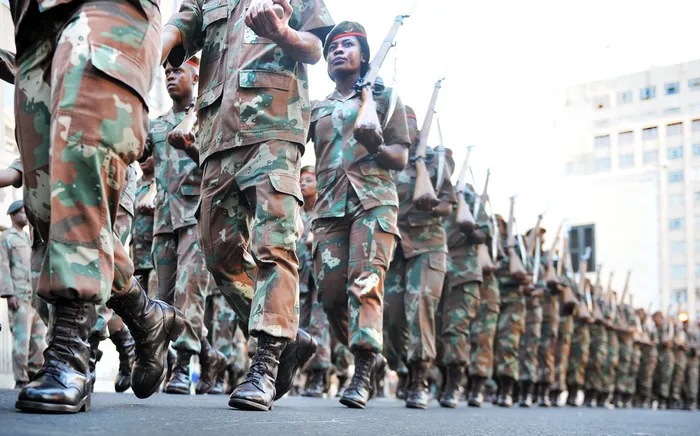
The Western Cape wants to know when the SA National Defence Force (SANDF) is being deployed
Image: Phando Jikelo / Independent Newspapers
In a province where communities have long pleaded for urgent intervention against gang violence, a question is growing louder by the day: where is the army?
Nearly a month after President Cyril Ramaphosa announced that the South African National Defence Force (SANDF) would be deployed to assist police in combating gang violence in the Western Cape, there is still no clear timeline or operational plan in place.
In the meantime, violence continues to grip communities across the Cape Flats.
Within just 72 hours this week, three mass shootings were reported across the Cape Flats, seeing 13 people being shot and eight dead. The wave of violence has once again raised questions about how long communities must wait for the promised intervention.
In a separate incident yesterday morning, two men were shot and killed in Mfuleni, underscoring the daily reality residents face while waiting for the military deployment to materialise.
While the SANDF has already been deployed in parts of Gauteng to assist law enforcement operations, the Western Cape, where gang violence remains deeply entrenched, has yet to see the intervention.
Criminology researcher at the University of Cape Town, Simon Howell, said the delay may partly stem from the fact that soldiers are being prepared for a role that differs significantly from their traditional training.
“The military has to take on, especially in the Western Cape, a different type of operational role than they are typically trained for,” Howell said.
“Military training is not so much crime prevention. So I think time has been taken for this too, because soldiers need to be trained to do crime prevention and to liaise with SAPS and carry out this sort of work in a security cluster environment, rather than the normal independence that they have.”
He said this approach follows lessons learned from previous deployments. “This was a result of a report written after the previous deployment which indicated that the military had to integrate itself effectively into the law enforcement environment more generally.”
Howell added that gangs are unlikely to be particularly concerned about the prospect of the SANDF deployment.
“Whether gangs are taking advantage of that (delayed deployment) I don't really think so. To be honest I think this is more of a PR exercise than anything else. In my understanding the gangs are not particularly scared nor worried about the military's presence and it's simply business as usual and it will probably be business as usual even when they are deployed frankly but we'll see.”
Community activists say the delay is deeply frustrating for residents living in the crossfire.
Chairperson of the Cape Flats Safety Forum Abie Isaacs said communities have been waiting weeks for the promised intervention.
“Where is the army?” Isaacs asked.
“As the Cape Flats Safety Forum we are concerned about the army not being deployed. Look at what's happening, in a week three mass shootings, yet the army is meant to deal with gang violence.
“We are asking when will the army be deployed or is there a change of plan?”
Isaacs acknowledged that the soldiers may be going through training but highlighted again the need for urgent intervention.
“Yes, maybe the delay is for orientation purposes, but we are long past the 10 days the President spokes about. That's our concern, its a month later with no sign of them.
Isaacs added: “The delay also already gave people the opportunity to move some of their arms from area to area.
“We are noy saying give us a date or time, but honestly speaking we are 30 days in and still no sight of the SANDF, obviously people will start doubting.”
Crime fighting organisation Fight Against Crime South Africa also raised concern about the continued delay.
Spokesperson Jay-Jay Idel said military deployments can have an immediate stabilising effect when policing capacity is stretched.
“We have already seen the immediate stabilising impact SANDF deployment can have in areas where they have been deployed in Gauteng. That shows the value of using every available resource when policing capacity is overwhelmed.”
He said communities are increasingly questioning the lack of urgency.
“If murder and death on the Cape Flats has become normal, do our lives not matter enough to warrant urgency? Every delay has consequences, and the reality is that people are being killed while decisions are debated.”
Idel also argued that the deployment should not have been announced publicly before implementation.
“When the announcement was first made by the President, shootings spiked almost immediately. It was as if gangsters were trying to collect death in advance rather than in installments. Operational decisions of this nature should simply happen.”
“From our perspective, the continued delay is unacceptable. Communities needed intervention as in yesterday, not weeks later.”
Civil society organisation Action Society said the issue also highlights deeper structural problems within the policing system.
National spokesperson Juanita du Preez said violent crime remains concentrated in identifiable policing hotspots.
“These statistics clearly show that violent crime in South Africa is concentrated in identifiable hotspots,” she said.
“Yet our policing system still allocates resources through a highly centralised national model that does not respond effectively to these local realities.”
Du Preez said temporary measures cannot replace the need for properly resourced investigations.
“Deploying soldiers may create short term visibility, but it is like putting a plaster on a haemorrhage.”
“What these stations need is properly resourced investigative capacity. More boots on the ground will not lead to more convictions if the detectives, forensic services and prosecutors behind those arrests are already overwhelmed.”
Safety and Security Mayco member JP Smith said the announcement was not followed by any clear action.
“On the 12th of February, President Cyril Ramaphosa announced that the SANDF would be deployed to Cape Town to assist with combatting gang violence, and after securing some needed media attention for both the President and the ANC, nothing has transpired,” Smith said.
“We haven’t so much as heard a peep about this planned deployment, where they will be deployed, what they will do, and when they will be deployed, even though it has now been almost a month since the announcement was made.”
Police Portfolio Committee Chairperson Ian Cameron also raised concerns about the lack of a clear strategy.
“Recent briefings to Parliament's Police Portfolio Committee and the Joint Standing Committee on Defence about the planned deployment of the South African National Defence Force alongside the South African Police Service have raised serious concerns,” Cameron said.
“To be clear, Parliament is not requesting sensitive operational details or tactical information that could compromise safety on the ground. However, what remains missing is even a clear strategic deployment plan explaining how this intervention will actually work.”
In a statement yesterday President Cyril Ramaphosa confirmed the deployment of 2,200 soldiers to support the police in five provinces until March 2027. The presidency said the operation is estimated to cost over R823 million.
Presidential spokesperson Vincent Magwenya said SANDF members will assist SAPS in operations against illegal mining and gang activity in the Eastern Cape, Free State, Gauteng, North West and Western Cape.
No exact time of deployment to the Cape Flats was given.