New African mushroom discovery could rewrite the origins of the world’s most famous “magic mushroom”


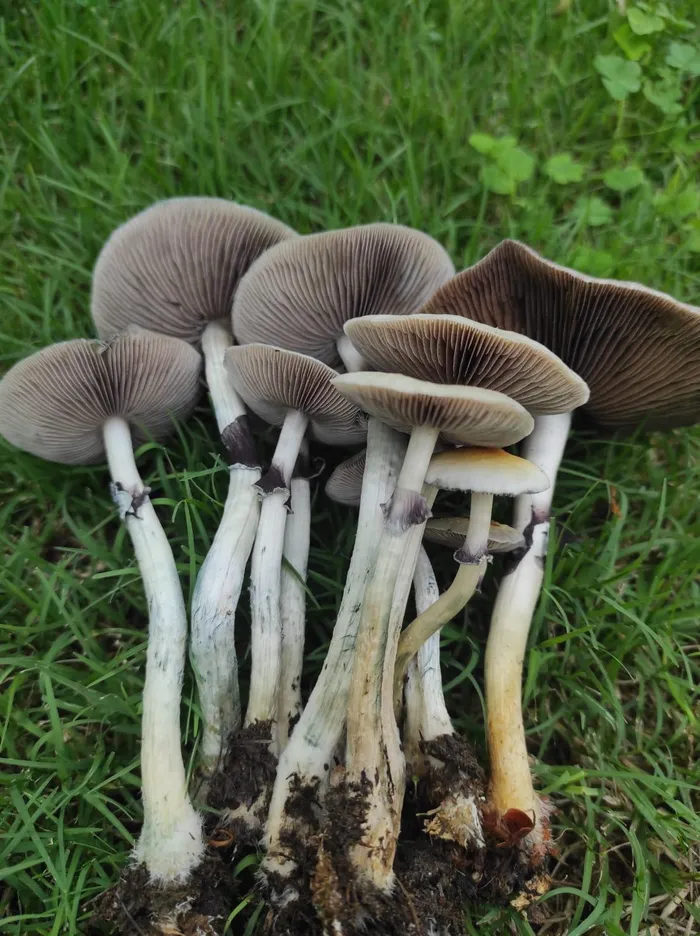
Magic Mushroom
Image: Supplied
A newly discovered African species of psychedelic mushroom may finally answer a long-standing scientific mystery about where the world’s most widely cultivated “magic mushroom” truly comes from.
Researchers from southern Africa and the United States have identified a previously unknown species, Psilocybe ochraceocentrata, which appears to be the closest known wild relative of the globally known psychedelic mushroom Psilocybe cubensis.
Their findings, published in Proceedings of the Royal Society B, suggest that the evolutionary roots of these iconic mushrooms trace back to Africa.
For decades, scientists believed that P. cubensis widely cultivated around the world and famous for its psychedelic properties originated elsewhere. A common theory suggested that the mushroom arrived in the Americas after cattle were introduced by European colonists in the 1500s.
The species itself was first formally described in Cuba in 1906.
But the discovery of P. ochraceocentrata, found growing naturally in the grasslands of South Africa and Zimbabwe, is challenging that narrative.
Named for the distinctive ochre-yellow colouring at the centre of its cap, the newly described mushroom appears to share a common ancestor with P. cubensis dating back roughly 1.5 million years. That evolutionary link points strongly to Africa as the origin point for the lineage.
One of the researchers involved in the study, Breyten van der Merwe from Stellenbosch University, said the discovery provides important clues about the wild history of one of the most famous psychedelic fungi.
“Even though the two species look similar, they have different genetic, ecological and chemical traits,” he explained.
The discovery also highlights something surprising: the newly described species has likely been circulating among mushroom cultivators for years just under a different name.
According to Van der Merwe, P. ochraceocentrata has been grown internationally under strain names such as “Natal super strength” (NSS) or “Transkei”.
“It’s one of the most popular strains of magic mushrooms because it is quite potent and easy to grow,” he said. “But until this study, nobody realised it was a totally separate species from the classic magic mushroom.”
To unravel the mushroom’s evolutionary story, the international research team used advanced genetic techniques. Scientists analysed DNA extracted from specimens collected across southern Africa, along with historical reference samples.
The research involved a collaboration between scientists from several institutions, including Alexander Bradshaw of Clark University, Bryn Dentinger from University of Utah Health, Keaton Tremble from Duke University, and Cathy Sharp of the Natural History Museum of Zimbabwe.
The team used multi-locus phylogenetic analysis, molecular clock dating and ecological modelling to piece together how the mushrooms evolved and diverged.
Sharp first encountered some of the earliest specimens of the newly identified species in Zimbabwe in 2013. Yet researchers say Africa’s fungal biodiversity remains vastly understudied, meaning many species may still be waiting to be discovered.
The scientists believe the divergence between P. cubensis and P. ochraceocentrata may have been shaped by major ecological shifts millions of years ago.
During that time, grasslands were rapidly expanding in South America while large grazing animals whose dung provides the nutrient-rich environment these mushrooms grow in were spreading out of Africa and into Eurasia. These changing ecosystems may have created new opportunities for the mushrooms to evolve into separate species.
Beyond solving an evolutionary puzzle, the discovery could also have implications for future medical research.
Van der Merwe said scientists are now interested in studying the chemical compounds produced by these mushrooms and related plants, particularly for their potential therapeutic value.
“We plan to characterise and isolate the various compounds these plants and mushrooms produce,” he explained, “and then test them against models for post-traumatic stress disorder, anxiety and depression.”