Trust in South Africa's criminal justice system at an all time low


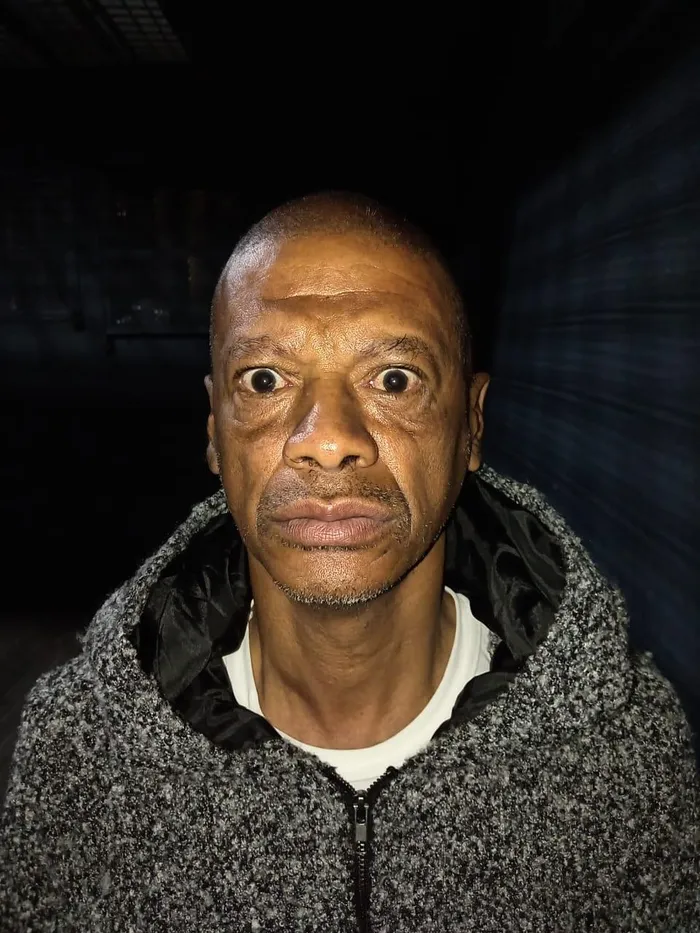
Igshaan Williams will appear in the Wynberg Regional Court on Wednesday
Image: Supplied
Action Society has launched its first Criminal Justice Trust Indicator (CJS-TI), a baseline measurement of public confidence in South Africa’s criminal justice system, with results indicating what the organisation describes as a near-total collapse in trust.
Based on anonymised survey responses submitted through its website, the 2026 baseline score stands at just 4 out of 100.
The report, titled Criminal Justice Trust Indicator: Public Perceptions of Criminal Justice Performance, measures four core dimensions of system performance as experienced by the public: perceived availability of justice, lived experience of justice outcomes, perceived impunity, and perceived system delay.
“The goal of this research is simple,” said Juanita du Preez, spokesperson for Action Society. “We want to move beyond political promises and measure whether ordinary South Africans experience the justice system as responsive, fair, and capable of delivering real consequences. Trust is not a public relations issue. It is a constitutional requirement.”
According to the findings, 96.4% of respondents said they do not believe there is justice for crime in South Africa, while 90.9% reported that they have not personally received justice in the past 20 years. A further 98% believe criminals “get away” with serious crimes.
In addition, 85.4% attributed delays to both the police and the courts, suggesting what respondents perceive as system-wide dysfunction.
“This is not a divided public,” Du Preez said. “It is a near-consensus that the pipeline from reporting to consequence is broken. That level of agreement should serve as an early warning signal to government.”
South Africa’s latest crime statistics again confirm persistently high levels of violent crime, yet statistics alone do not deter criminals. Convictions do. At the same time, Action Society’s Trust Indicator study shows that cases dragging on for years significantly erode public confidence in the justice system. When serious matters involving women and children are repeatedly postponed, communities lose trust and victims are forced to relive trauma through ongoing court processes.
One recent case cited illustrates these concerns.
A nine-year-old girl was raped in Hanover Park in May 2025. The accused, who was 51 at the time, had previously been convicted of raping and indecently assaulting a 10-year-old child and was sentenced to 20 years’ imprisonment in 2005. He was released on parole in October 2024.
According to information presented in court, the child had been on her way to Madrassa when the accused allegedly called her and asked her to buy milk. After she returned with the milk, she was allegedly instructed to place it on the kitchen table before the door was locked. The court heard that she was given food and later became drowsy.
She was subsequently found on the property after neighbours’ CCTV footage showed her entering the house and not leaving. Police located her in the backyard when they searched the premises.
The accused appeared in a packed Wynberg Magistrate's Court on charges of abduction, human trafficking, rape and sexual assault. The matter later appeared in the Wynberg Regional Court on 11 February 2026, where it was postponed to 4 March 2026 for the accused to undergo mental observation.

Action Society has launched a new report
Image: Anna Tarazevich/Pexels
The case has fuelled calls for stricter parole conditions for violent offenders and renewed demands for the publication of the National Register of Sexual Offenders.
Kaylynn Palm, Head of Action Society’s Action Centre in the Western Cape, said the Trust Indicator findings align with public reaction to cases such as this one.
“South Africans are told how many crimes were reported, but they are seldom told how many perpetrators were successfully convicted. Our Trust Indicator study confirms that prolonged cases and repeated postponements weaken public trust. Justice must be swift, visible and certain. Without consistent convictions and sentencing, crime statistics become nothing more than numbers on a page,” Palm said.
Beyond the statistics, the report identifies recurring themes in respondents’ descriptions of their experiences: lack of feedback after reporting crimes, investigations perceived as stalled, repeated court postponements, and outcomes that feel administrative rather than meaningful.
Among respondents who reported receiving justice and provided a timeframe, the median time to finalisation was 24 months, with many matters taking longer.
“In human terms, people experience the system as a series of dead ends,” du Preez said. “When justice takes years, when communication is absent, and when consequences are uncertain, trust collapses. And when trust collapses, reporting declines, cooperation weakens, and deterrence erodes.”
Action Society emphasised that the survey measures perceptions and lived experiences rather than official conviction statistics. However, the organisation argues that perception itself is central to system legitimacy.
“A justice system cannot function without public cooperation,” du Preez said. “If people believe reporting is pointless and that offenders will face no consequences, the system’s legitimacy is at risk. Trust is the oxygen of constitutional governance.”
The organisation has outlined a twelve-month reform agenda focused on restoring certainty of prosecution and finalisation. Proposed interventions include a clear case-status communication standard for victims, improved docket traceability, time-bound investigation standards, transparent reasons for prosecution decisions, stricter case-flow management in courts, and enforceable victim-centred service standards.
“What moves trust is not slogans or crackdowns,” du Preez said. “It is certainty. The certainty that a report leads to investigation, that investigation leads to prosecution, and that prosecution leads to finalisation. That is what deters crime.”
The Criminal Justice Trust Indicator will be repeated on a consistent schedule to track whether public confidence improves.
“This is a baseline,” Du Preez concluded. “From now on, institutions cannot rely only on policy statements. They must show measurable improvement in how the public experiences the justice system. South Africans are entitled to a system that protects them, treats them with dignity, and delivers real consequences for wrongdoing.”