Big biblical backlash against Cape Town Pride Parade


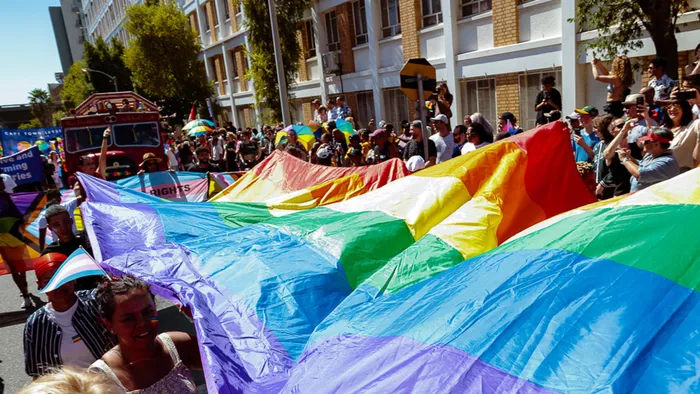
The Cape Town Pride Parade takes place on Saturday.
Image: Supplied
As Cape Town Pride’s Mardi Gras prepares to take place this Saturday, against the backdrop of the city’s preparations to host World Pride 2028, reports that churches and religious leaders are being mobilised ahead of the event have sparked intense debate. The mobilisation has drawn sharp criticism from LGBTQIA+ groups, with calls for restraint from civil society, and official clarification from the City of Cape Town, highlighting the complex interplay of constitutional rights in a diverse society.
Controversial pastor Reverend Oscar Bougardt, founder of Calvary H.O.P.E Ministries, confirmed that faith leaders are being rallied ahead of the event. He described the initiative as “spiritual reflection and moral engagement,” emphasising that it is not intended as confrontation.
“As faith leaders, we believe it is our responsibility to respond to cultural developments that we feel have significant implications for families and children,” Bougardt said.
“Many within our faith communities are deeply concerned about what they see as gender ideology being normalised in society, particularly where it may influence young people. Our mobilisation is focused on prayer, guidance, and reaffirming biblical teachings regarding identity, marriage, and family.”
Bougardt stressed that there are no plans for unlawful disruption. “Any gathering associated with our mobilisation would be peaceful, lawful, and prayer-based. We have made it clear that our engagement must remain respectful and within the framework of the Constitution. We do not condone harassment, hostility, or violence,” he said.
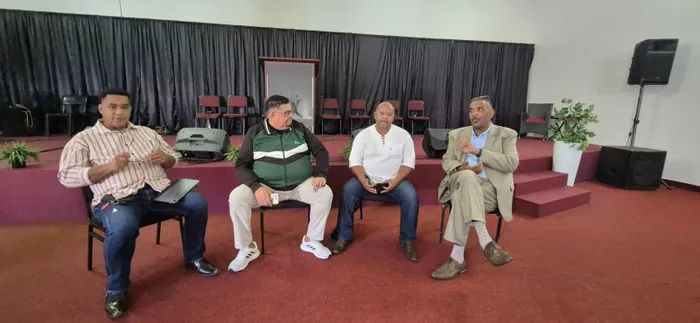
The church leaders said they are against the City backing the event
Image: Tracy-Lynn Ruiters
Responding to concerns that the mobilisation could heighten tensions or be perceived as targeting the LGBTQIA+ community, Bougardt said: “Our position is rooted in religious conviction, not personal hostility. We affirm that every individual is made in the image of God and deserves dignity and respect. At the same time, we cannot ignore what we understand Scripture to teach regarding sexual ethics and gender. Holding to biblical doctrine should not be equated with hatred.”
He further emphasised the role of conscience in guiding faith communities. “We are not against anyone personally, but we are compelled by conscience to uphold what we see as biblical truths. What is happening in society today is very concerning.
The ideology of the LGBTQ is being promoted strongly in media and popular culture, and young minds are particularly susceptible. If the Church remains silent, these influences will go unchecked. As the saying goes: ‘Don’t let that which matters most be at the mercy of things that matter least.’ We have a responsibility as men and women of God to generate that pushback, using every tool at our disposal, always within legal and constitutional bounds.”
Bougardt also raised concerns about public funding. “There is growing concern among many citizens that public funds, drawn from taxpayers, may be directed toward hosting and promoting this global event, while pressing social challenges such as hunger, homelessness, unemployment, and community safety continue to affect thousands of residents. If public resources are to be allocated toward large-scale international events, then transparency, consultation, and sensitivity to broader societal needs are essential,” he said.
Other faith leaders have expressed similar views. Bishop John Gordan, part of the Western Cape Church Leaders Unite, said his group stands in “push back” against the event.
“It’s not like we can do much about what has already been decided, but we are in disagreement with the City for allowing this event to take place,” Gordan said. “As a church we stand strong on Bible principles. A union is between husband and wife. What is happening in the world today is very, very alarming. The ideology of the LGBTQ is being pushed in a very strong way.”
Apostle Henry Van Der Zandt, from Mitchells Plain, echoed the sentiment. “We totally disagree with what the City of Cape Town is doing. Firstly, I want to say that we don’t hate gay people, we are against the ideology. We are not against people. We represent the Kingdom of God, a spiritual entity, and we stand against what the government is trying to create. It is not a privilege; it is my right to stand up for biblical truths,” he said.
Reverend Donovan Wenn, moderator of Universal Outreach Mission Church in Macassar, similarly argued that Pride events are “colourful and glamorous” portrayals that he believes can influence children.
“We are not mobilising to create enemies; we are mobilising to stand on the Word of God,” he said. “When you look at the Bible and Sodom and Gomorrah, God destroyed the city. There wasn’t even an opportunity for them to turn back. Does the City want Cape Town to go through what Sodom and Gomorrah went through?”
While faith leaders stress conscience and biblical principles, civil society groups have called for careful restraint. Siya Monakali of Ilitha Labantu said South Africa’s constitutional democracy protects freedom of religion, freedom of expression, and the right to equality.
“These rights coexist and must be exercised responsibly and without infringing on the rights of others, whether individually or as a community,” Monakali said.
“In a society as diverse as ours, tolerance and mutual respect are essential. Differing religious, cultural, or identity-based beliefs do not justify hostility, intimidation, or the demonisation of one another.”
Monakali emphasised that all gatherings whether organised by faith-based institutions, LGBTQI+ structures, or any other sector should be guided by restraint, inclusivity, and respect.
“Leadership across sectors carries a responsibility to ensure mobilisation and public messaging do not heighten tensions in a country already confronting high levels of violence and social division,” he said. “Ilitha Labantu affirms that all public events must remain peaceful and that the protection of dignity, safety, and constitutional rights remains non-negotiable.”
From within the LGBTQIA+ community, responses have been more direct. Luiz De Barros, Editor-in-Chief of MambaOnline.com, described the mobilisation as “deeply disappointing.”
“There is no justification for any church to mobilise against Cape Town Pride or WorldPride. These are joyful events that celebrate a community’s identity, rights, achievements, and freedoms in a democratic South Africa,” he said. “While churches have every right to express their views, they do not have the right to attempt to prevent the LGBTQIA+ community from hosting its celebrations, nor to deter allies, friends, and families from joining us.”
De Barros warned that rhetoric portraying LGBTQIA+ people as immoral or a threat to families is not only false but dangerous, potentially contributing to discrimination or violent hate crimes. “Pride should be a celebration, but safety and dignity must always remain priorities,” he said.
He also rejected the notion that Pride requires religious approval. “Queer people do not need permission from religious institutions to live openly and freely. If anything, religious organisations which are often powerful and influential should be reaching out to Pride organisers to ask how they can foster greater inclusion and repair the harm that many faith institutions have historically inflicted on LGBTQIA+ people. Meaningful dialogue must be grounded in mutual respect and an acknowledgement of that history.”
The City of Cape Town has sought to clarify its position.
In a response to a media enquiry, the municipality said it is not aware of any planned protest nor has it received official notification of a gathering beyond the approved Cape Town Pride events.
“The right to protest is enshrined in the Constitution, and citizens are entitled to express their views and live their lives free from prejudice, while respecting the rights of others,” the City said.
“The Cape Town Pride parade and Mardi Gras are permitted events. As such, security, traffic services, and event marshals will be deployed to ensure safety and maintain order during the road procession and at the stadium Mardi Gras. The City of Cape Town has supported the Cape Town Pride Festival through its established events support process for more than a decade, as it does with nearly 200 events annually.”