Opposition parties critical of Ramaphosa’s address to the nation


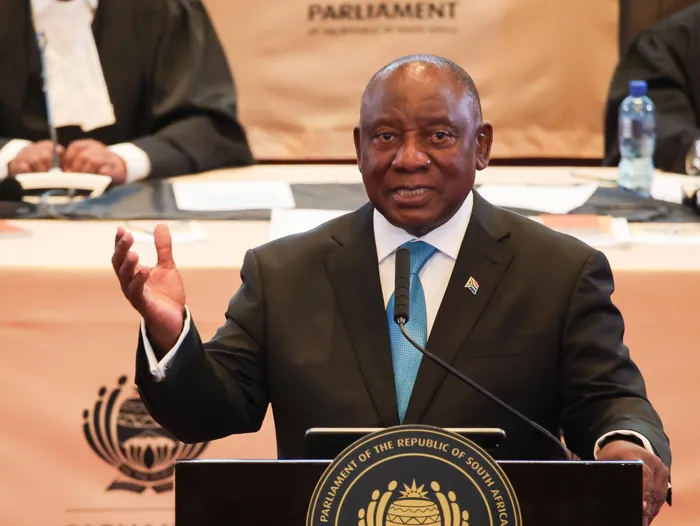
President Cyril Ramaphosa delivering the State of the Nation Address (SoNA) at a joint sitting of of Parliament in Cape Town on February 12, 2026.
Image: GCIS
Political parties across the spectrum have delivered mixed but largely critical reactions to Cyril Ramaphosa’s 2026 State of the Nation Address, with concerns centred on poverty, crime, economic reform and service delivery in South Africa.
Brett Herron, Secretary-General of GOOD, acknowledged positive economic signals but warned that recovery has not translated into improved living conditions for millions. He said unemployment, hunger and homelessness remain widespread and argued government must introduce meaningful social support, including expanded basic income.
Herron also supported strengthening the National Prosecuting Authority and welcomed military support to police in the Western Cape and Gauteng, but stressed that lasting crime prevention requires addressing poverty, housing and spatial inequality.
Similarly critical, Rod Solomons of Build One South Africa described the address as weak and disconnected from citizens’ daily realities. He argued government failed to present decisive strategies to tackle unemployment, crime and failing infrastructure. Solomons also called for the removal of Police Minister Senzo Mchunu, warning that crime will persist without political accountability and stronger policing capacity.
The Democratic Alliance leader John Steenhuisen offered a more balanced response, acknowledging economic improvements including stabilising debt and improving investor confidence.
However, Steenhuisen said faster reform is needed to reduce unemployment and lower living costs.
The DA called for greater private sector involvement in transport and energy infrastructure and argued Eskom should relinquish its monopoly over transmission to the National Transmission Company of South Africa.
While supporting the deployment of the South African National Defence Force to assist the South African Police Service, the party stressed that improved intelligence and investigative capacity are needed for long-term safety. The DA also criticised failing municipalities, arguing effective governance is critical for reliable services and economic growth.
From a different perspective, Corné Mulder, leader of the Freedom Front Plus, accused Ramaphosa of presenting an overly optimistic view of national conditions.
He compared the address to narratives used by Jacob Zuma, arguing it ignored deteriorating municipal services and crises such as water shortages in Johannesburg. Mulder cited low economic growth projections from the International Monetary Fund, warning they remain insufficient to reduce unemployment.
He also criticised Black Economic Empowerment policies, rising youth unemployment, municipal debt and failing infrastructure.
Mulder further raised concerns about border control, international relations and government’s response to agricultural crises, including foot-and-mouth disease, arguing the address lacked decisive reform and strategic repositioning.
Collectively, the responses reflect broad political consensus that while economic indicators show improvement, significant concerns remain about unemployment, crime, failing municipalities and service delivery.
Opposition and coalition partners alike emphasised that economic stability alone is insufficient without accelerated reform, improved governance and direct interventions to address poverty and public safety challenges facing millions of South Africans.