Military deployment welcomed, but calls for sustained strategy to combat gang violence


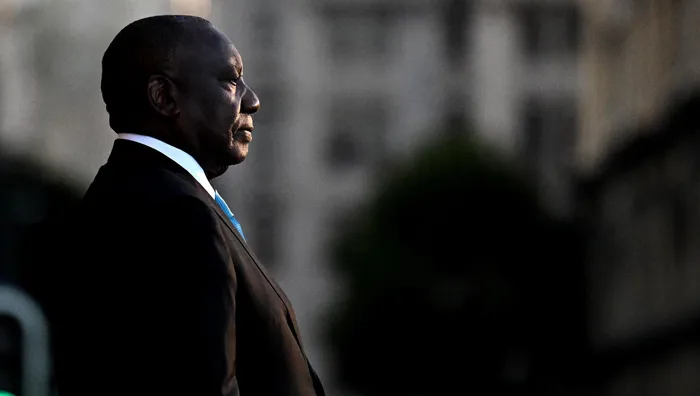
President Ramaphosa’s 2026 SONA address projects confidence and recovery, but echoes years of unfulfilled promises.
Image: Phando Jikelo / Parliament of SA
Crime experts, community activists and organisations have cautiously welcomed welcomed President Cyril Ramaphosa's deployment of the army to crime ravaged communities in the Western Cape.
Ramaphosa in his State of the Nation Address, delivered a stark reflection on South Africa’s crime crisis, describing it as one of the most pressing threats to social stability and democratic progress.
He emphasised that the consequences of crime extend far beyond statistics, saying the cost is measured in lives lost and futures cut short. The President highlighted the deep emotional and psychological toll of crime, noting that fear has become a daily reality for many South Africans. “The cost of crime is not just in numbers, it is in lives cut short, dreams destroyed, and the fear that paralyzes our communities,” he said.
The President warned that organised crime now represents the most immediate threat to South Africa’s democracy. He said criminal syndicates have grown more sophisticated, infiltrating communities and exploiting social vulnerabilities.
Government, he said, would intensify its focus on dismantling these networks through improved intelligence gathering, increased use of technology, and coordinated law enforcement strategies.
“Organised crime is no longer a peripheral problem it is an urgent threat that affects every South African,” he said.
Central to the government’s plan is the deployment of the SANDF to support the South African Police Service in high-risk areas. Ramaphosa confirmed that he has instructed the Ministers of Police and Defence to develop a detailed technical plan identifying priority deployment zones in the Western Cape and Gauteng.
The deployment is expected to begin within days, with security forces tasked with stabilising violence-ridden areas and strengthening policing operations.
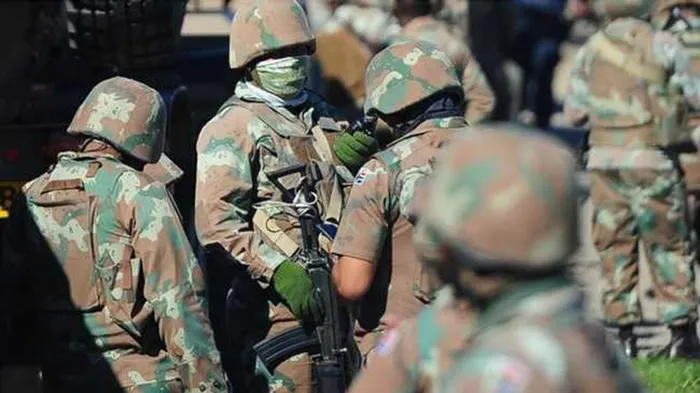
President Cyril Ramaphosa has announced the deployment of the South African National Defence Force to the Western Cape
Image: File
Independent crime researcher Calvin Rafadi welcomed the decision, describing the military as a force multiplier capable of providing much-needed support to police and anti-gang units operating in some of the country’s most dangerous areas.
Rafadi said additional security capacity is urgently needed to address escalating gang violence and expressed hope that the deployment could provide relief to communities, particularly school children who continue to live under the constant threat of gang shootings.
He explained that the military is expected to assist law enforcement through visible crime prevention measures, including roadblocks, stop-and-search operations, and support during raids targeting suspected drug outlets and gang strongholds.
Rafadi stressed that while such interventions are important in restoring stability, they should be accompanied by rehabilitation programmes aimed at preventing young people from being recruited into gangs.
“The immediate task is to remove the guns and restore some safety, but the longer-term work must focus on rehabilitation and breaking the cycle of recruitment,” he said.
In contrast, crime expert and University of Cape Town criminology researcher Simon Howell raised serious concerns about relying on military deployments as a primary crime-fighting strategy. Howell argued that similar interventions have been attempted repeatedly over the past three decades without producing sustainable results.
He warned that gangs are not solely criminal structures but are deeply rooted in socio-economic conditions such as poverty, unemployment, marginalisation, and disinvestment. “Military interventions may stabilise areas temporarily, but they do not address the fundamental drivers of gang formation and growth,” he said.
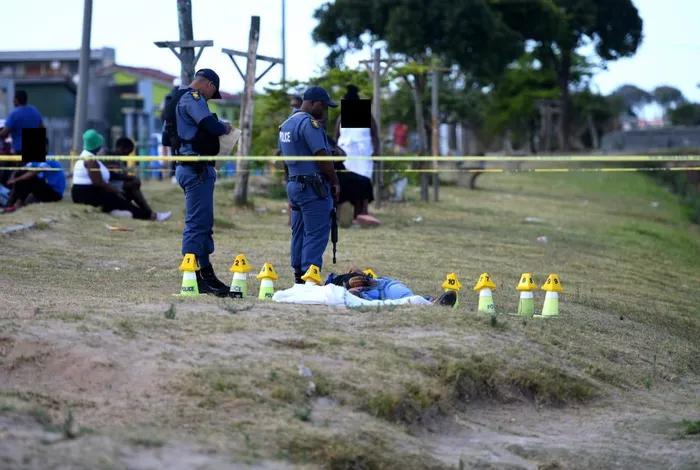
The Cape Flats has been experiencing multiple shooting incidents over the past few months
Image: Leon Knipe
Howell cautioned that heavy military presence could unintentionally deepen community trauma and widen mistrust between residents and law enforcement agencies.
He argued that while the military may play a limited role in stabilising volatile areas, lasting solutions require broader social and economic reforms that tackle the underlying causes of violence.
Crime expert Chad Thomas added context on the military’s role.
“The deployment of the SANDF is a show of force and indicates a meaningful commitment to try to curb crime. However, one must remember that the military is trained differently to SAPS. Soldiers specialise in warfare, not policing. The State needs to explain what exactly the SANDF will do,” he said.
Thomas suggested a model similar to the former Commando structures: “The commandos provided perimeter security during operations, allowing SAPS to conduct searches safely. A similar SANDF model as a force multiplier under SAPS command would work well.”
Community safety activist Veranique Benji Williams, founder of the Faith and Hope Missing Persons Unit, said the announcement reflects what many residents have been calling for over several years.
Williams, who previously criticised communities for remaining silent while children were killed in gang crossfire, described the deployment as a positive step but urged the government to ensure that the intervention is sustained rather than temporary.
She said previous security deployments, including specialised policing units, had only reduced crime for short periods before violence resurged.Williams warned that communities have heard similar commitments before and remain cautiously hopeful that this intervention will translate into long-term safety improvements.
The Cape Flats Safety Forum also welcomed the announcement, noting that calls for military intervention date back to December 2022 when the organisation warned that gang violence had placed communities under siege.
The forum emphasised the urgency of rapid deployment, expressing concern that delays could undermine public confidence and allow violence to continue unchecked. “We hope soldiers are on the ground in the coming days, not months,” it said, stressing the need for immediate action to protect residents.
Fight Against Crime South Africa spokesperson Jay Jay Idel said while the organisation supports the announcement, its success depends entirely on whether it is structured, sustained, and produces measurable results.
Idel warned that short-term deployments designed to generate publicity would fail to address the scale of the crisis. He noted that communities are not experiencing violence because of election cycles but because gang activity has overwhelmed policing capacity.
Idel stressed that the SANDF’s role should be limited to stabilisation: securing hotspots, supporting specialised anti-gang operations, and allowing the police and units like the Anti-Gang Unit to function effectively.
He described the current policing environment as severely strained, where mass shootings tie up every available police resource, leaving victims of gender-based violence, assault, and other crimes waiting for help.
“Families already sleep on floors to avoid stray bullets. Businesses close early because gangs decide when violence happens. People are not scared of soldiers they are tired of funerals,” he said.
For many, the success of the intervention will ultimately be measured not by political promises, but by safer streets, fewer funerals, and the chance for children to grow up free from the shadow of violence a tangible shift in the daily reality of life on the Cape Flats and other affected areas.