South African author responds to European censorship controversy over From The River to the Sea colouring book


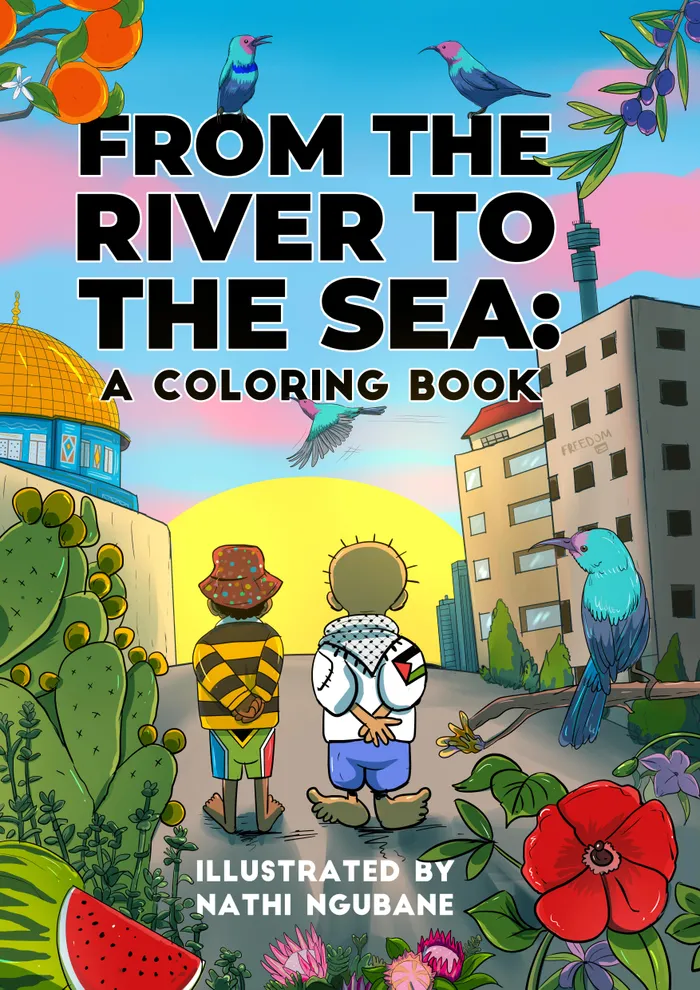
The front cover of the colouring book
Image: Supplied
South African author and content creator Nathi Ngubane has reacted after his children’s colouring book From the River to the Sea (FTRTTS) was blocked from import and distribution in France following a police raid on the independent Paris bookstore Violette and Co.
According to reports five police officers, accompanied by a prosecutor, entered the shop in an effort to confiscate copies, although none were found.
The book had been rendered illegal for sale and distribution in France since October 2025, leaving bookstores in a legal “purgatory” where carrying it could result in penalties.
The French ban follows earlier action in Germany, where the Hugendubel bookstore chain removed the title from its catalogue.
The retailer stated that the book was “removed immediately upon learning of its existence” and expressed regret that it had stocked the title. Jewish organisations have sharply criticised the publication, arguing that it presents a one-sided narrative of the Israeli-Palestinian conflict and amounts to ideological indoctrination aimed at children.
South African Zionist Federation national spokesperson Rolene Marks welcomed France’s decision, calling the book harmful.
“What’s sold as innocent education is blatant propaganda targeting kids as young as six,” Marks said.
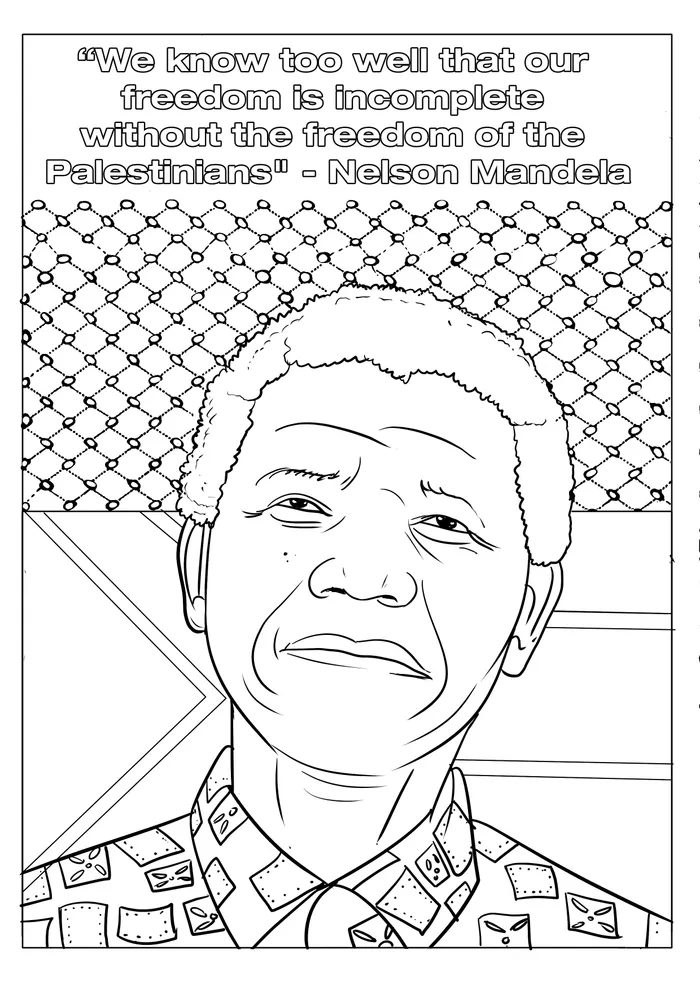
One of the pages in the book
Image: Supplied
She added that the book libellously brands Israel an ‘apartheid’ state; strips Palestinians of any agency or accountability; glorifies ‘martyrs’ as heroes; and normalises violence at religious sites.
Marks said France’s move reflected the responsibility of democracies to protect children.
“France drew the right line. Democracies must shield children from violence-glorifying radicalisation, no matter how cutely packaged.”
Publisher Social Bandit Media criticised the French decision.
Azad Essa, publisher at Social Bandit Media, said the company only learned of the legal status of the book after the raid at Violette and Co.
“So we are in a ridiculous position in which the book is not formally banned but is illegal to distribute, leaving it in a kind of purgatory in which book shops could still get in trouble for carrying it.
“We have tried to circumvent this absurdity by giving the e-book out for free. Anyone who wants the French version can mail us and get the e-book,” Essa said.
He added that while the publisher had received strong support, the French authorities’ actions were disappointing but unsurprising.
“These are the same states who have allowed massacres upon massacres of children to take place in Gaza. Of course it follows that they will oppose educational efforts to teach children about Palestine,” he said.
Ngubane said the book had faced opposition long before the French decision.
In South Africa, it met immediate backlash from the South African Jewish Board of Deputies, who accused the book of promoting “the obliteration of Jews” and calling for genocide, framing the educational material as a tool for indoctrination. “This led to the removal of our book from South Africa’s largest book chain store, Exclusive Books,” he said.
Internationally, the book had also faced suppression. Early last year, Israeli police raided the Educational Bookshop in East Jerusalem, confiscating books containing the word “Palestine” or images of its flag, including Ngubane’s colouring book, which was cited as evidence of incitement and support for terrorism.
The official Israeli police account featured the book in a social media post to justify the raid.
Ngubane, whose team produces educational content through Social Bandit Media, said the book was intended to help children engage with complex global issues in an age-appropriate way.
“I work with an incredible team called Social Bandit Media. We produce content for kids that looks to make sense of the world or an important issue. It’s an intervention, so to speak. We focus on making accessible and cost-effective materials to educate and inspire a new generation,” he said.
He explained that the inspiration for the book came after South Africa approached the International Court of Justice with charges of genocide against the Israeli government.
“When the South African lawyers approached the ICJ with a charge of genocide against the Israeli government, we wanted to capture this moment in history by creating not just any colouring book for kids, but a book that told a story about Palestine, where kids can learn about the injustices of the Nakba, Palestine’s literary icons like Edward Said and Ghassan Kanafani, and what it truly means to be in solidarity with the oppressed,” he said.
“My hope for this colouring book was to get children to be more informed about the devastating situation their peers are facing in Gaza. Children cannot be shielded from these conversations but rather included in an age-appropriate way, and this book was a way to assist them in engaging with difficult topics.”
Reacting to the French developments, Ngubane said efforts to restrict the book form part of a wider attempt to silence Palestinian perspectives.
“The strategy of silencing Palestinian voices is failing. These tactics only reveal the weakness of Israel’s and its supporters’ narrative. Any attempt to speak out against the injustice and genocide inflicted on Palestinians is quickly met with gaslighting, deflection, and intimidation,” he said.
Ngubane thanked supporters of Palestinian literature, including Violette and Co. “I want to express my deep gratitude to Violette and Co for their commitment to elevating Palestinian literature.
“This pattern of harassment, raids and intimidation by Zionists is appalling. These hysterical accusations are not about our book’s content; they are an attempt to silence Palestinian narratives. Such actions only strengthen us to continue echoing Palestinian voices and stories. We remain committed to this work until Palestine is free.”
Social Bandit Media has denied allegations that the book promotes hate or propaganda, stating that accusations of antisemitism are “completely unfounded” and describing the French intervention as censorship and an attack on artistic freedom.
The publisher reports that the book has sold at least 22 000 copies globally, including in South Africa, the United States, the United Kingdom, Switzerland, the Netherlands, India, and Pakistan. As European authorities continue to assess the limits of lawful expression in children’s publishing, From the River to the Sea has become a focal point in a wider global debate about education, political messaging, and the role of literature in shaping young minds.