The life and legacy of Dr. Diana Ferrus: a poet and activist who shaped South Africa


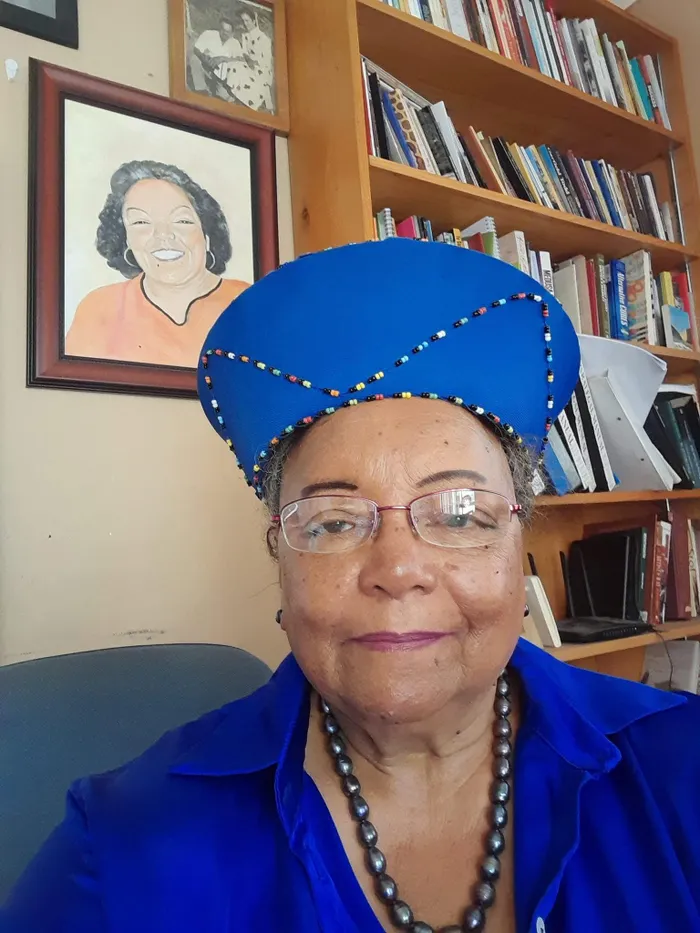
Dr Diana Ferrus has died at the age of 72.
Image: Facebook/Laniëlle Hartzenberg
South Africa mourns the passing of Dr Diana Ferrus, the poet, storyteller, and cultural activist whose words carried the weight of history, the depth of empathy, and an unflinching call for justice. She died at the age of 72, leaving behind a legacy that reaches far beyond literature, shaping the hearts and minds of generations.
President Cyril Ramaphosa reflected on Ferrus as a voice that never shied away from the truths of the nation. He said she was a creative stalwart whose profound understanding of the human condition and the all-encompassing injustices of apartheid inspired her way with words.
Her poetry was never just verse; it was a mirror for society, a vessel for memory, and a reminder of shared humanity.
“She was a patriot who painted our nation in prose that awakened us to the essence of our humanity. No-one could remain unaffected by her insight, her deep appreciation of our nation’s cultural and natural endowments, or her demands for justice and the restoration of the dignity of a dispossessed and disempowered people,” he said.
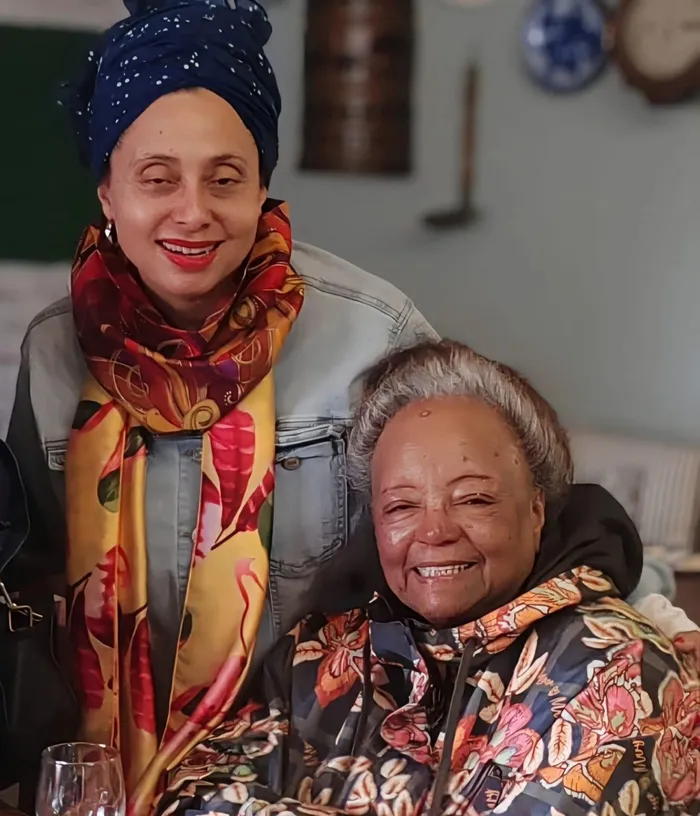
Dr. Marlene Le Roux and Dr. Diana Ferrus
Image: Supplied
Born in Worcester in the Western Cape, Diana Ferrus was the third of six children. From an early age, she was steeped in the oral storytelling traditions of her family, where poetry and song were woven into everyday life.
At 14, she began writing about her personal experiences, exploring the complexities of race, identity, gender, and social inequality themes that would remain central to her work.
Despite financial hardship and the constraints of apartheid, Ferrus cultivated a lifelong love of reading and writing that became both a sanctuary and a weapon against injustice.
Her academic journey took her to the University of the Western Cape, where she worked as an administrator and studied Women’s and Gender Studies. She became deeply involved in fostering creative expression and social activism, mentoring younger writers and engaging with the English and WGS departments.
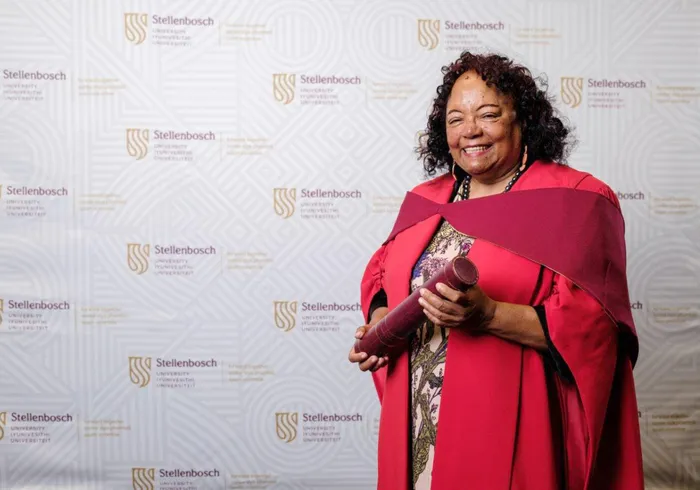
Diana Ferrus receiving her Honoree Doctorate
Image: Picture: Stefan Els
Professor Desiree Lewis, Chair of Women and Gender Studies at UWC, described her as a guiding presence.
“Dr Ferrus was an active, well-known and beloved participant in the university community that drove women's rights and feminist agendas in the mid-1990s. At this time, many progressive women staff and students, including administrators - were united in finding a distinct voice to celebrate women's (especially black) freedoms and creativity.
She had close ties with the English Department and often performed her poetry at campus events and off-campus either co-organised by or alongside students and staff in UWC's English department. The political vision of the WGS department and the creative vision of the English department offered her important reference points at UWC.
“She was an ardent believer in speaking out, and speaking truth to power. Her poem about Sara Baartman especially reflected her commitment to unearthing the less-known stories, which is in line with UWC's long legacy of speaking out for social justice, and aligning scholarship and creative expression with a grounded political vision.”
Ferrus’ literary prominence was cemented by her 1998 poem I’ve Come to Take You Home, written for Sarah Baartman, the Khoikhoi woman who had been exhibited in Europe in the 19th century.
The poem, part lament, part summons to justice, played a pivotal role in persuading the French government to return Baartman’s remains to South Africa. Ferrus recited it in the French Senate and accompanied Baartman’s remains back home, transforming history with words.
In April 2022, Stellenbosch University formally recognised Ferrus’ extraordinary contribution to literature, culture, and mentorship by awarding her an honorary Doctor of Philosophy (DPhil), honoris causa. She received the degree during an in-person graduation ceremony for the Faculty of Arts and Social Sciences.
Professor Nico Koopman, Deputy Vice-Chancellor for Social Impact, Transformation and Personnel, said, “Diana was an honorary doctor of Stellenbosch University. She embodied the values of Stellenbosch University: She embodied excellence throughout her life. She embodied compassion, especially to the most vulnerable. She advances accountability and was a responsible citizen.
“She treated everyone from every background with respect and dignity. And she advanced the equality of all people and creatures through her commitment to a society of fairness and equity, a society of equilibrium where some don’t have too much and others too little. What is significant is how she aspired to a justice that does not alienate, but that reconciles and brings people across all boundaries together.”
Beyond academia, Ferrus’ impact on performance and the arts was profound. Marlene le Roux, CEO of Artscape, and a friend of Ferrus recalled:
“Diana Ferrus was an icon of letters and a mentor-teacher whose extraordinary achievements changed the world far beyond our shores. Her seminal poem, ‘I’ve come to take you home,’ is widely credited with helping persuade the French government to return the remains of Sara Baartman after nearly two centuries.
“That was Diana’s power with words: language as a key, a balm, and a summons to justice. Beneath that power was a beautiful, gentle soul with a quiet determination that never allowed us to forget where we come from. She embraced our ancestry with pride and dignity and invited us to do the same.”
Le Roux recalled a memorable night early in their friendship, singing ghoema songs with Ferrus until dawn, and described how she brought history alive in her performance.
During Artscape’s 50th anniversary online celebrations, Ferrus walked among mannequins dressed in colonial-era opera costumes and delivered her poetry with effortless grace, reminding audiences of Baartman’s journey and the legacies of exploitation and resilience.
Le Roux remembered Ferrus as a steadfast activist for women’s rights, deeply connected to UWC, and as a mentor and friend. Their collaborations included Legends in Harmony in 2024, a tribute to living legends and their protégés, and the documentary Bones: A Story of Homecoming, which partly captured Diana’s artistic and personal journey.
Le Roux recalled their last meeting at a Netherlands Embassy function, where Ferrus, fresh from the airport, smiled and said she had come straight from her travels, refusing to slow down.
“Diana didn’t slow down. Her goodbye dance was a little like singing a ghoema medley that night at the Minister’s house, full-hearted, generous until the light went out. Rest well, Diana. You have taken us home to ourselves, and we will carry your song forward.”
In 2023, at the Iziko Museum’s Slave Lodge, Ferrus’ poem My Name is February was staged for the Dutch Royal visit, a collaboration with theatre director Basil Appollis, dancers, and visual artists.
“None of us imagined that the performance and the accompanying protest in the streets of the city would lead the main news in the Netherlands that night. But that was Diana: truth-teller, conscience-keeper, always finding the note that resonates far beyond the room,” said Appollis.
Throughout her life, Diana Ferrus wrote, performed, and mentored with a deep commitment to justice, dignity, and creativity. Her work, produced in both Afrikaans and English, explored identity, heritage, gender equality, and historical memory, ensuring that stories of resilience and resistance remain part of South Africa’s national consciousness.
She leaves behind a legacy that continues to inspire writers, activists, and artists, reminding South Africans of the power of words to heal, to confront, and to bring home the stories that history almost forgot.
President Ramaphosa reflected, “May Diana’s soul rest in the peace to which she invited Sarah Baartman in her landmark poem.”