District Six at 60: remembering a vibrant community's fight against Apartheid


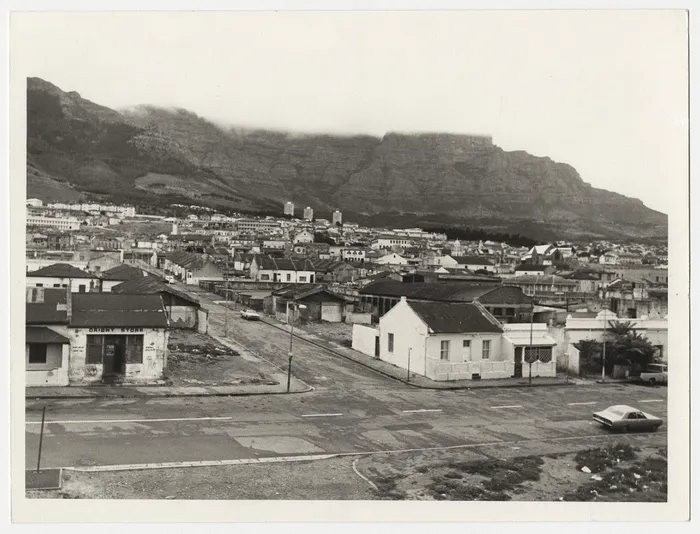
District Six in its years
Image: Towfiek Toefy Collection, District Six Museum.
In the words of the famous song District Six, written by South African musician and playwright David Kramer, District Six is never truly gone, it lives on in memory, especially “when the South Easter blows”.
Six decades after the area was declared a White Group Area, that sentiment still lingers over Cape Town, carried in stories, music and the unresolved ache of forced removals that reshaped thousands of lives.
This year marks 60 years since that decision led to the forced removals of more than 60,000 people and the destruction of one of South Africa’s most vibrant urban communities. As the country reflects on this painful milestone, the District Six Museum continues to hold space for memory, dialogue and future-focused reflection.
“The Museum is mindful that the landscape and the community of District Six is changing as the restitution process unfolds and our elders pass on,” said Chrischene Julius, director of the District Six Museum.
“We mark 60 years since the declaration of District Six as a White Group Area by focusing on future generations and their sense-making of the legacy of removals in their families and communities.”
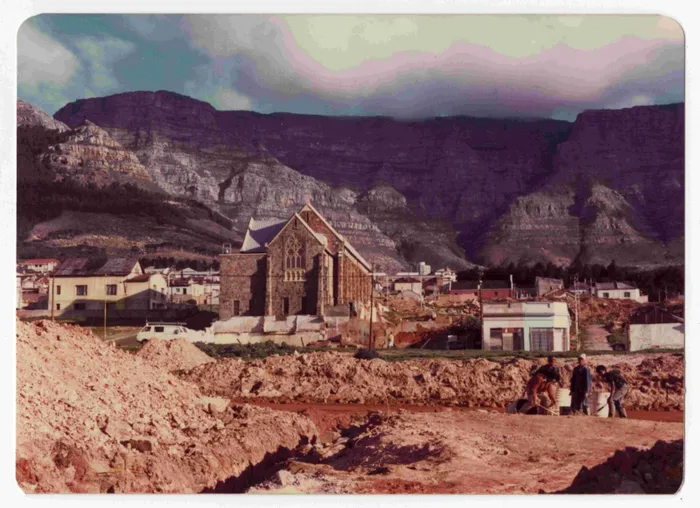
District Six remembered.
Image: District Six Museum
Julius explained that the anniversary raises difficult but necessary questions about belonging, especially for younger generations who have returned to the area through restitution.
“For those younger generations who have returned to District Six through the restitution process, how do we answer the question of ‘who belongs to District Six’ do you need a lived experience of growing up in this neighbourhood or can we all claim the legacy of this multicultural and tolerant community as a model for our future?”
Long before the bulldozers arrived, District Six was a deeply layered and diverse part of Cape Town.
“The area that is District Six has always been part of the city since it was a colonial settlement,” Julius said.
“The people of District Six can claim their origins from indigenous people, people from other regions of the Cape, as well as enslaved people who settled there after Emancipation.”
She noted that over time, the area became home to people from across the world.
“As the neighbourhood flourished, District Six became home to Jewish immigrants and refugees from Eastern Europe. Located as it was near to the harbour, in a bustling port city, it became home to all,” Julius said.
This diversity gave rise to a multicultural working-class community grounded in “hard work, a spirit of sharing and a particular black urban identity premised on belonging to the city,” she added.
District Six was also a cultural powerhouse.
“It nurtured strong educational and cultural institutions; it was the home that birthed the goema of the klopse, the rhythm of Malay and Christmas Choirs and nurtured the emergence of Cape Jazz,” Julius said, adding that “it was home to a loved and protected LGBTQIA+ community.”
Often described as more than a building, the District Six Museum operates as a living archive.
“The foundation of the museum is memory,” Julius explained. “We collect and interrogate memory to move us beyond nostalgia, to a place in which we look at the past critically and with care.”
Former residents play a central role in this work, she said. “At the core of our creative workshops and projects are former residents of District Six who are active participants in the curation of exhibitions and memorial rituals. On a daily basis they also act as storytellers, sharing their experience of living in District Six and of the removals.”
Creative practice is key to this process, she added. “We use the arts and creative acts to stimulate memory and to create a space of sense-making. This includes knitting and crochet, writing, mural-making, working with clay and performance art, amongst a few modalities.”
Families who were forcibly removed continue to return to the museum, often across generations.
“These are the children of ex-residents bringing their parents in to revisit their memories, or ex-residents with their children and grandchildren sharing their legacy with a measure of pain and pride,” Julius said. “Oftentimes we have children of ex-residents who visit the Museum on their own, looking to make a connection with their own past.”
Younger generations, many with no lived experience of apartheid, are also engaging deeply with the history.
“Learners have no lived experience of apartheid, and we find that once they leave the Museum, they are awakened to the legacy of group areas and other apartheid laws in their lives,” she noted.
As first-hand testimonies risk being lost, the museum’s role continues to evolve. “Even though we may lose these memories, we do not lose their impact on our lives,” Julius explained. “Our work is about fostering difficult dialogues around race and inequality amongst young and old alike.”
The story of District Six continues to resonate far beyond South Africa’s borders. Julius said international visitors often recognise parallels with forced removals in other parts of the world, from urban clearances in the United States to segregation laws elsewhere.
“The realisation that we carried our identity cards and pass books as part of a tightly controlled system of racial classification always has a huge impact. People find it incredulous.”
Locally, the museum remains a space of unexpected connection. “In the past week, two guides who would’ve been classified as ‘White’ and ‘Cape Malay’ under apartheid, discovered they were family after years of working with each other,” Julius said. “The Museum provides a backdrop and holding space in which these experiences can be shared.”
Sixty years on, Julius believes the story of District Six must continue to be told. “It is important because District Six is a model for how communities can co-exist today,” she said. “The idea of ‘kanala’ is a real model, like ubuntu, for forging new communities in post-Apartheid South Africa.”
The museum faces ongoing challenges, particularly sustainability. “The Museum’s biggest challenge is ensuring its sustainability for the next 60 years and more,” Julius said. “We are an independent Museum with an important community archive, a robust visitor engagement programme and a curatorial practice that works with the joys and complexities.”
Looking ahead, she said the message of this 60th anniversary remains as urgent as ever: “Never, never, never again. This was the rallying cry of land claimants as they fought to come back to District Six. It still applies to the racial, spatial and economic inequality South Africans face today.”