Lack of rape kits will jeopardise cases, denying survivors justice


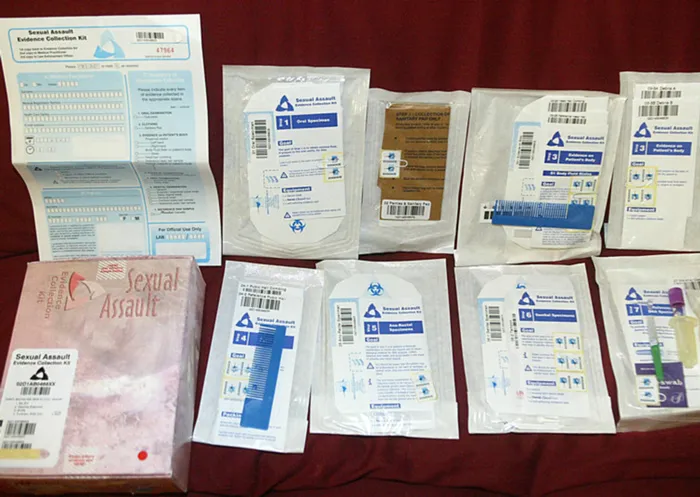
Rape kit!!!!These are contents of a Sexual Assault Evidence Collection Kit that is used for DNA testing on rape cases. The kit contains a form to fill-in both the doctor and the patients' particulars. After filling in the form then the procedure according to steps is followed-Step1: Oral Specimen, Step2: Collection of Sanitary Specimen only, Step3: Evidence on patient's body(Body Fluid Stains): Step3(i). Contains Head hair comb: Step3(ii). Debris(a) and Debris(b), Step4: Pubic Hair Comb, Step5: Ano Rectal Specimens, Step6: Genital Specimens and Step7: Reference DNA Specimens. 180806. Picture: Bongiwe Mchunu There is an ongoing debate regarding the D1 and D7 rape kits availability in the Western Cape
Image: File
Rape survivors in the Western Cape will find it difficult to prove their cases in court after several police stations across the province ran out of rape kits, essential in collecting evidence, a claim denied by police.
Reports of rape kit shortages across the Western Cape have ignited a fierce debate between police authorities and organisations working at the frontline of gender-based violence (GBV), with claims and counterclaims painting sharply contrasting versions of reality.
While the South African Police Service (SAPS) insists that the province has thousands of Adult and Paediatric Sexual Assault Evidence Kits in stock, on-the-ground accounts paint a far more troubling picture.
The controversy escalated after a highly placed source revealed that more than 20 police stations and FCS units were currently without D1 kits, used in adult sexual assault cases and very few D7 kits, used in child rape cases.
According to the source, shortages had affected stations not only across the Cape Flats but stretch as for as rural areas, where access barriers are already high.
Some of the kits that are available, the source added, had expired in October 2025, forcing officers to borrow from neighbouring stations or delay examinations. In several instances, survivors were reportedly told to wait, return later, or travel to other facilities.
According to internal documentation seen by this publication, out of 172 police stations across the Western Cape, more than 30 were reported to have zero D1 kits available, it was signed off on 2 December 2025, while several others had critically low stock. Some of the most alarming examples included:
Redelinghuys: 0 D1 kits; 30 D7 kits; Elands Bay and Piketberg: 0 adult kits; Pacaltsdorp: 0 D1 kits; 48 D7 kits with George, Knysna, Groot Brakrivier and Mossel Bay also showing zero kits of either type; Atlantis: 0 D1 and 0 D7 kits, while neighbouring stations Melkbosstrand, Table View and Philadelphia also recorded zero kits.
High-crime areas such as Harare, Khayelitsha, Mfuleni, Lwandle, Mitchell’s Plain, Ocean View, Belhar, Grassy Park and Wynberg reportedly had either no D1 or no D7 kits available
Central Karoo (Beaufort West, Laingsburg, Leeu Gamka, Murraysburg, Prince Albert): only two D1 kits and three D7 kits at Laingsburg
The claims sparked backlash after SAPS issued a statement denying any shortage. National spokesperson Brigadier Athlenda Mathe said the reports were misleading and added that the Western Cape had a “healthy surplus” of kits.
“The South African Police Service has noted misleading reports indicating that there is a shortage of rape kits in the Western Cape. Current stock levels in the province indicate that there are more than 3 700 rape kits available, for both adults and children,” Mathe said.
Mathe said an additional 2 850 kits had been issued to the Western Cape, but only after a requisition was placed on 10 December- a day after the story about the shortages broke.
These kits are scheduled for delivery on 15 December for wider distribution.
“Rape kits are immediately distributed to stations and FCS units where they are utilised,” she said. According to SAPS, the monthly usage in the Western Cape is 197 adult kits and 125 paediatric kits, suggesting on paper that the province is adequately supplied.
Countrywide, SAPS reported holding 14 942 adult kits and 22 640 paediatric kits, levels Mathe described as stable and adequate. She added that keeping kits unused for too long risks waste, which is why stations redistribute them to avoid expired stock.
Despite assurances, a confidential tip-off prompted an urgent, unannounced oversight visit on Tuesday by Ian Cameron, Chairperson of the Police Portfolio Committee, and Nicholas Gotsell, DA NCOP Member on Security and Justice. The visit was triggered after the Weekend Argus published claims of widespread shortages.
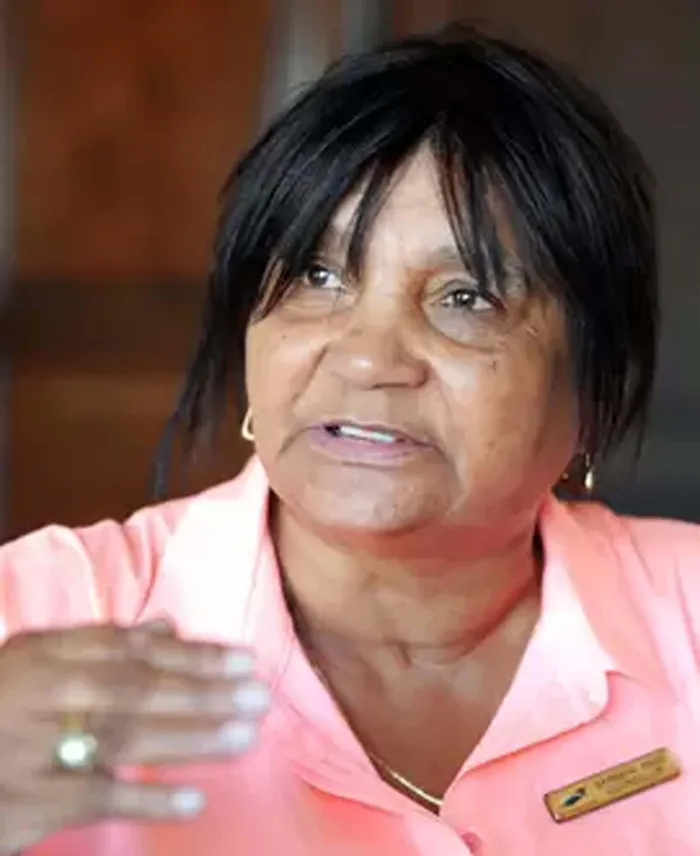
Councillor Barbara Rass said the 16-year-old was traumatised as she had lost everything in one night. Picture: African News Agency (ANA) Barbara Rass
Image: File
During the inspection at the SAPS Provincial Supply Chain stores in Epping, Cameron and Gotsell said they found no D1 or D7. Their findings directly contradicted SAPS’ official position and sparked further concern.
Mathe however argued that confusion may have arisen because rape kits are not stored at the SAPS Epping warehouse, where uniforms and stationery are kept.
Gotsell said he also cross-referenced the certificate report on Thursday and found that stations which were reportedly in possession of kits did not have, these include Paarl and Sea Point.
Athlone reported it had stock but 70 of the D1 kits and 60 of the D7 kits have expired.
“If SAPS are denying the reports, it is worrying that there appears to be a disconnect between the officers on the ground, who work with victims on a daily basis, and those who sit in their offices and are removed from what is happening on the ground,” Gotsell said.
The gap between administrative figures and lived realities was also highlighted by Barbara Rass, one of the founders of the Western Cape Thuthuzela Care Centres. Rass said the reported shortages were “explicitly worrying” and represented a violation of survivors’ rights.
“They are sabotaging human rights. These are services according to human rights that must be provided. Imagine how the victim has to feel to be turned away or told to wait a few minutes or hours until the station gets a backup kit. You are already scared, embarrassed and fearful it’s like you are raped again by the system.”
Rass said rural survivors experience this impact most severely.
“The rural areas suffer more because sometimes these people do not even have transport. We dealt with a case from Riebeek West the victim went to Paarl, then to Atlantis, then to Malmesbury. It affects everything.”
She warned that inconsistent access to kits undermines prosecutions:
“Are the stats even accurate? It affects the entire chain.”
Child-protection organisation Molo Songololo, which works in communities including Atlantis, Delft and Beaufort West, confirmed they were aware of shortages in certain areas.
“Molo Songololo services areas such as Atlantis, Delft and Beaufort West. We have heard that there might be some shortages, and we also heard that they are responding to the situation. Worcester had shortages," said Director, Patrick Solomons
“This is a very, very important service, and victims need to be assured that when they access these centres, they will receive the full service they need. We are not aware that there is a mass crisis, but where there has been a shortfall, centres have called on others for support.”
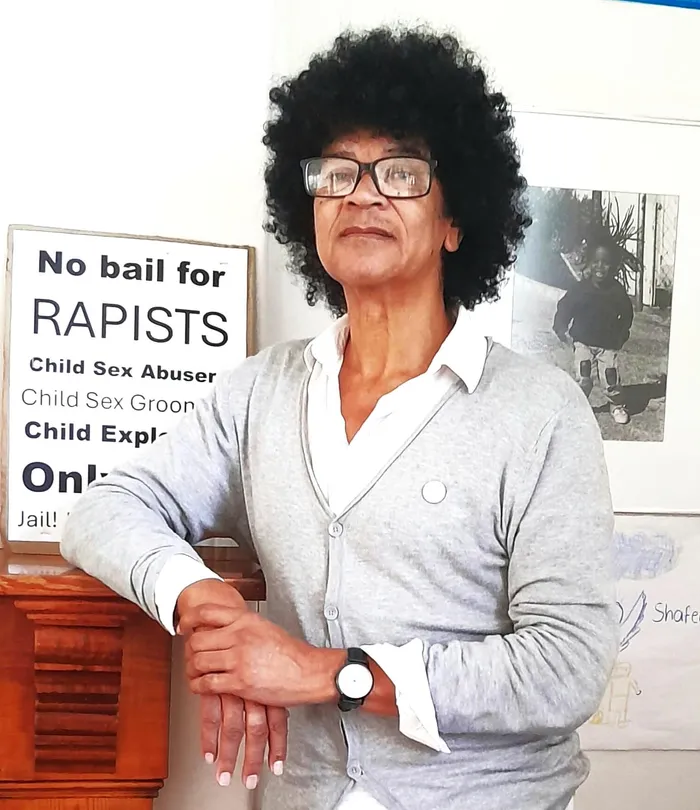
Molo Songololo director, Patric Solomons
Image: Supplied
Solomon cautioned that panic was understandable given the seriousness of the service.
“We should never have a situation where any facility has no rape kits that is not acceptable, and those responsible should be held to account. Any further delays can damage or remove evidence. Gaps will negatively impact victims, cases and outcomes, and ultimately their right to justice.”
He called for regular oversight, proper inventory systems and collaboration between agencies.
“Proper inventory should be taken regularly, and oversight should be done regularly. We cannot be fighting each other because it is not in the best interest of the victims.”
He welcomed the delivery of kits in the new week stating: “We should never even have a situation where there is a shortage of such important kits, however we are very pleased that whatever problem that there might have been has been addressed.”
Meanwhile, Action Society condemned the reported shortages, saying they reflect deeper structural failings within SAPS.
“Reports of widespread shortages of Adult Sexual Assault Collection Kits at Western Cape FCS units are deeply concerning and show a system still failing survivors at the most critical point of their journey to justice,” the organisation said.
“When a victim arrives, the evidence is on her body and begins to degrade immediately. If the correct kit isn’t available, that evidence is lost before the case even starts, making prosecution extremely difficult and, in many instances, impossible.”
“From our experience, the absence of kits forces survivors to wait for long periods, be sent elsewhere without support, or leave without an examination because the trauma of delay becomes unbearable.
“Each of these outcomes destroys the integrity of the case and retraumatises the survivor.
“These shortages point to deeper failures in SAPS procurement mismanagement, poor oversight and, at times, corruption all of which directly harm survivors and enable offenders to walk free.”
As SAPS maintains that there is “no crisis,” activists insist the disconnect between paperwork and people persists. While official tallies suggest abundance, station-level realities particularly in rural or high-crime areas appear far less secure.
The unfolding controversy comes during the 16 Days of Activism for No Violence Against Women and Children, a period in which the government publicly commits to supporting survivors. Yet victims in multiple Western Cape communities may have faced empty shelves when seeking forensic support.
Oversight bodies are now expected to continue unannounced inspections of stations and closely monitor the distribution of the 15 December delivery to determine whether shortages or distribution failures have been resolved.