Speed trap alerts: city weighs charges
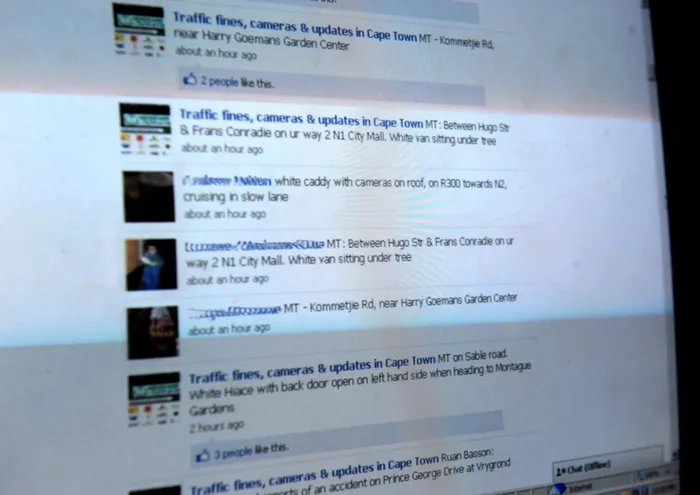
The Facebook site that alerts motorists to roadblocks and speed traps in Cape Town. The Facebook site that alerts motorists to roadblocks and speed traps in Cape Town.
Representatives from the City of Cape Town, the provincial government, traffic law enforcement and the metro police department have held an urgent meeting with lawyers to discuss laying criminal charges against the owner of an SMS subscription service which warns motorists of upcoming speed traps.
Yesterday the Cape Argus reported that the subscription service, SMSRadar, and a Facebook group called “Traffic fines, cameras & updates in Cape Town” had drawn the ire of the City of Cape Town.
But although the Facebook group goes further than sending warnings about speed-traps, by also disclosing where police and traffic law enforcement roadblocks are, it is SMSRadar that may find itself the subject of a test case.
The city’s mayoral committee member for safety and security, JP Smith, said the reason for this is because SMSRadar is profiting from the service, while the social networking group does not appear to be for financial gain.
Smith said that it was time to determine “when behaviour like that (amounts to) defeating the ends of justice”.
“We have met with senior legal counsel and are gathering more evidence.
“We have got to make a test case now,” he said.
As for the Facebook group, which has more than 35 000 users, Smith said that attempts would be made to engage with them.
“We will meet the website guys and ask them to limit the bad stuff, and take them to the traffic management centre in Goodwood and show them how it works and the impact of accidents, to see if they can take a responsible approach,” he said.
“We can potentially make information available and they can put it on their site and make the site more relevant. We want to see if we can talk to them.”
Meanwhile, senior advocates canvassed by the Cape Argus have cast doubt on the chances of success in prosecuting those who warn others of law enforcement or speed trap activities, because the State would have to prove a causal link between the action of warning and the result thereof.
To make a charge of defeating or obstructing the course of justice stick, the State would have to prove beyond a reasonable doubt that a person was already in the process of the commission of a crime, and that someone had actively prevented that person from being brought to book because of an intervention.
For instance, in terms of South African case law, the State would have to prove that if it had not been for the act of interference, a person would have been caught for speeding.
However, nothing prevented the legislature from creating a new kind of offence through legislation, said one lawyer.
But yesterday, Jadesh Kumar, the managing director of SMSRadar, argued that speed trap warnings effectively ensured that people drove slower and therefore obeyed the law if they had not done so before.
He said that there were many other devices, such as Garmin and Road Angel, which provided similar services, and that in some countries police even supported speed trap warning initiatives.